Mamian Skirt Traditional Design: 5 Key Facts to Know


The Mamian skirt(马面裙) traditional design has captivated fashion lovers worldwide, from its controversial spotlight in Dior’s collection to its timeless place in Chinese Hanfu fashion. Known as the “horse face” skirt, the Mamian skirt blends history, elegance, and practicality. Whether you’re a Hanfu enthusiast or exploring traditional attire for your wardrobe, here are five essential facts about the Mamian skirt traditional design that highlight its enduring charm in Ming Dynasty skirt style and beyond.
A Historical Gem from the Song Dynasty
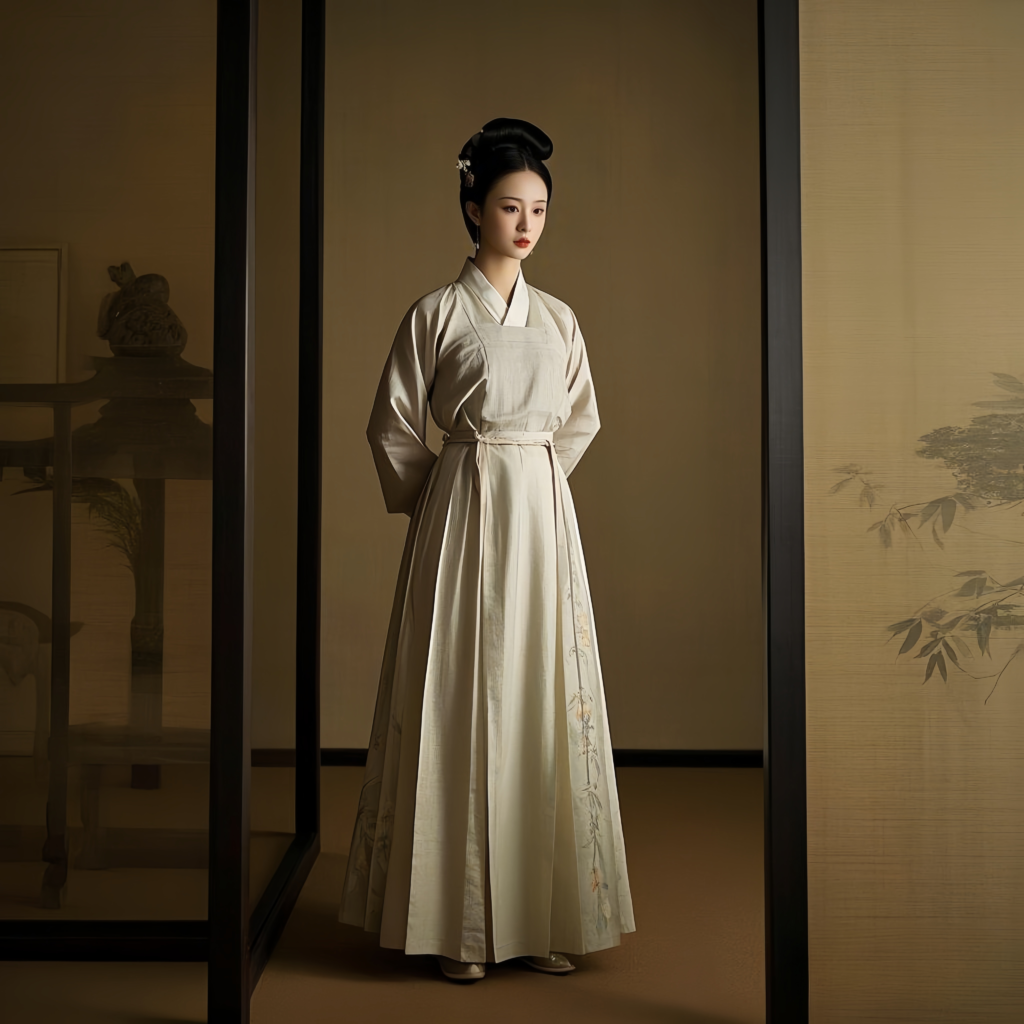
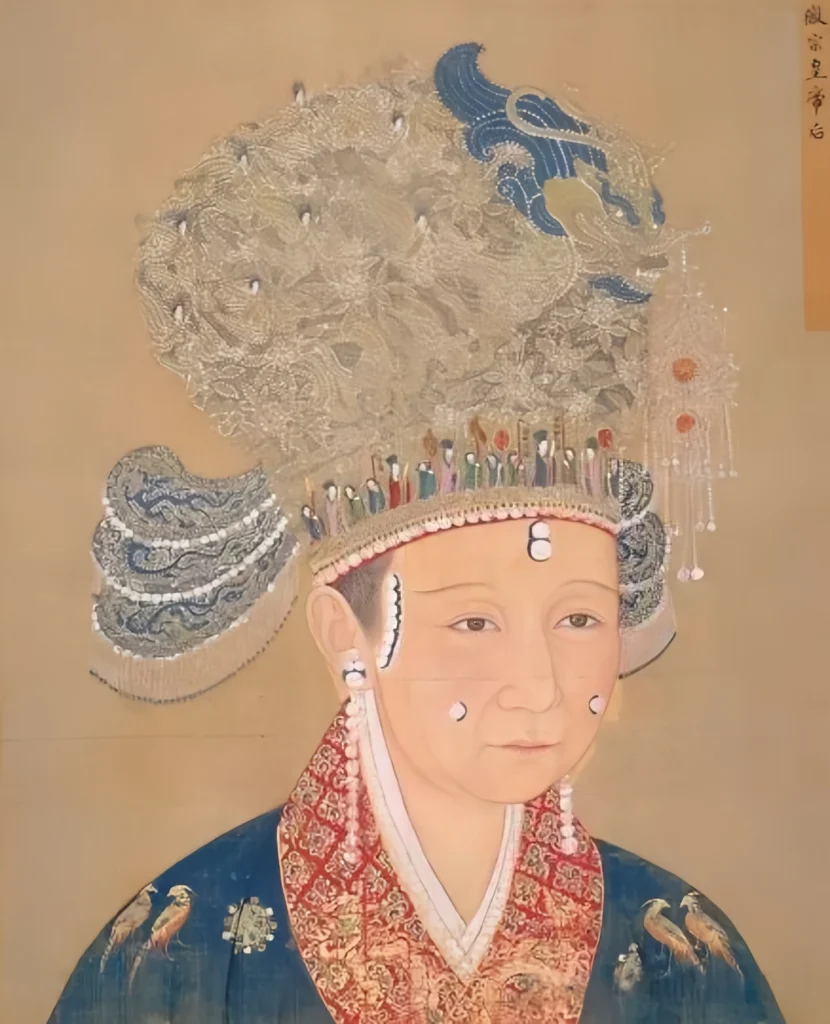
The Mamian skirt traditional design traces its roots to the Song Dynasty, where elite courtesans—fashion icons of their era—wore pleated silk versions. The name “Mamian” (horse face) comes from its resemblance to a fort’s stepped “face,” with folded panels mimicking gates. By the Ming Dynasty, the skirt became a staple among women, celebrated for its Song Dynasty elegance and practicality. Its popularity continued into the Qing Dynasty, with Manchu nobility embracing its distinctive silhouette. For more on its origins, visit the China National Silk Museum.
Key Features of the Mamian Skirt
The “Doors” (Skirt Panels)
One of the most iconic features of the Mamian skirt is its construction, particularly the “doors” (裙门). Unlike a typical skirt, the Mamian skirt is made from two panels of fabric, each with a smooth, unpleated section at the edges. These panels overlap at the waist, creating a design where the “doors” can open and close. When the skirt is laid flat, you’ll see three “doors”—two at the sides and one at the front. When worn, these doors overlap at the back, revealing only the front and back pairs of “doors.”
This unique construction allows for maximum freedom of movement, as the skirt is not fixed at the sides. This design makes the Mamian skirt ideal for activities like horseback riding, where mobility is crucial.
Pleats
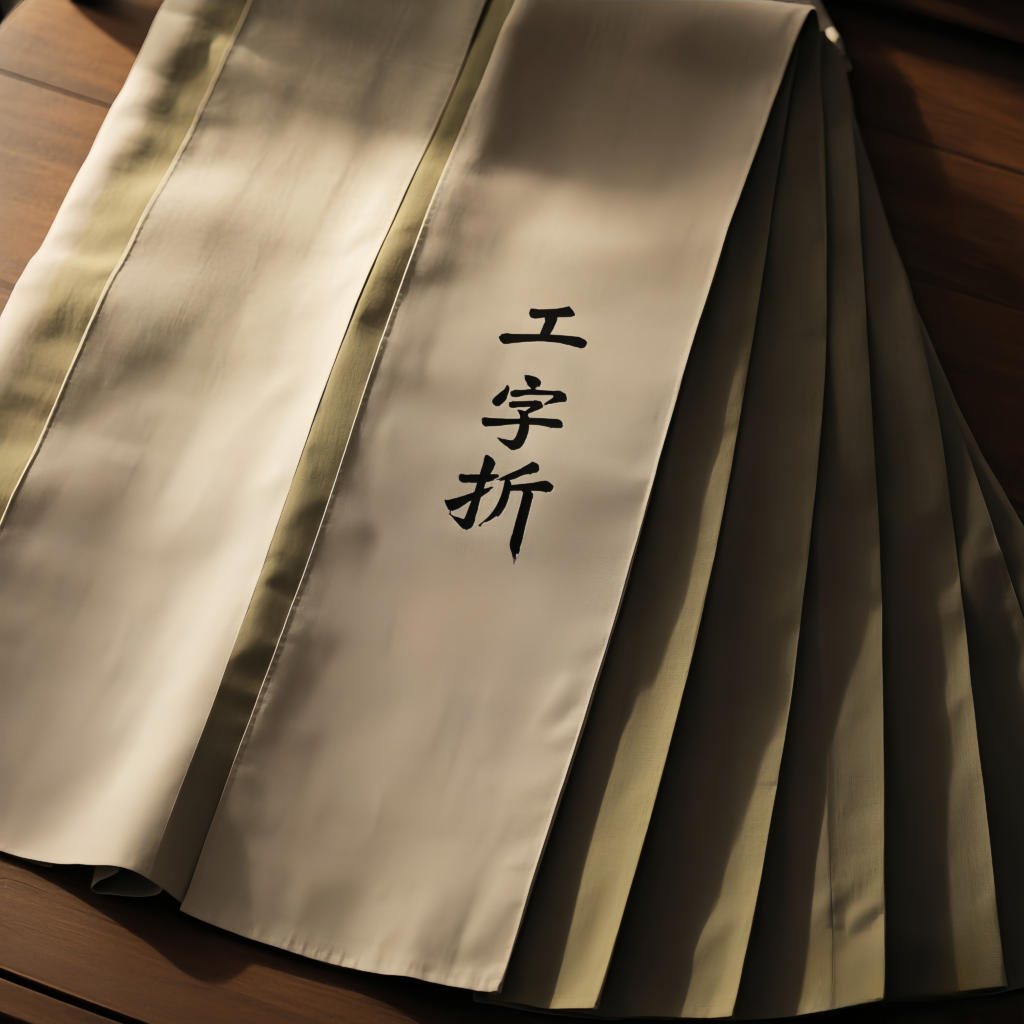
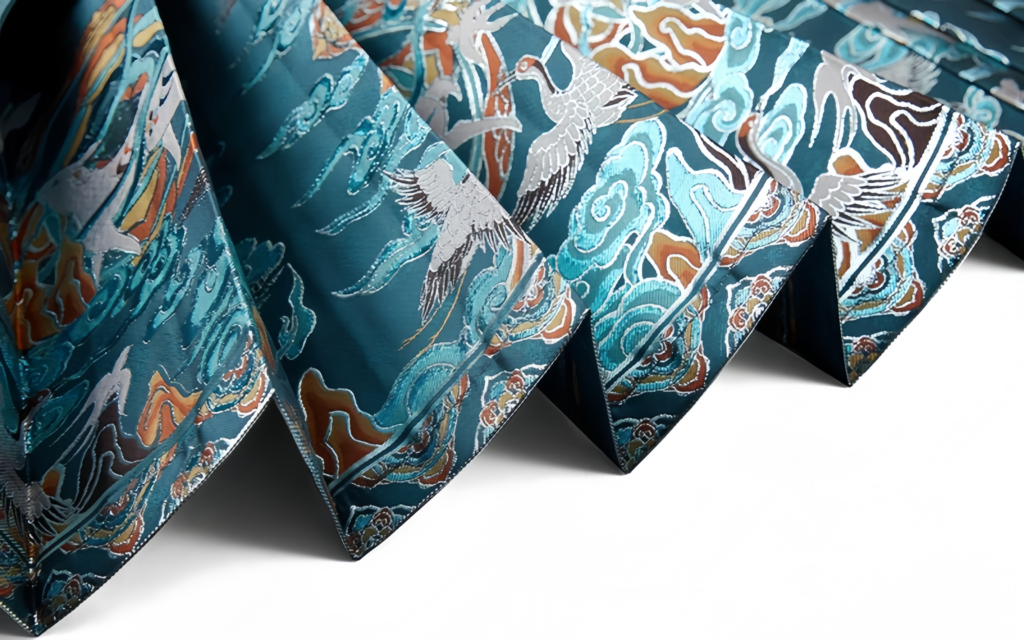
The pleats of the Mamian skirt are unlike those of a standard pleated skirt. Known as the “工字折” (Gongzi fold), the pleats are formed by folding the fabric toward the center and then folding it outward in a layered fashion. Each pleat unfolds from the center, creating a distinctive trapezoidal shape, allowing for a smooth flow while also enabling greater flexibility. Typically, the skirt features 4 to 7 pairs of pleats on each side, though in some variations, such as the Baidie Mamian skirt, there are even more pleats.
Fabric Choices
Like most traditional Chinese clothing, the beauty of the Mamian skirt often lies in its pattern and shape rather than its fabric. However, certain fabrics work better with the Mamian skirt’s structure, particularly stiffer materials that help maintain the skirt’s shape. Over the centuries, different dynasties preferred different materials, each adding its own twist to the design.
Different Dynastic Styles
Song Dynasty
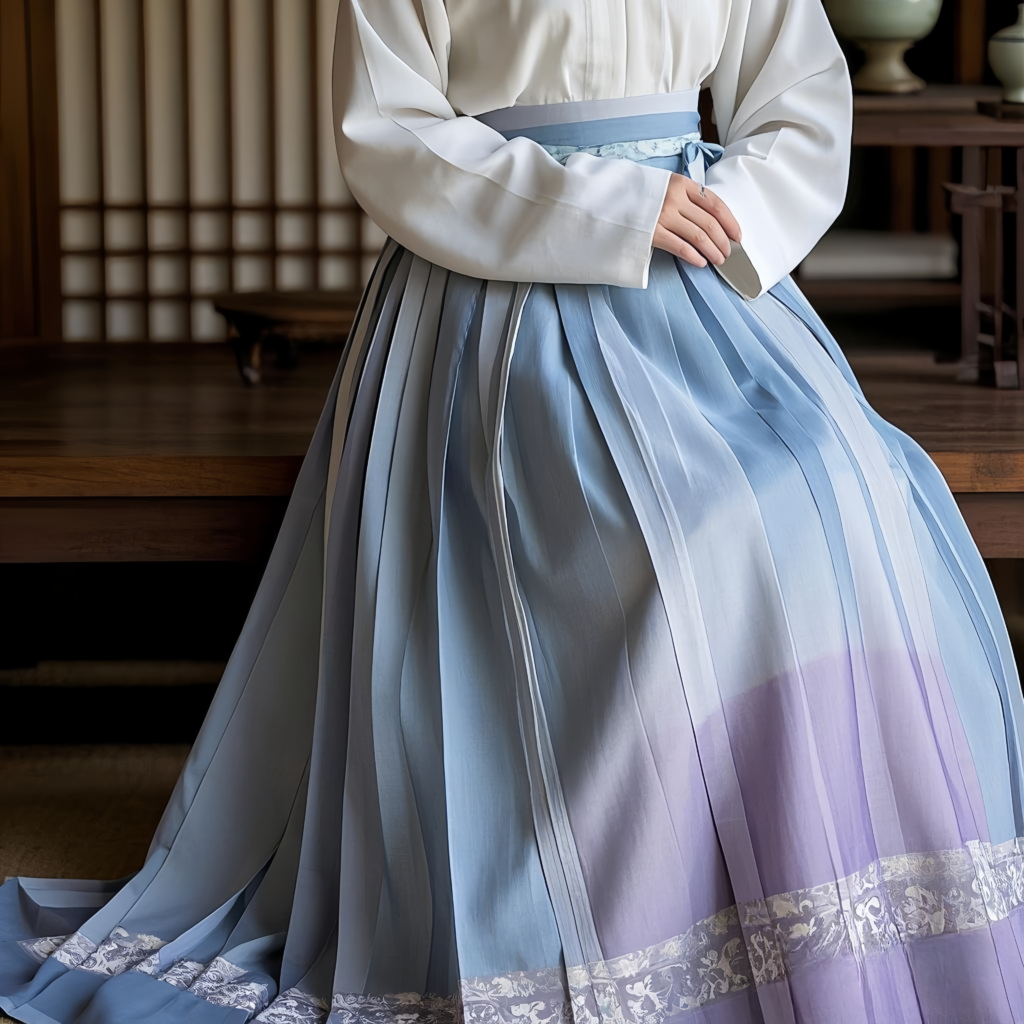
The Song Dynasty was when the Mamian skirt truly began to flourish. The aesthetic during this time leaned toward simplicity and elegance. Mamian skirts of this period were often made in solid colors with soft fabrics and minimal embroidery. The light, simple, and understated look of these skirts represents the refined beauty of the era, and many modern Mamian skirts that you see with delicate pastel colors are reminiscent of the Song style.
Ming Dynasty
During the Ming Dynasty, the Mamian skirt reached its peak popularity. It was a common garment for women, often paired with a pao (袍) or kaidan (开裆) jacket. The Ming style was all about opulence, and Mamian skirts were no exception—bold colors like red, black, and blue were dominant, made from thick silk or wool and often embellished with gold thread embroidery. The skirts were lavishly decorated with intricate gold patterns, often extending across the skirt in horizontal stripes.
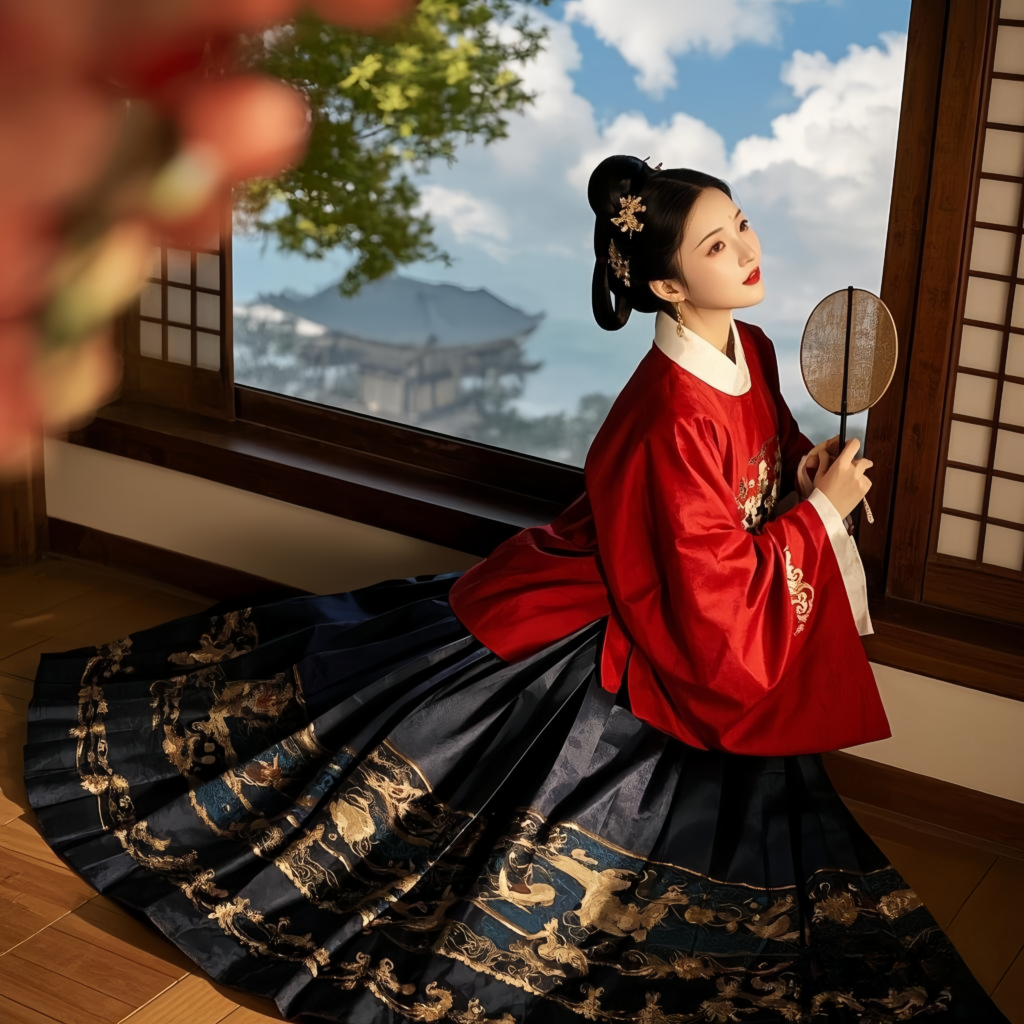
As the jackets began to grow longer, covering more of the skirt, the focus shifted to the bottom of the Mamian skirt. Embroidery and decorative elements became concentrated at the hem, with the top portion of the skirt left simple and unadorned.
Qing Dynasty
While the Mamian skirt persisted into the Qing Dynasty, this period marked a shift in style. The skirts from this time often featured contrasting piping around the “doors” (裙门) in white, with floral embroidery adding further decoration. Princess Diana’s iconic outfit also displayed this characteristic, linking modern renditions of the Mamian skirt to its historical roots.
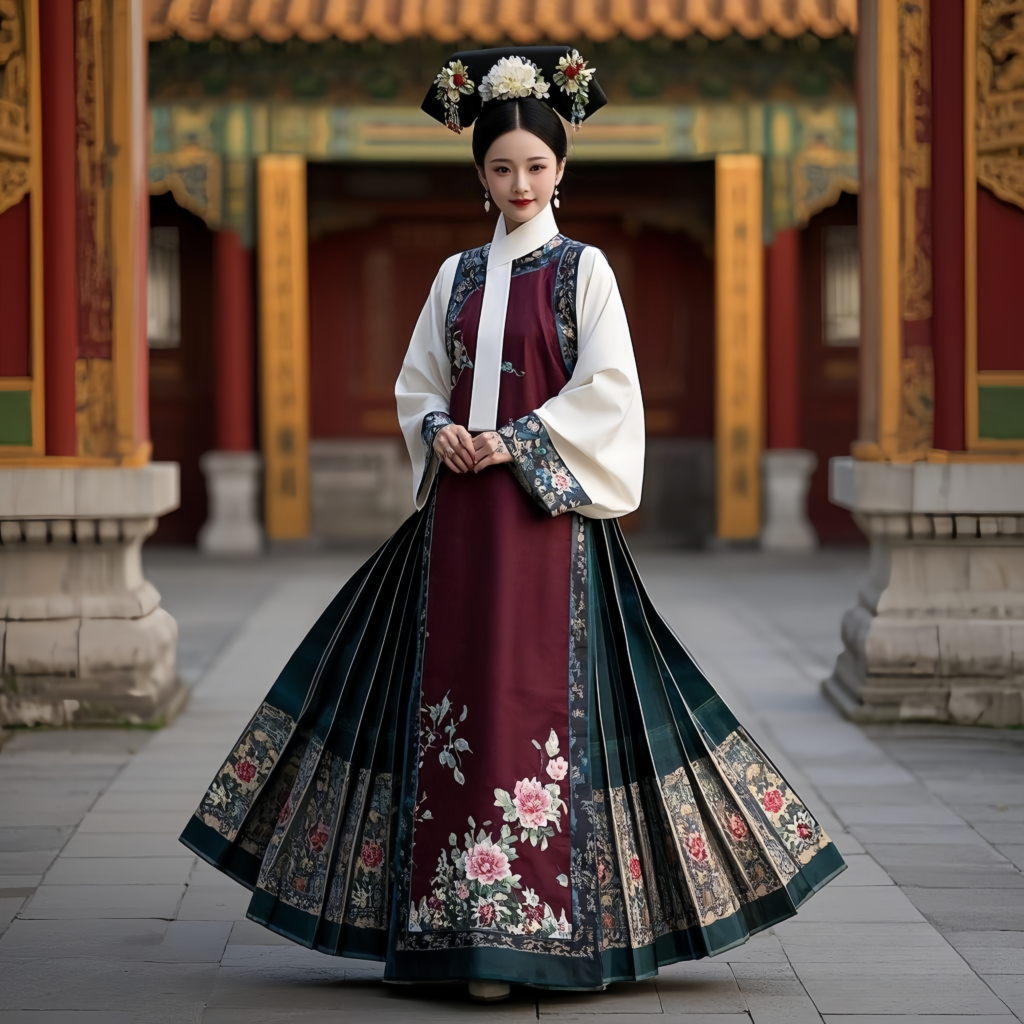
Wearing the Mamian Skirt Today
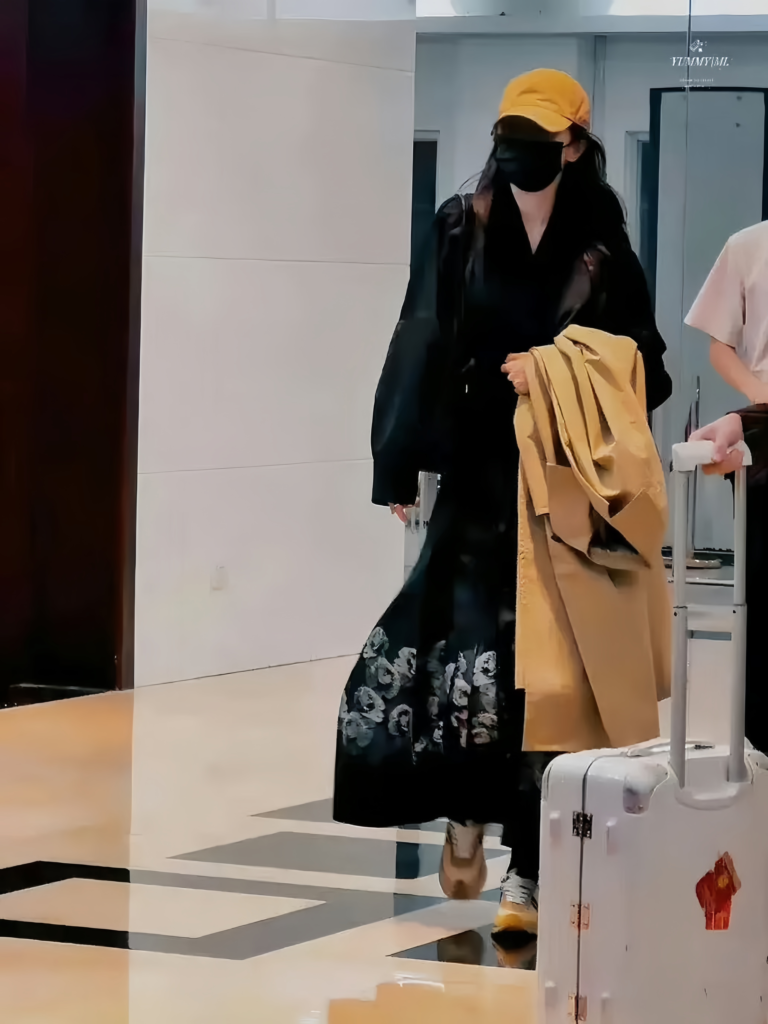
The Mamian skirt has seen a modern resurgence in fashion, thanks in part to its appearance in high-fashion collections like Dior’s. In recent years, people have been experimenting with the design in all sorts of creative ways. Personally, I own a modern, pocketed version of a Mamian skirt, and I’m constantly raving about how versatile it is. The fold design makes it incredibly practical, with room to hide pockets without disrupting the traditional look.
These skirts are now paired not only with classic hanfu tops but also with more modern outfits, like simple button-up shirts, especially in the Ming style. A plain white shirt pairs perfectly with the brightly colored skirt, allowing the skirt’s complex design and bold colors to take center stage. This blend of traditional and modern makes the Mamian skirt a great choice for daily wear.
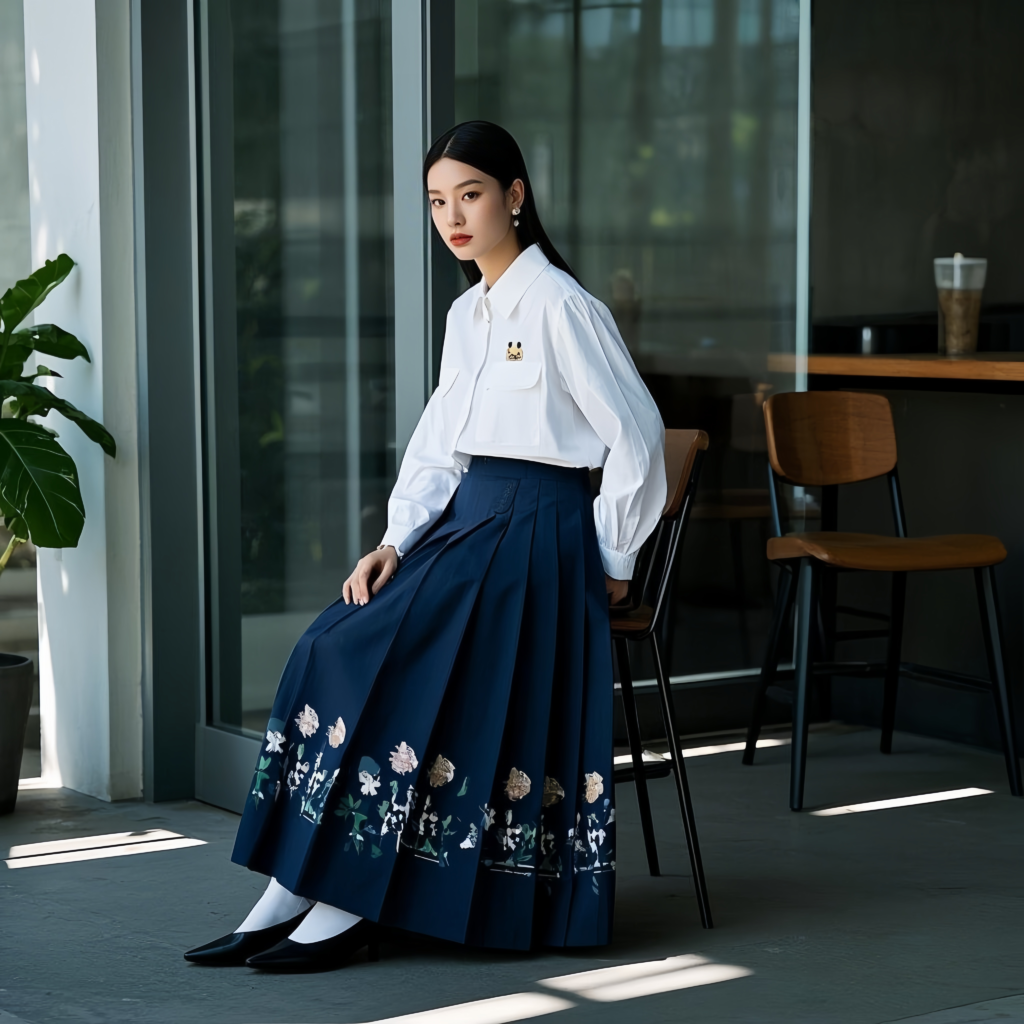
If you’re looking for a softer, more feminine vibe, you could opt for a Song Dynasty-style Mamian skirt. These skirts tend to have lighter colors and simpler designs, making them a bit harder to find but still incredibly charming. Modern versions of the Mamian skirt come in various fabrics, from polyester and chiffon to fun patterns with cartoon rabbits and cats. The options are endless, and they remain just as elegant from afar as their historical counterparts.
Modern Revival and Versatility
In 2025, the Mamian skirt traditional design thrives in Chinese Hanfu fashion. Modern versions pair it with classic Hanfu tops or contemporary pieces like white button-up shirts, balancing tradition and style. Song-style skirts in pastel tones offer Song Dynasty elegance, while Ming-inspired designs dazzle with bold colors. Fabrics range from chiffon to playful patterns with rabbits or cats, and some even include pockets for practicality. This blend of heritage and innovation makes the Mamian skirt a must-have for any wardrobe
Why the Mamian Skirt Matters
The Mamian skirt traditional design is more than fashion—it’s a cultural bridge. Its history, from Song courtesans to Qing nobility, resonates with modern fans of Ming Dynasty skirt style. Ready to embrace this iconic piece? Our store offers Mamian skirts in Song, Ming, and Qing styles, perfect for your Chinese Hanfu fashion journey.

Responses