Ancient Hairstyles in Costume Dramas You Can’t Name


In palace intrigue dramas, a concubine’s rise brings noticeable changes to her outfits and hairstyles. Let’s dive into some stunning ancient Chinese women’s hairstyles
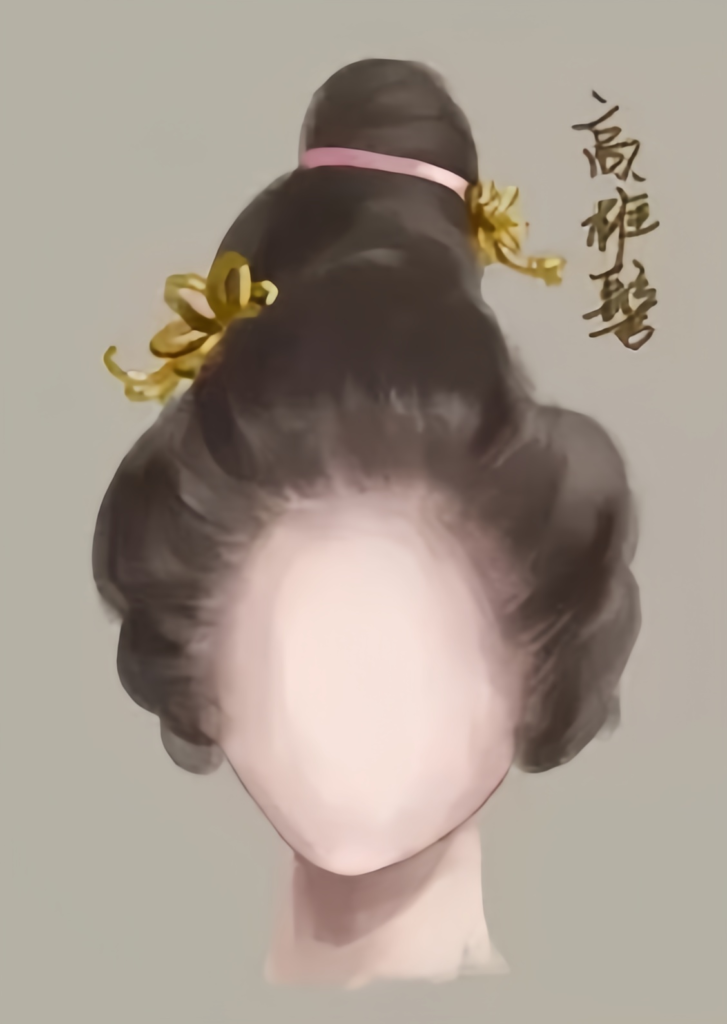
Gao Zhui Ji (Tall Spire Bun)
Gao Zhui Ji, a classic Han women’s style, gathers hair into a single tall spire on top. Zhuang Tai Ji records: “During Song Lizong’s reign, palace ladies sported high buns, towering and elegant, called Gao Zhui Ji.” You can spot this in Song-era Jin Ci female statues in Shanxi Taiyuan.
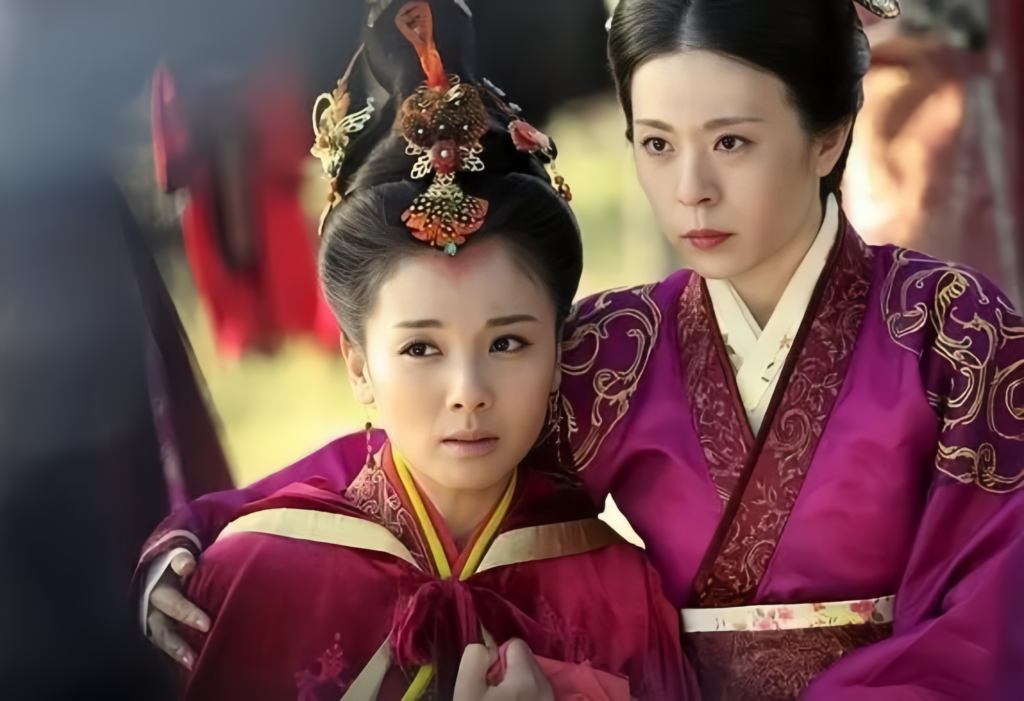
Qin-Han Period: Guan Fa (Twin Bun)
Guan Fa, for kids or unmarried girls, splits hair into two symmetrical spires on either side of the head, with a small strand left dangling. It’s said to have kicked off in Qin-Han or earlier, staying popular.
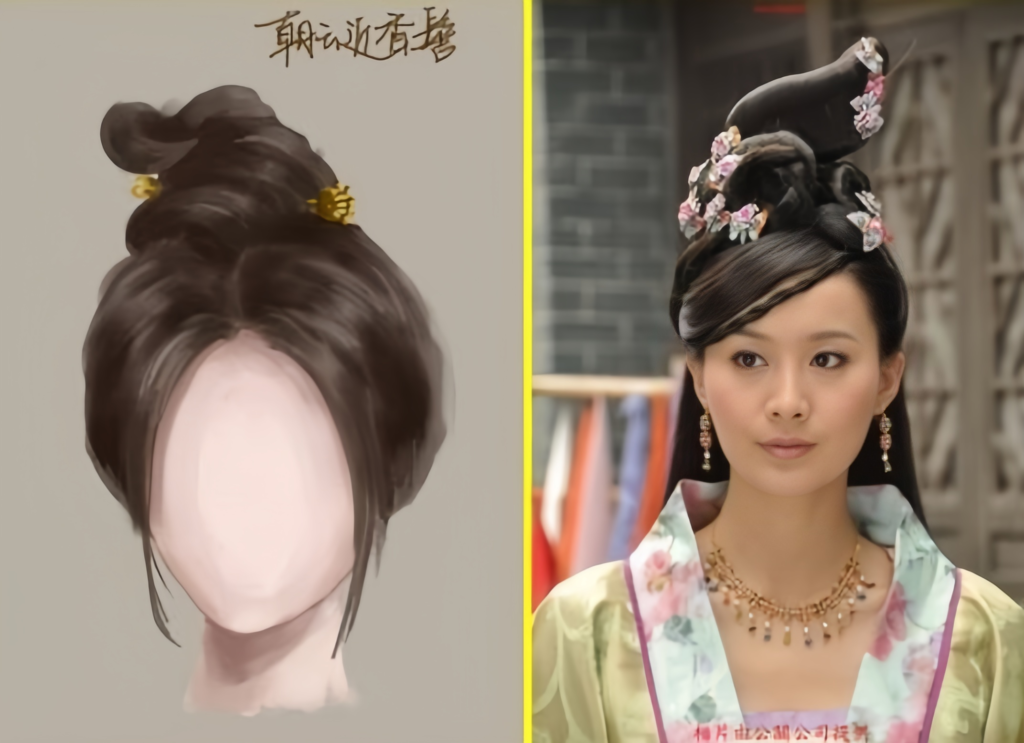
Zhao Yun Jin Xiang Ji (Morning Cloud Near-Fragrance Bun)
Zhao Yun Jin Xiang Ji, another Han women’s style, mimics a twisted stack. Hair is divided, twisted, and layered on top—lively yet sturdy.
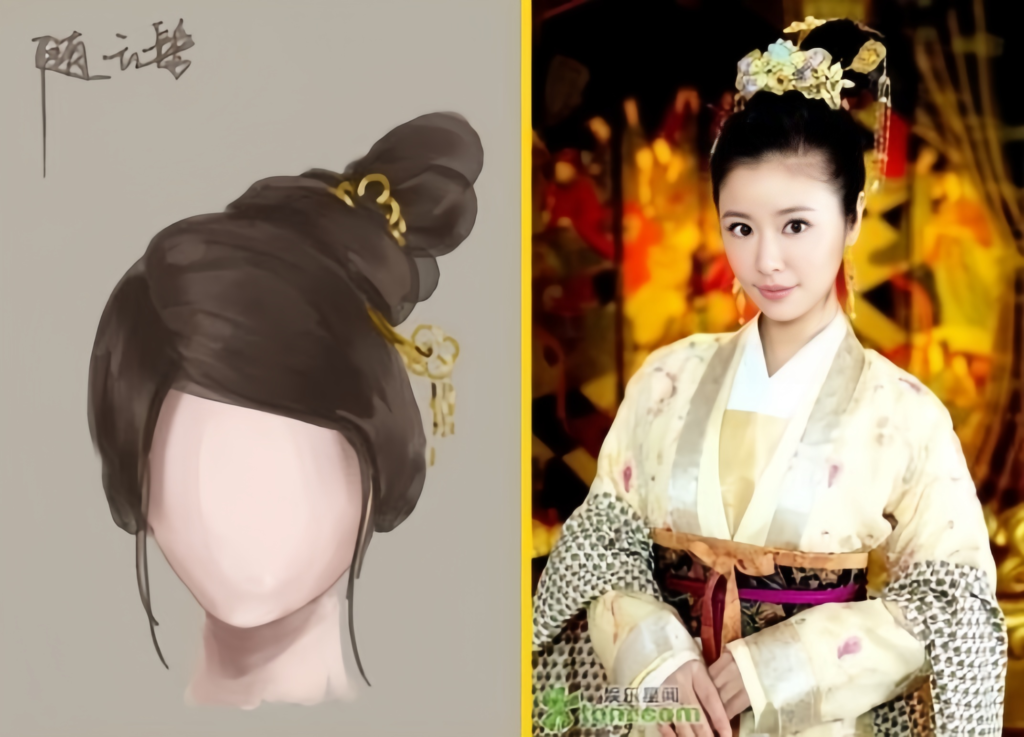
Sui Yun Ji (Cloud-Following Bun)
Sui Yun Ji, a side-twist style, looks like clouds drifting, with the bun flowing naturally.
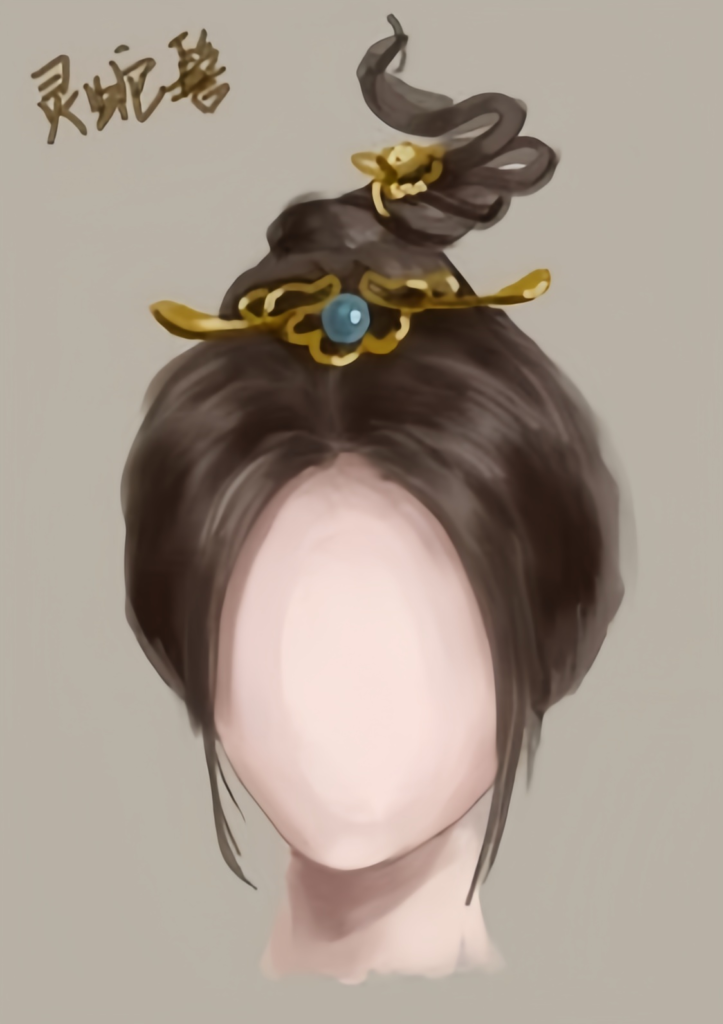
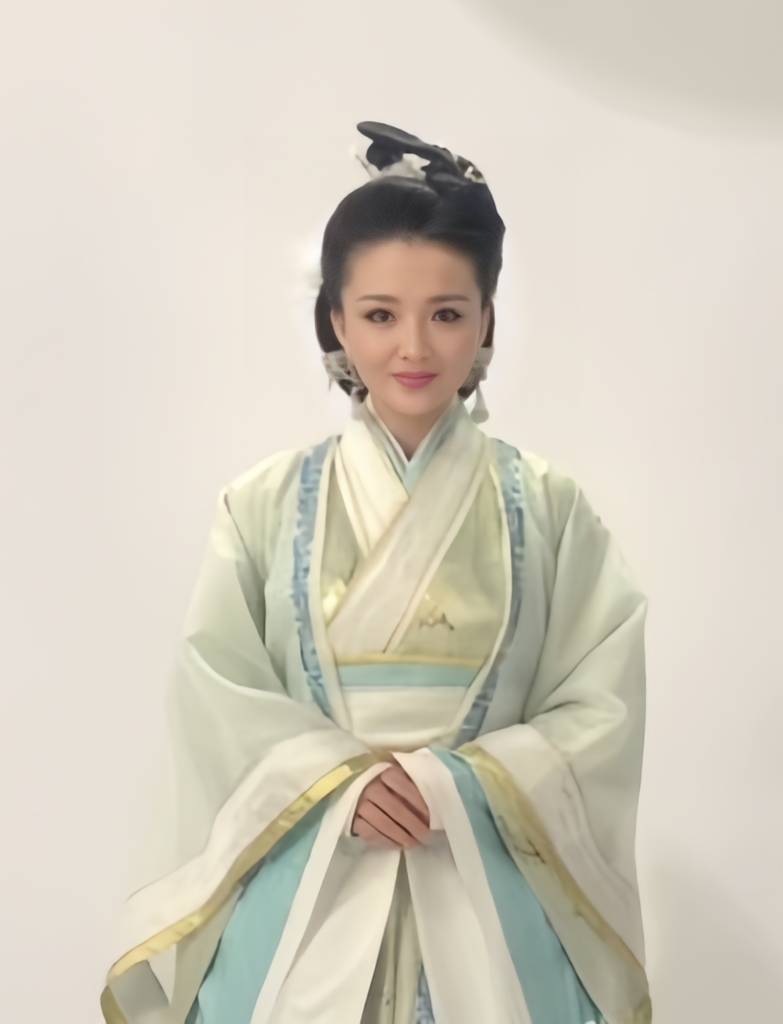
Ling She Ji (Spirit Snake Bun)
Ling She Ji, a Han women’s style from Wei-Jin, varies freely, shaped on the fly. Legend credits it to Cao Wei’s Empress Zhen. Cai Lan Za Zhi says: “After entering the Wei palace, Zhen saw a green snake spitting red beads, harmless yet elusive. Daily, she styled a back-front bun inspired by its coils—unique each time, dubbed Ling She Ji. Palace ladies tried, but few nailed it.” The snake’s shape sparked the design.
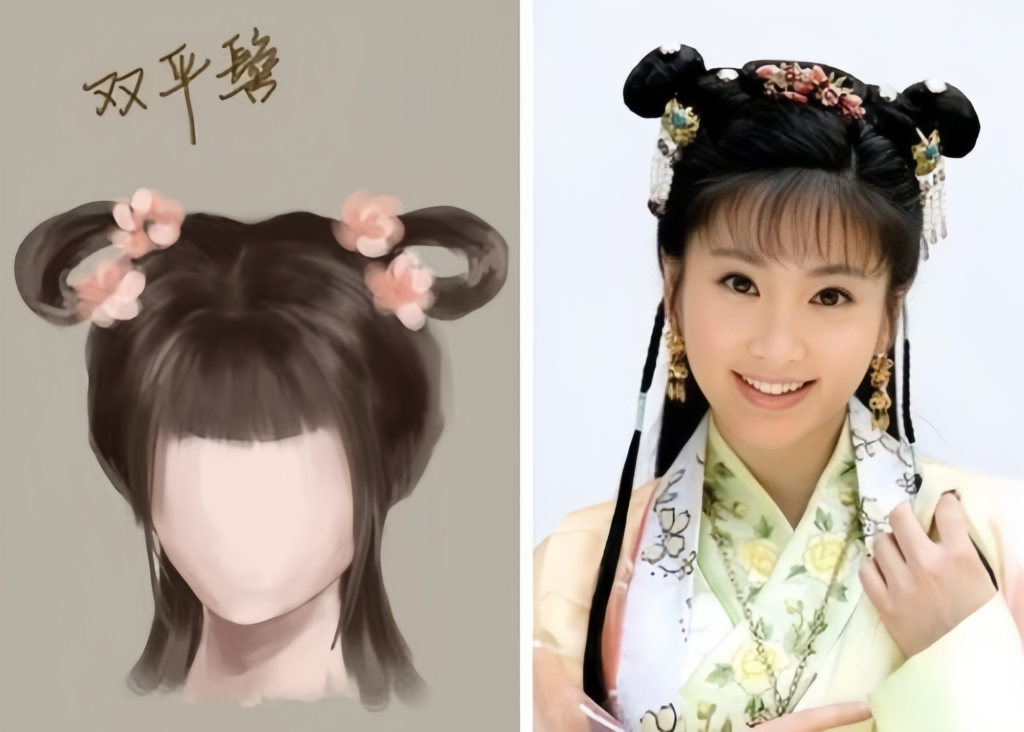
Qin Dynasty: Shuang Ping Ji (Double Flat Bun)
Common for court maids, servants, or young girls, Shuang Ping Ji started in Qin and lingered through modern times. Think twin buns or hanging styles, seen in ancient art like Dunhuang’s Thousand Buddha Cave attendants and Yan Liben’s Lie Di Tu palace servants. Variants include “Shuang Ya Ji,” “Chui Gua Ji,” and “Shuang Gua Ji.”
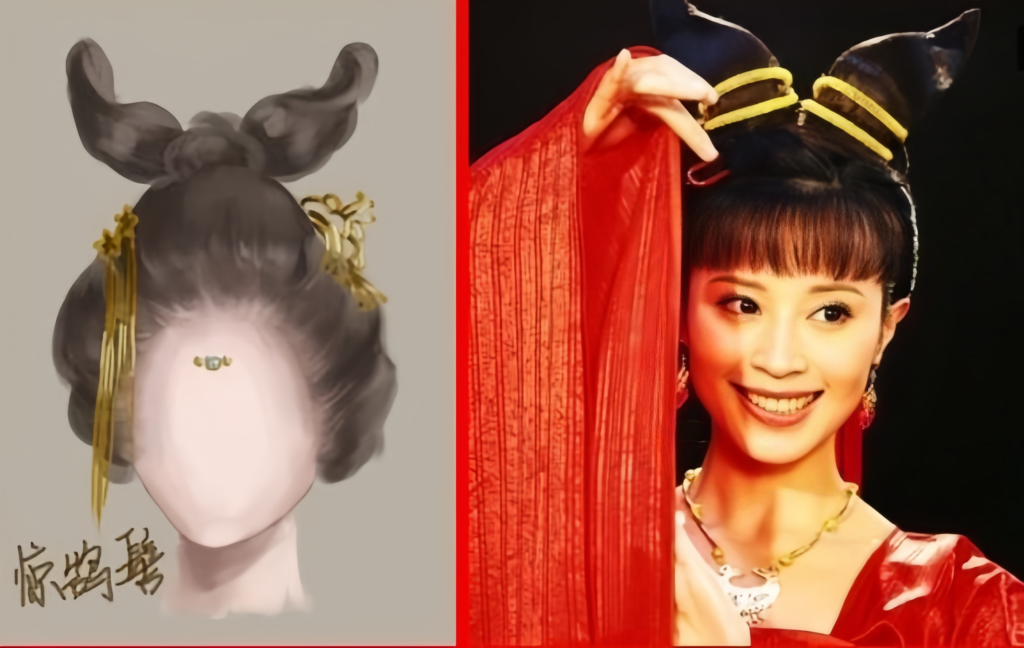
Han Dynasty: Jing Gu Ji (Startled Crane Bun)
Jing Gu Ji, popular from late Han to Three Kingdoms (Wei), is a double high bun. Zhong Hua Gu Jin Zhu by Ma Gao notes: “Wei palace ladies loved long brows and Jing Gu Ji.” It spanned Two Jins, Northern-Southern Dynasties, and Tang, thriving in Chang’an. Hair is lifted and styled like a bird about to fly, sometimes with a fake bun on top. Originating in Wei’s palace, it spread to commoners and peaked in Tang.
Han-Wei Period: Wa Tuo Ji (Waist-Drop Bun)
Wa Tuo Ji, a trendy Han-Wei women’s bun, differs from “Duo Ma Ji” (a variant, not the same).
Responses