What Ancient Chinese Women’s Makeup Really Looked Like

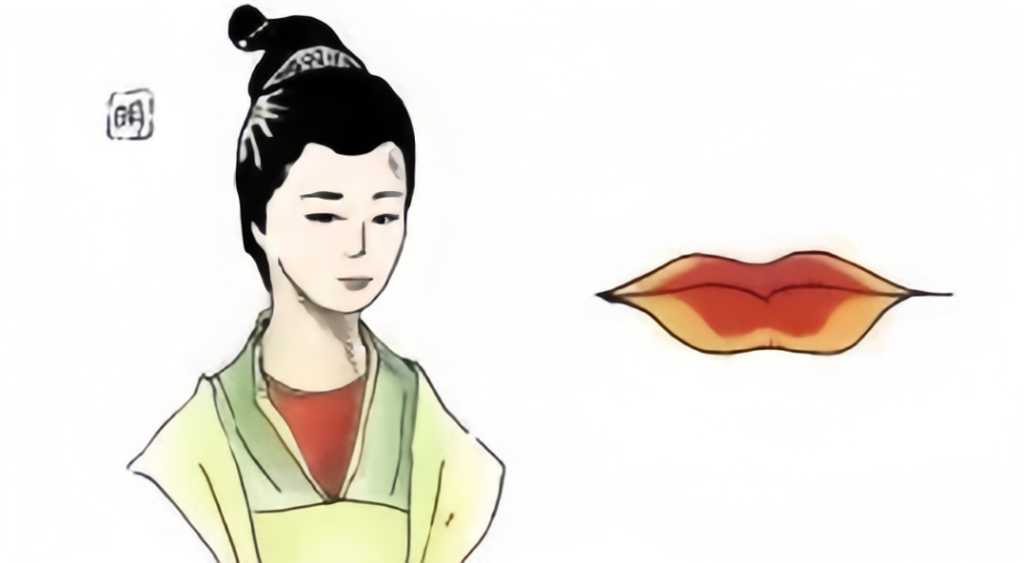
Ancient Chinese Makeup through Various Dynasties
Since forever, lip makeup across dynasties wasn’t just about women looking pretty for someone special—it showed the politics, economy, culture, and even the rulers’ mindsets of the time, a core part of Ancient Chinese makeup.
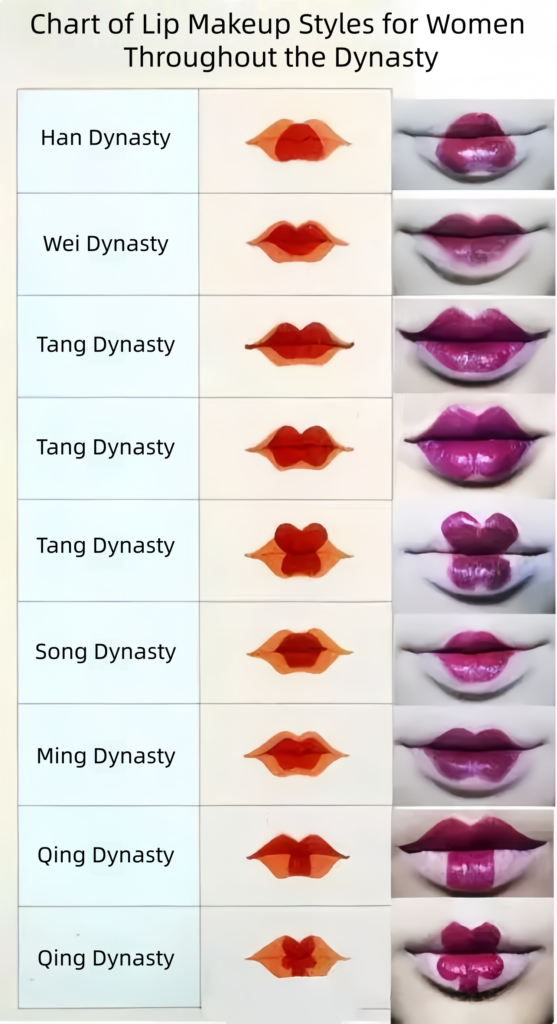
Han Dynasty
With years of chaos, Han folks were too broke to care much about beauty. By Emperor Wu’s time, the push for “dismissing all schools but Confucianism” shifted women’s aesthetics toward virtue over looks, so Han women kept their makeup simple.
For lip makeup, they rocked a small-top, big-bottom, almost triangular shape, a classic in Hanfu makeup styles. Hairstyles were basic too, split into two types: a low bun at the back of the head (like Lü Zhi’s in Chu Han Legend) or a high bun piled on top.
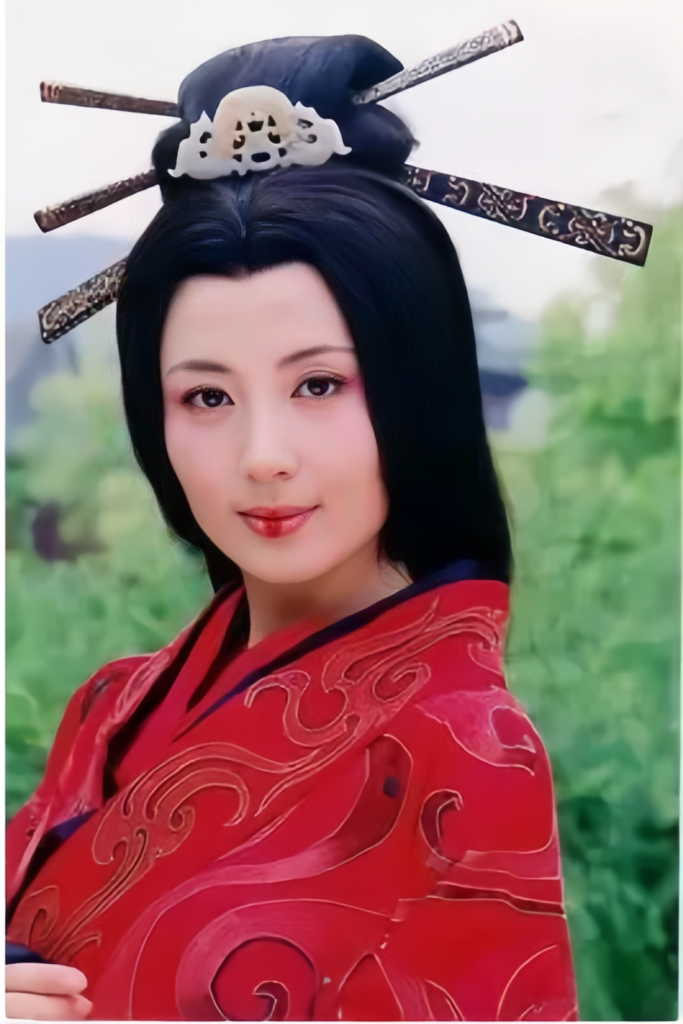
Mainstream beauty talk picked up under Emperor Ming of Eastern Han, with records praising “palace women brushing on dark brows.” Besides those bold brows, distant mountain brows were also a Han classic, reflecting Traditional Chinese beauty. Legend has it, Sima Xiangru fell head over heels for Zhuo Wenjun’s “brows like distant mountains.”

Wei and Jin Dynasties
Wei and Jin saw玄学 (mysticism) boom, pushing aesthetics to a wild philosophical level. All sorts of bold, unique makeup styles popped up, with lip shapes turning fan-like. Beyond red lips, the Southern and Northern Dynasties brought “black lips” dyed with dark paste, a unique Dynasty beauty trend.
Guys back then were often more into beauty than women. With politics a mess, scholars dodged court drama and dove into mysticism for escape. Big names like the Seven Sages of the Bamboo Grove and the Cao clan in Wei loved powdering up. Records of Wei mention Cao Zhi caking on powder, and their son-in-law He Yan, under Cao influence, became the famous “powdered He Lang.”

Tang Dynasty
In the grand Daming Palace, Princess Taiping’s masked smile stole hearts, marking a dazzling, thriving era full of traditional Chinese beauty.
Beyond fancy clothes, Tang women had a seven-step routine: powdering with lead, dabbing rouge, drawing dark brows, sticking on floral decals, dotting cheek dimples, painting red streaks, and slathering lip color.
While reviving traditional clothing, Du Jun also dug into ancient women’s makeup, uncovering Traditional Chinese beauty. To her, a woman’s vanity table reflected the era’s trends and fortunes.
A little extra fluff? No stress—Yang Guifei still charmed Emperor Xuanzong silly. No joke! Du Jun and her crew decoded Yang Guifei’s look from New Tang Book: jet-black hair with towering wigs, gold hairpins at the temples, willow-leaf brows, peach blossom makeup with a light powder layer under the eyes, fair and plump skin, naturally red nails, and a love for yellow skirts.
Curious about Hanfu designs? Explore our traditional Chinese clothing introduction for their history.
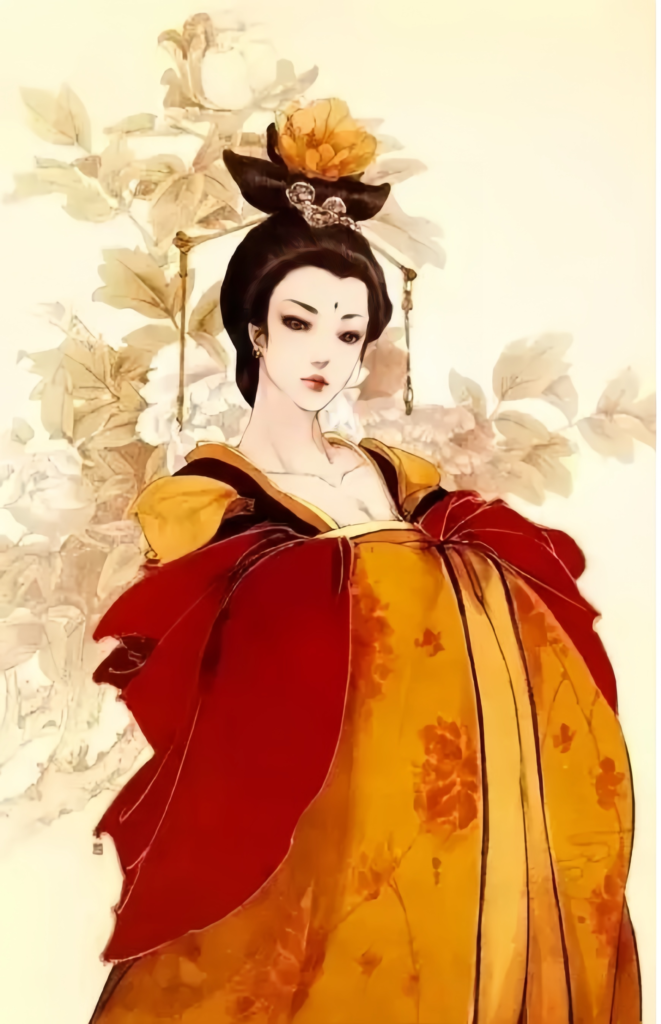
Lip styles were crazy diverse—17 types in just the last 30 years of Tang, like round, heart, or saddle shapes. The cherry and flower shapes were the hottest. The famous “cherry lips” belonged to Bai Juyi’s performer Fan Su, dubbed “Fan Su’s cherry mouth,” a standout in Hanfu makeup styles.
Wine-blush makeup, peach blossom makeup, rosy glow makeup, lazy-day makeup—popular looks mixed in foreign flair. There was even a wild “tear makeup” trend, described in Bai Juyi’s Fashionable Makeup: “No rouge on cheeks, no powder on face, lips dyed black like mud, brows drawn low like the character eight. Beauty or not, it’s lost in this sad, teary look.” By today’s standards, it’s a bit much!

Song Dynasty
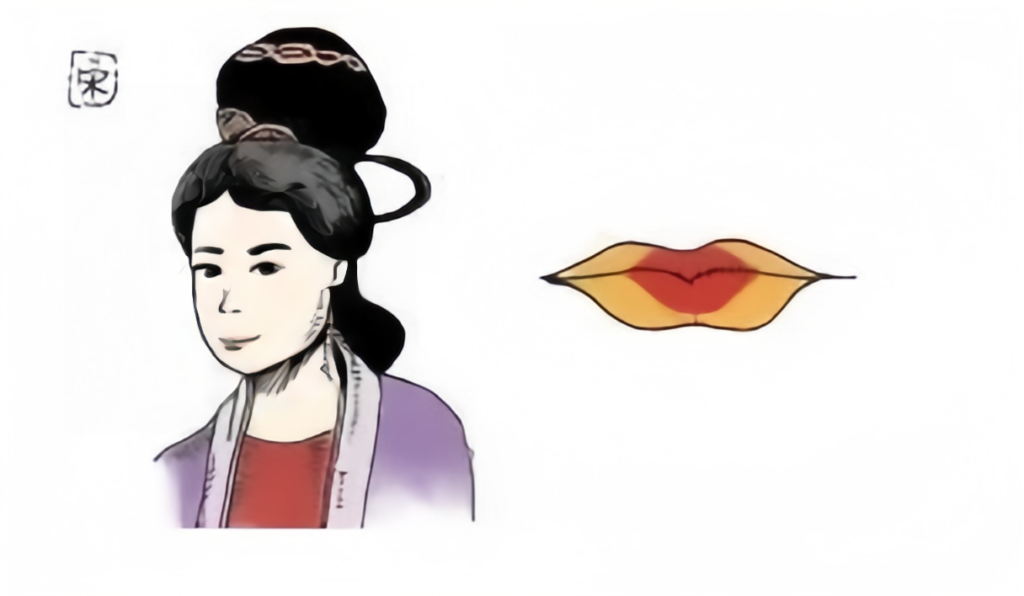
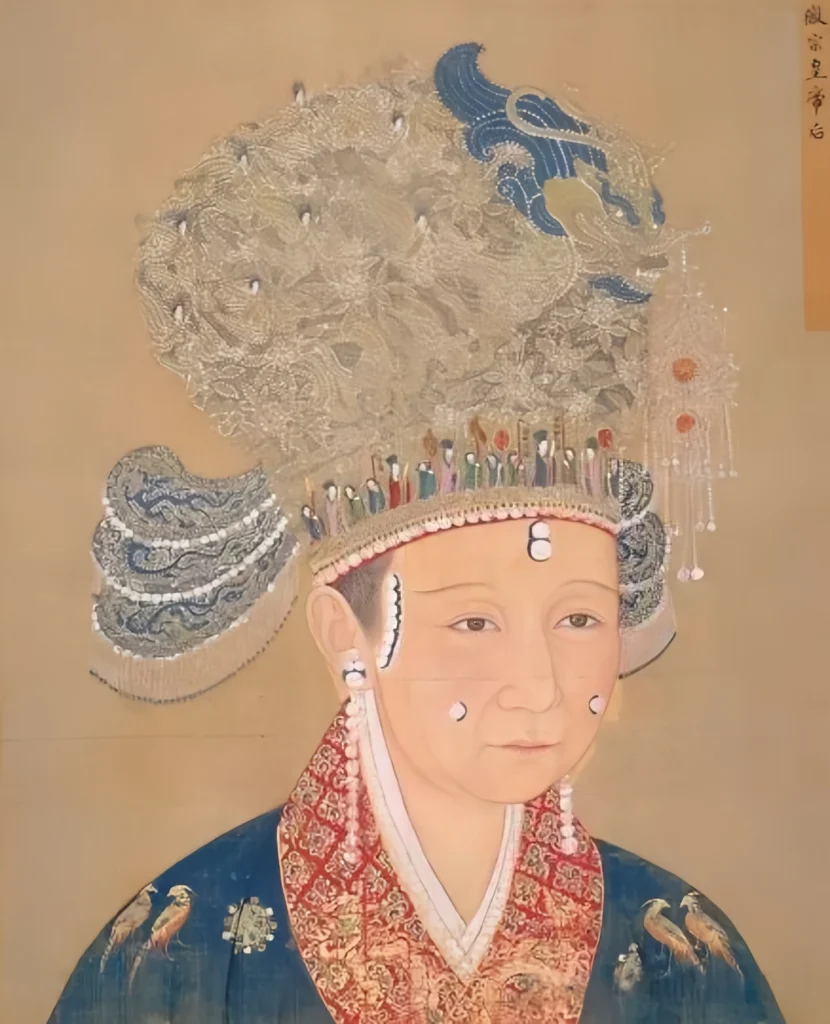
No matter how bustling Kaifeng looked in Along the River During Qingming, it couldn’t hide that traditional Chinese society started slipping after Song. Women’s beauty standards shifted from flashy and open to delicate and refined, marking a new Dynasty beauty trend.
Makeup leaned fresh and elegant, with fewer lip styles than Tang. Sandalwood-red lips became the go-to color.
In his poem Southern Song, Qin Guan wrote: “Rubbing a blue shirt and apricot skirt, leaning alone on a jade railing, silently dotting sandalwood lips.” That’s the lip color vibe.
Floral decals got a Song twist. Besides cutting black shiny paper into shapes for the face, women stuck fish gills on their cheeks, calling them “fish charmers.” Trendy ladies even dotted their foreheads and brow centers with tiny pearls, showcasing Historical Chinese cosmetics.
Ming Dynasty
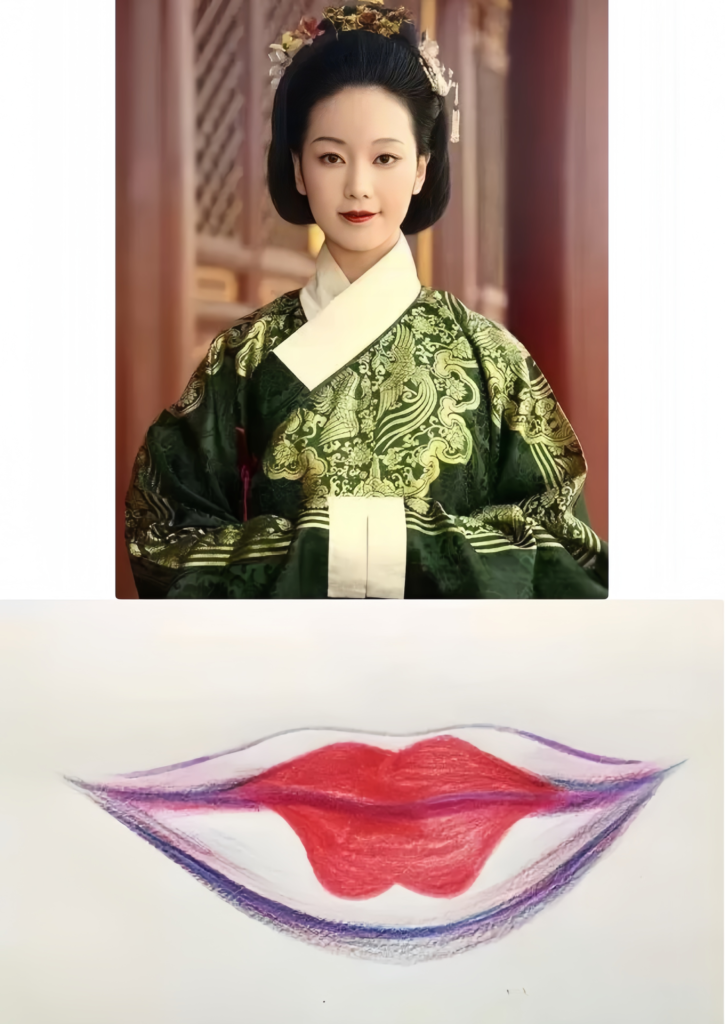
Peach blossom and wine-blush makeup were huge in Ming, with peach blossom being the lighter pick, showcasing Hanfu makeup styles. Got freckles? Women would stick shad fish scales on their faces to hide them. (Good luck finding those fish now—they’re nearly extinct!)
Thin brows were the beauty standard—big brows and bold eyes got you laughed at as a country bumpkin. Nail painting, once a Tang palace thing, became a Ming obsession for everyone.
Body scent was the new chase. Mercury was a hot item for Ming women to nix body odor, while European ladies snapped it up to treat syphilis.
Qing Dynasty
Qing palace women and common folk dressed worlds apart. Upper-class Qing ladies wore qipaos, cloud shoulder capes, and flag-style hairdos, loving bright orange-toned makeup, a hallmark of Dynasty beauty trends. Their cheeks were darker, with simpler brow styles like willow-leaf, water, flat, or slanted brows. Common women, especially in the Jiangnan area, stuck to Ming-era looks.
Want to style Hanfu like a pro? Check our Hanfu styling guide for tips on perfect looks.
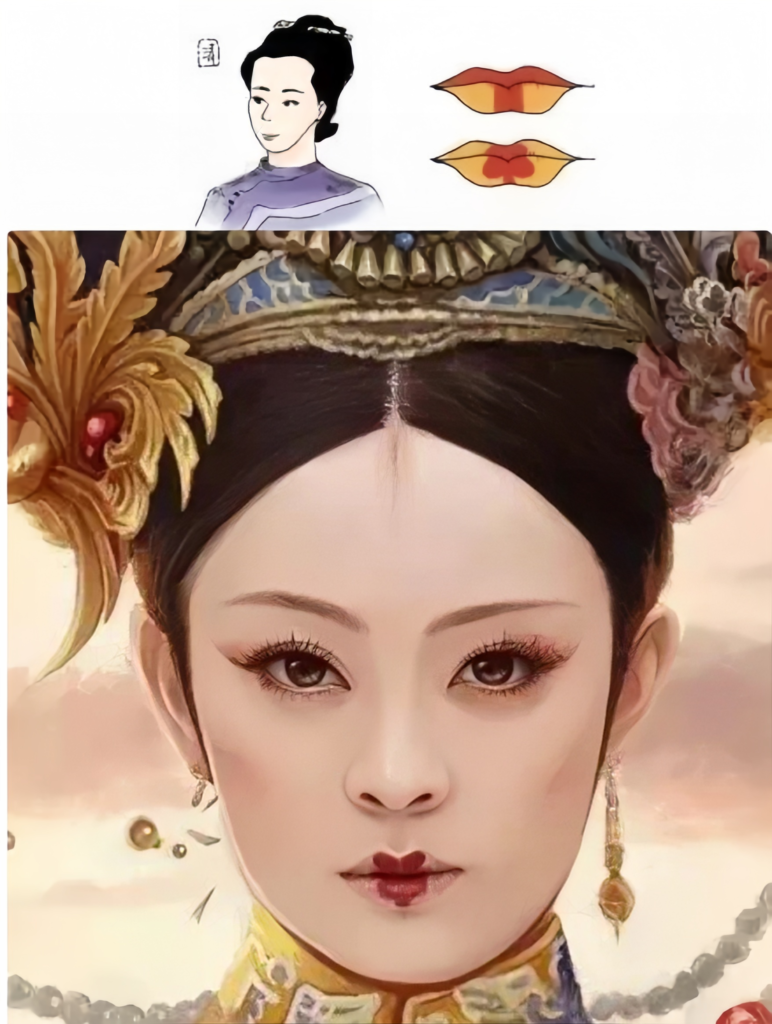
Lip styles were pretty uniform, though. Qing women went for bright red, dabbing just a tiny dot on the upper and lower lips.

Responses