Headwear in the Hanfu System: Jin and Ze (Cloth Headgear)

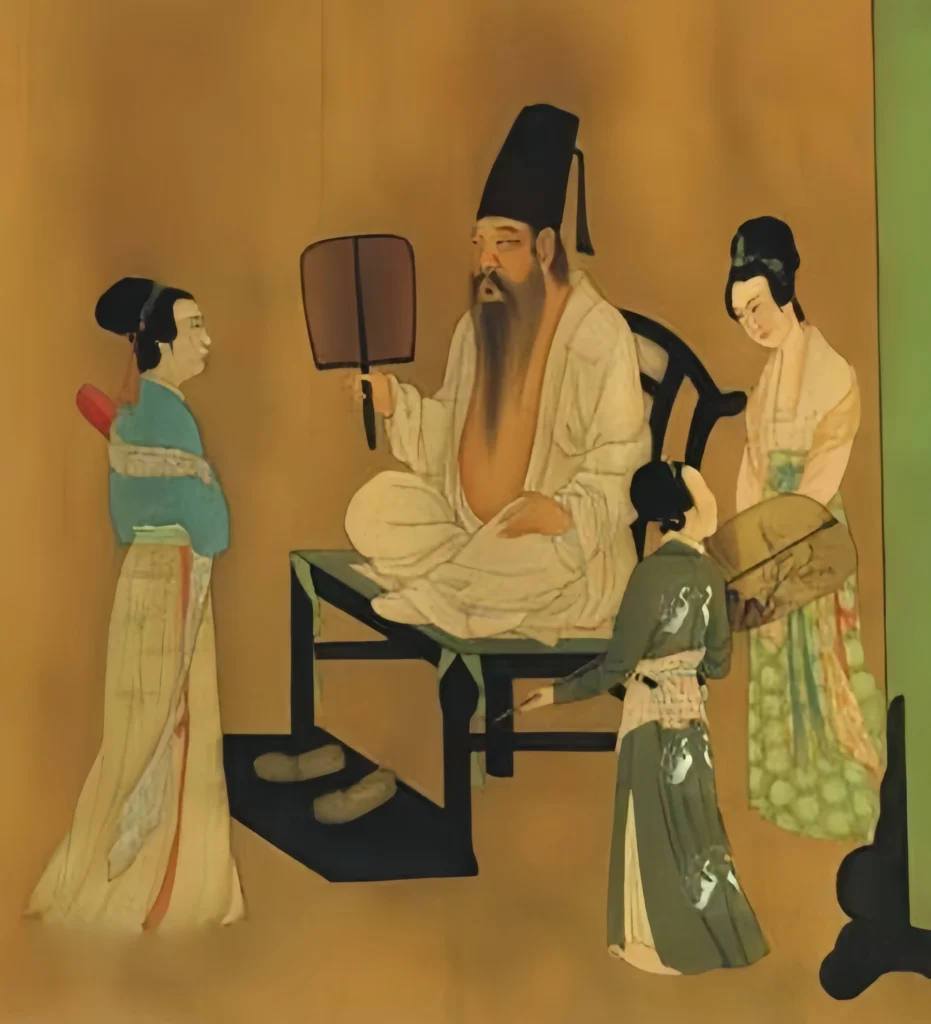
Jin and Ze Headwear
The tradition of tying headcloths dates back no later than the Shang and Zhou dynasties. Texts such as The Rites of Zhou and The Book of Rites record the coming-of-age ceremony for men. After the ceremony, different forms of headwear were chosen according to social status. Scholars wore crowns, while commoners wore headcloths, reflecting the earliest forms of traditional Chinese headwear.
As stated in Shiming · Explanation of Head Adornments:
“Jin means restraint. When a man reaches twenty, scholars wear crowns, and commoners wear headcloths.”
Because headcloths were primarily used by common people, the term “headcloth” was sometimes used to refer to commoners themselves. During the Spring and Autumn and Warring States periods, soldiers often wrapped their heads with blue cloth and were called cangtou (“blue-headed”). In The Book of Songs · Greater Odes · Yun Han, it is written: “Among the people of Zhou, none were left behind.” The Zhou favored black and referred to commoners as limin.
The term qianshou (“black-headed people”) also originated from headcloths. Qian means black. The Qin dynasty favored black, and black cloth headwraps were common among the populace, leading to the use of qianshou as a collective term. Shuowen Jiezi · Black Section records:
“Qian means dark. In Qin, the people were called qianshou, referring to black. In Zhou, they were called limin.”
The Origin of Headcloths: Kui
The origin of headcloths likely comes from kui (pronounced kui, third tone), a cloth headpiece tied around the forehead. The Book of Songs · Lesser Odes · Kui Bian states: “There is one wearing a kui bian.”
Interpretations of kui differ across generations. One view holds that kui refers to a leather cap; another suggests it describes the appearance of wearing such a cap. In The Etiquette of Ceremonies · Scholar’s Capping Rite, it is recorded: “A black cloth cap with an open back, fastened with blue cords.” Zheng Xuan of the Han dynasty explains that the opening refers to the cheek area described in “there is one wearing a kui bian.”
The black cloth cap had no hairpin; instead, the kui was worn around the hairline and tied at the back of the neck, secured with four corner ties to stabilize the cap. The fastening at the back was also derived from securing the kui. Those not yet capped wore a wrapped ze, which developed from the kui.
In Shiming · Explanation of Head Adornments, Liu Xi of the Han dynasty notes: “Guo means to cover broadly over the hair; in the state of Lu it was called kui.”
The Book of Later Han · Dress Regulations records: “In ancient times, there were crowns but no ze. When wearing a crown, a kui was added to the head to hold things in place.” From these records, it is clear that kui functioned as an early form of traditional Chinese headwear. Nobles wore it beneath crowns, while commoners used it directly to bind their hair, forming the foundation for ancient Chinese hairstyles.
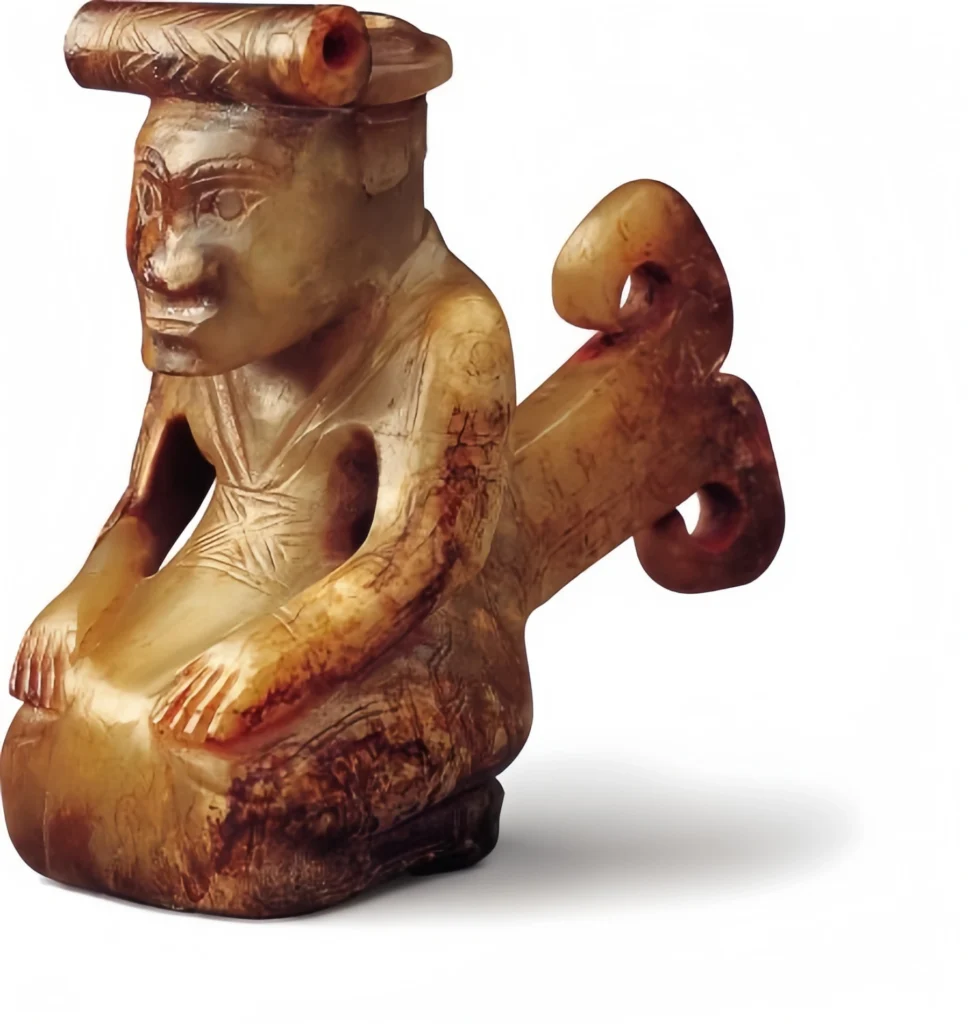
A jade figure with a wide-handled waist tool from the tomb of Fu Hao shows a figure wearing a kui.
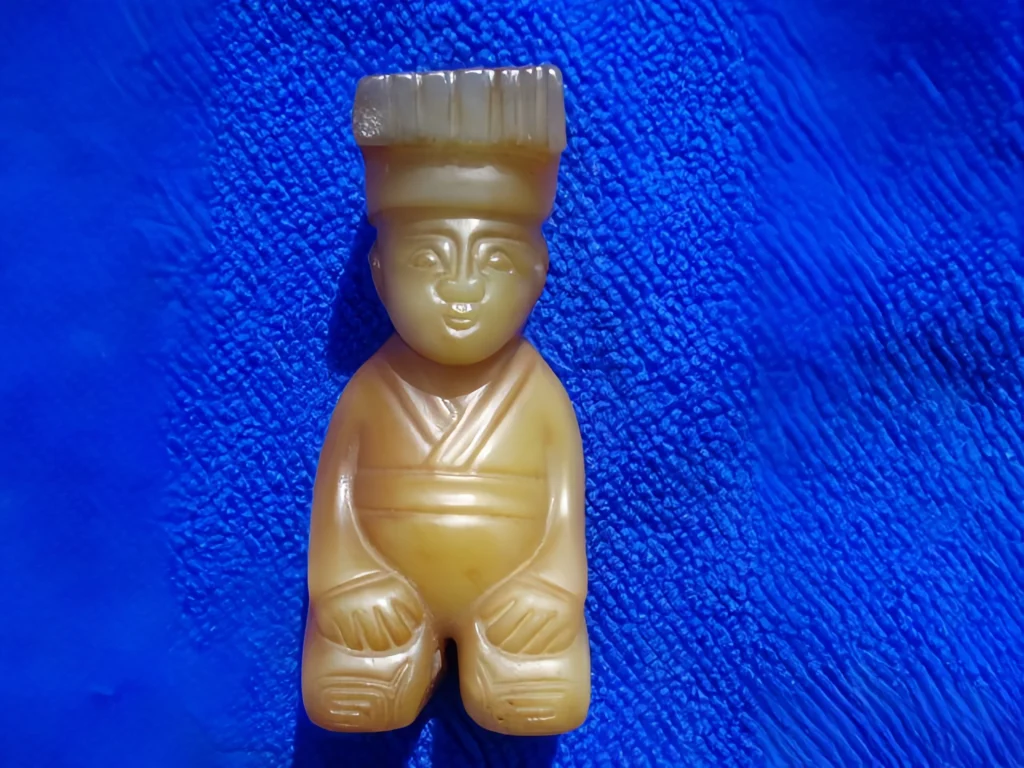
Another Shang-dynasty jade figure also depicts a kui, corresponding to what The Etiquette of Ceremonies refers to as a wrapped ze.
Jin and Ze from the Qin and Han Dynasties Onward
From the Qin and Han dynasties onward, commoners widely used jin and ze to wrap the head. In Jiu Jiu Pian, Shi You of the Han dynasty wrote: “Crowns, headcloths, hairpins, and fastenings.” Tang dynasty commentator Yan Shigu explained: “A ze is a cloth used to contain the hair and keep it orderly. It is usually worn under a crown, or sometimes worn alone.”
By the late Eastern Han, headcloths were no longer limited to commoners and became widely used by scholars and court officials. During the Wei and Jin periods, frequent warfare led the scholar-official class to grow weary of rigid Confucian norms. Influenced by Daoist thought, many pursued naturalness and personal freedom. This was reflected in dress and appearance: crowns were seen as cumbersome, while headcloths were light and convenient, gradually becoming customary in Hanfu hairstyles.
Headcloths Classified by Material (Han–Wei Period)
Ge Jin (Ramie Headcloth)(葛巾)
Made from ramie fabric. Zhang Hua of the Jin dynasty wrote in Bowu Zhi: “After the Han restoration, scholars all wore ramie headcloths.” Ge jin was also called the “wine-filtering cloth,” traditionally associated with Tao Yuanming. The Book of Song · Biography of Tao Qian records that when his wine was ready, he removed his ramie headcloth to strain the wine, then put it back on afterward.
Shu Jin(疎巾)
Made from coarse hemp fabric. Hemp cloth was rough in texture and commonly used by commoners. Lei Pian records: “Shu is a type of coarse hemp; in the Later Han, Mi Heng wore such a headcloth.”
Jian Jin(缣巾)
Made from undyed silk. The Book of Song · Treatise on Rites notes that generals such as Yuan Shao and Cui Jun wore jian jin. Silk could be raw or refined; raw silk was firm, allowing the headcloth to be folded into various shapes, complementing ancient Chinese hairstyles.
Lun Jin(纶巾)
Woven from thicker silk threads, soft and substantial in texture. Often used in winter and suitable for both men and women regardless of status. Frequently worn by scholars, it became an important element in Chinese men hairstyles.
Gu Pi Jin(毂皮巾)
Made from processed bark of the mulberry tree, essentially early bark paper. The Book of Later Han mentions “wrapping the head with mulberry bark,” referring to this type.
White Egret Jin(白鹭巾)
Made from white egret feathers, usually worn by refined scholars. Originating in the Jin period, it became popular in the Southern Dynasties and continued into the Tang and Song. Later versions were not limited to feathers and could also be made from white fabric, often paired with Hanfu hair accessories.
Headcloths Classified by Style
Fu Jin(幅巾)
Usually cut into a square shape, named after the standard width of cloth bolts. The typical method involved covering the head, wrapping the rear corners around the temples, and tying them at the back of the head. This style is a classic example of traditional Chinese headwear, often paired with Hanfu hairstyles to achieve a formal scholarly appearance.
Jiao Jin(角巾)
Commonly worn by scholars, named for its angular shape. Originating in the Eastern Han and popular during the Wei and Jin periods. According to The Book of Later Han · Biography of Guo Tai, Guo Linzong once folded one corner of his headcloth during rain, inspiring the style. Jiao Jin was widely adopted as part of ancient Chinese hairstyles, reflecting both status and personal taste.
Ze Jin(帻巾)
Designed to tightly contain the hair bun. Yang Xiong wrote in Fangyan: “Covering and tying is called ze jin.” Early Ze Jin were simple wraps. From Emperor Wen of Han onward, structural improvements were made, including the widened forehead band (yanti), a rear fastening (shou), raised side ends (ears), and a fully covered top (roof). Civil officials wore pointed Ze Jin (jie ze), while military officials wore flat-topped versions, known as ping ze. These forms influenced later Hanfu hairstyles and Hanfu hair accessories.
Qiao Tou(缲头)
Used mostly by commoners. Naming varied by region. The cloth was rolled into strips, wrapped from back to front, and tied at the forehead, with the topknot either exposed or covered. Qiao Tou illustrates the widespread use of Chinese men hairstyles and traditional Chinese headwear among non-elite groups.
Futou (Headwrap)
Also called putou, futou evolved from the Han-dynasty square headcloth. Originally made from silk, it was wrapped from front to back, covering the hair bun and tied at the back of the head. Emperor Wu of Northern Zhou modified the design by cutting four extensions, making it accessible to all social classes. Early futou covered only the bun. By the Sui and Tang periods, the forehead was also covered, requiring chin straps to prevent slipping.
Because early futou were soft, inner supports called jinzi were added beneath them. These supports were made from paulownia wood, bamboo strips, rattan, or reeds. Different shapes of jinzi determined the final form of the futou. Tang-dynasty styles included flat-top, royal family styles, and official patterns. Soft-wrapped futou were later replaced by hard-wrapped versions with fixed frames, allowing them to be worn without tying. From the Song dynasty onward, futou were used for both daily and official dress, frequently integrated into Hanfu hairstyles.
Ming Dynasty and Later Developments
The gauze hat worn by Ming dynasty officials, commonly known as the Wusha Hat, evolved from the earlier futou. Constructed with an internal frame made of iron wire or bamboo strips, reinforced with stiff paper, and covered with black gauze, the hat front sat lower while the back was higher, with gauze wings inserted at each side.
Tangjin (唐巾)
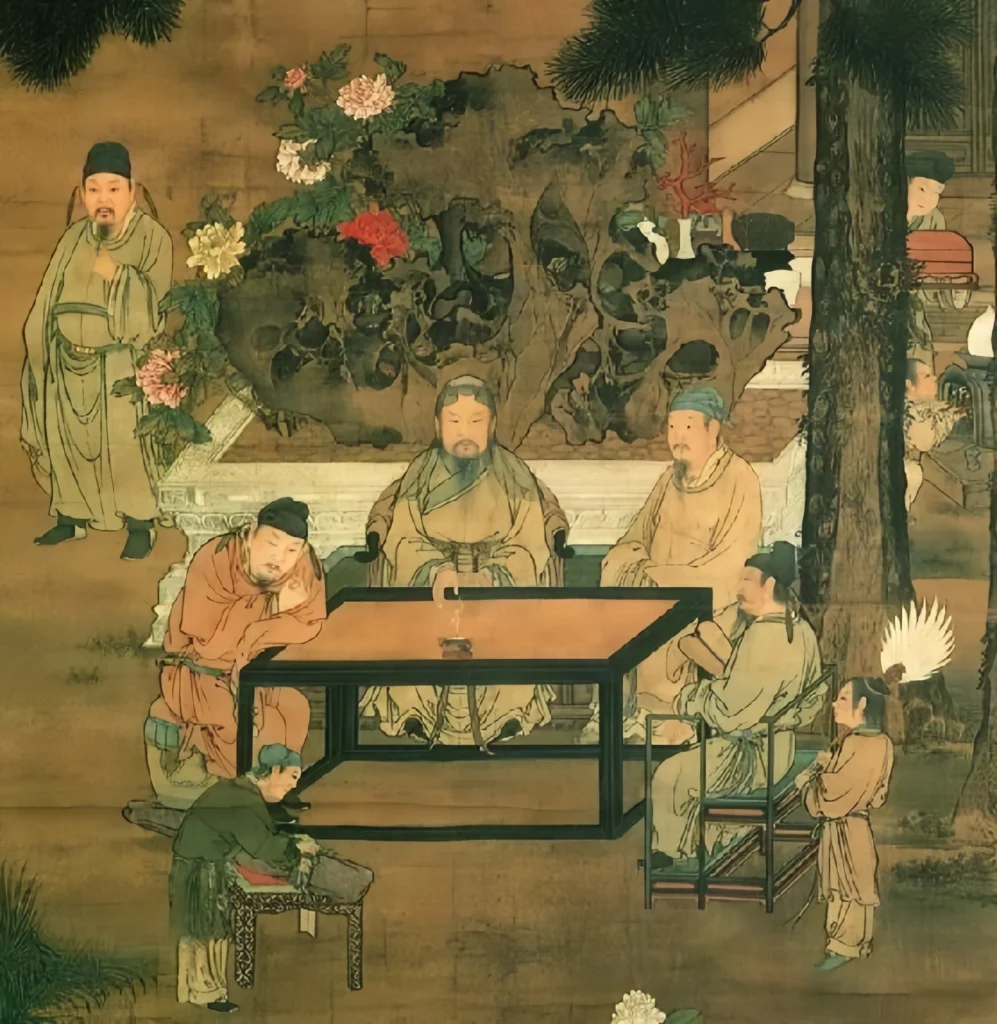
Usually made of black gauze. Its shape closely resembled the Tang dynasty futou, which is how it received its name. Commonly worn as everyday attire by scholars, officials also favored it during leisure time. According to The History of Yuan – Regulations on Attire:
“Tangjin is made like a futou, but with its corners allowed to droop.”
Zhijin (直巾)
A type of tall headscarf made from lacquered gauze, standing upright on the head. Seen in The Night Revels of Han Xizai, it reflects early ancient Chinese hairstyles incorporated into traditional Chinese headwear.
Jiedaijin (结带巾)
Introduced during the Song dynasty. Before its introduction, scholars wrapped headscarves with long ties hanging down the back. Emperor Huizong of Song issued new regulations prohibiting trailing ties. Scholars responded by widening the ties, knotting them, and letting them drape toward the front, influencing Hanfu hairstyles.
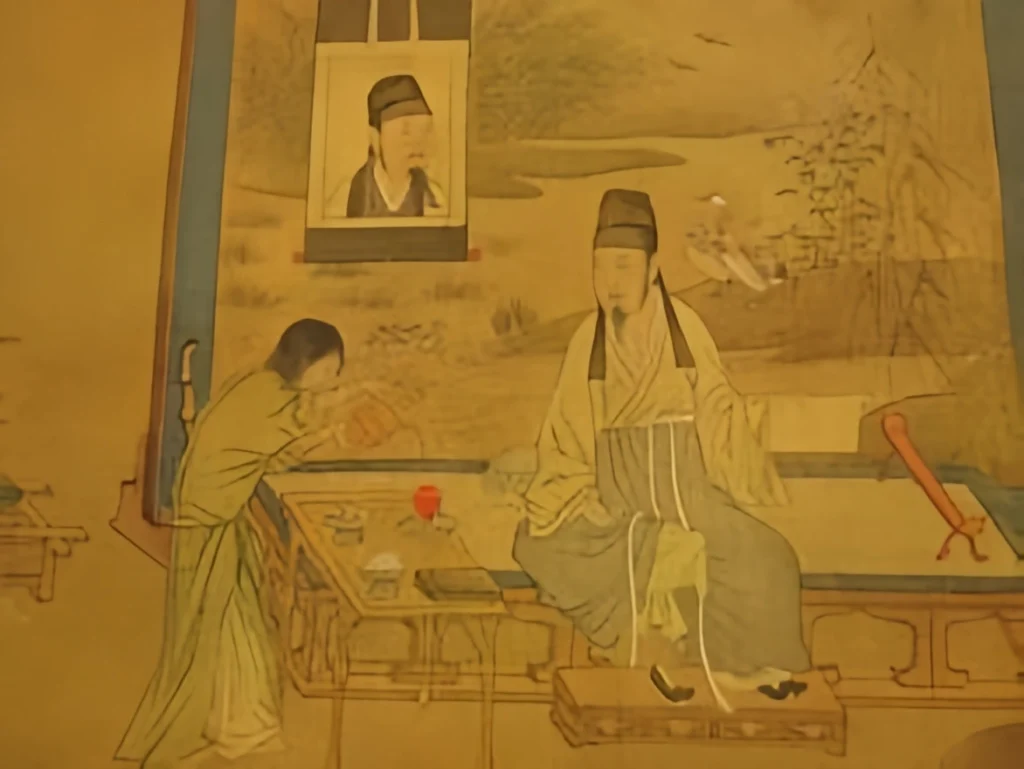
Xiaojin (小巾)
A small headcloth, just large enough to cover a hair bun. When worn, a small piece of gauze was placed over the bun and secured at the base with cloth ties, enhancing the refinement of Chinese men hairstyles.
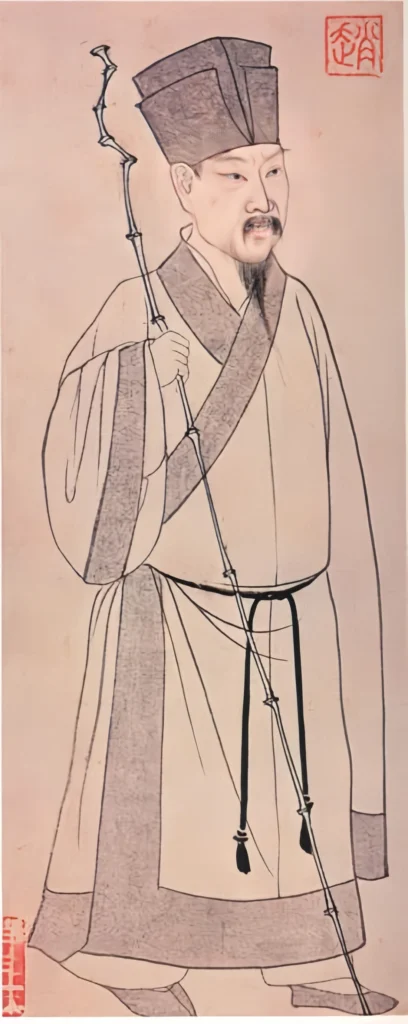
Dongpo Jin (东坡巾 / Dongpo Cap / Zizhan Style)
Traditionally associated with Su Dongpo, who wore it frequently before his exile. Made in two layers: the inner layer formed the main body and was taller, the outer layer slightly shorter, with a central notch called the brim. It became a standard accessory for literati Hanfu hairstyles.
Xiantao Jin (仙桃巾)
Often made of lacquered gauze, worn by recluses and Daoist practitioners during the Song dynasty. Its rounded yet pointed top resembled a celestial peach, inspiring its name. Frequently paired with minimalistic Hanfu hair accessories.
Peak Development in Ming Dynasty
Over thirty to forty different headscarf styles emerged. Scholars and literati favored Fangjin, Rujin, Yunjin, Gold-Thread Jin, Yangming Jin, Chengzi Jin, Ziyang Jin, Four-Opening Jin, Piaopiao Jin, Lingyun Jin, Yutai Jin, and Jinshi Jin. Commoners wore Four-Tie Jin, Piyun Jin, and Zaozi Jin. Officials, musicians, monks, Daoists, and recluses each had specialized forms.
Wangjin (网巾)
A hair-binding headpiece used by adult men. Woven from black silk cord, horsehair, or palm fiber, featuring a metal ring with cords. The top had a large circular opening for pulling the hair bun through, with cords tightened above and below. Hanfu hairstyles were often maintained with Wangjin, and higher-status individuals would add outer headpieces when going out.
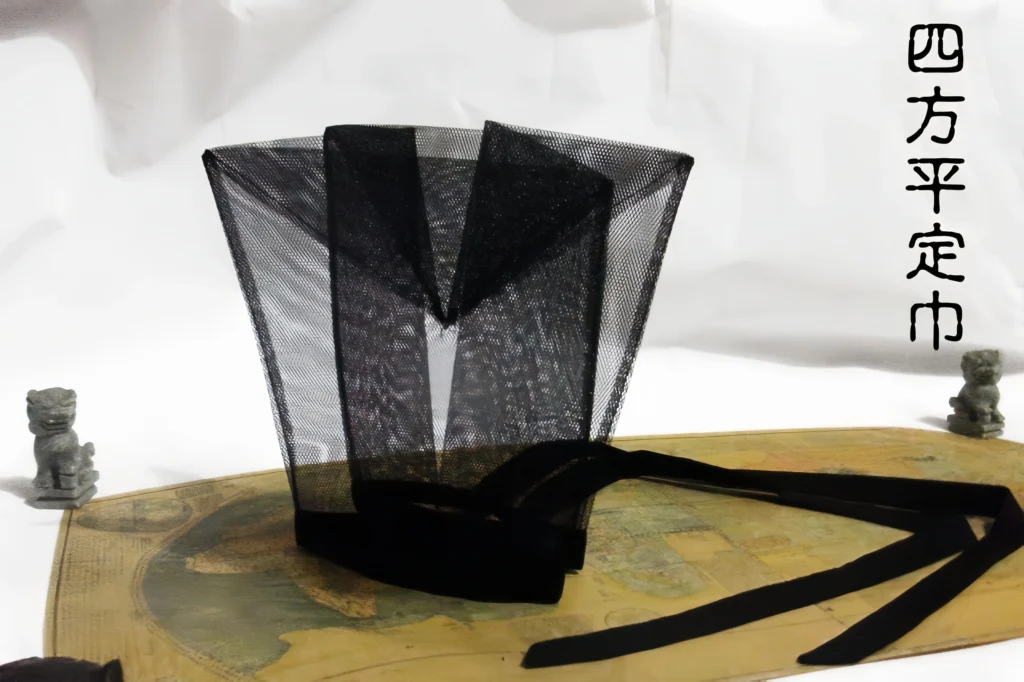
Fangjin (方巾)
A soft cap for Ming scholars, foldable, forming perfect right angles when laid flat. Also known as Four-Corner Fangjin or Square Peace Jin, widely used in Hanfu hairstyles.
Rujin (儒巾)
Square headscarf worn by students, front higher than back, typically two-layered with black lacquered rattan silk or coarse linen inside. Part of the canonical ancient Chinese hairstyles.
Piaopiao Jin (飘飘巾)
Worn by Ming officials and gentry. Front square, sides tapered slightly, roof-like, with long fabric panels fluttering as the wearer walked, blending Hanfu hairstyles with flowing aesthetics.
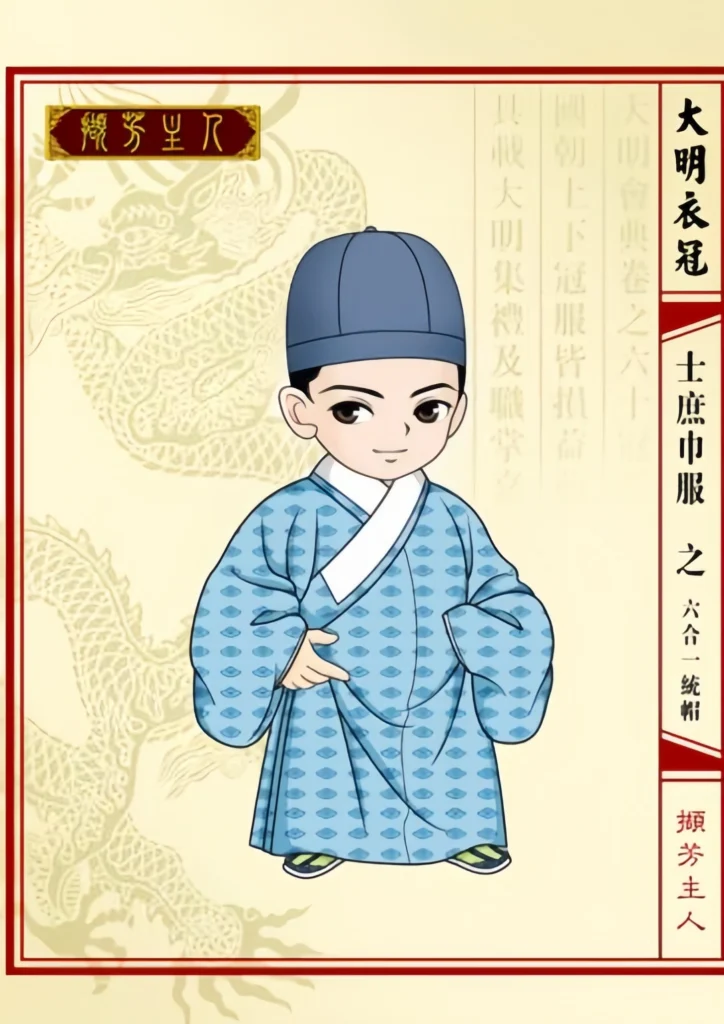
Liuhe Jin (六合巾)
Small round-topped cap made from six stitched fabric panels with a wide brim. Symbolized heaven, earth, and four directions, representing the unity of the world. Initially for scholars, later popular among commoners. Differences from Qing melon caps include height, as Qing men wore braided queues.
On Hats (Mao) and Hanfu
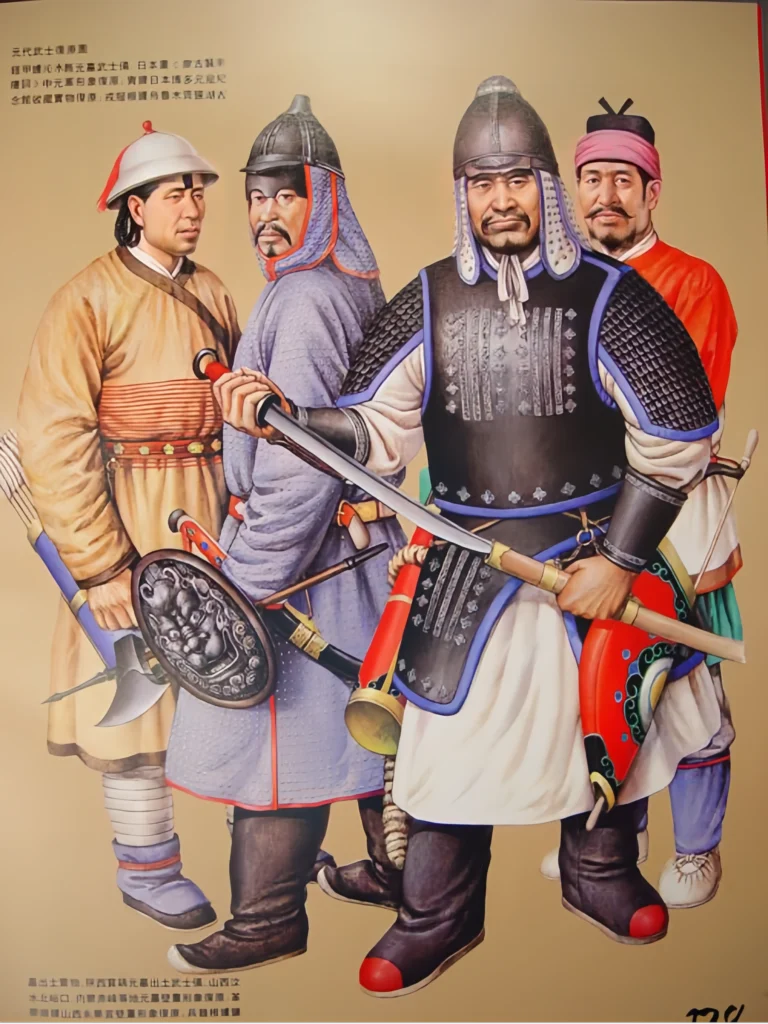
Jia-style hats were not part of traditional Chinese headwear but originated as Hu (non-Han) garments. Until the Qin and Han dynasties, hats were mainly worn by northern ethnic groups; Han people generally used them only to keep children warm. Xu Shen’s Shuowen Jiezi states:
“Hats are head coverings for children and barbarians.”
After Emperor Ling of Eastern Han adopted foreign customs, Hu-style hats gradually spread to the Central Plains, peaking in the Tang dynasty. However, these hats were originally minority clothing. Although Han people adopted them, their non-Han origin remained.
While many Hanfu headpieces resemble hats in shape, they are still categorized as headscarves. Since hats were not originally created by Han ancestors, they are excluded from the Hanfu hairstyles and headwear system.
Love Headwear in the Hanfu System?
Check our Hanfu guide for authentic tips!


Responses