Ming Empress Ritual Robes — The Ultimate Guide

Ming Empress Ritual Robes
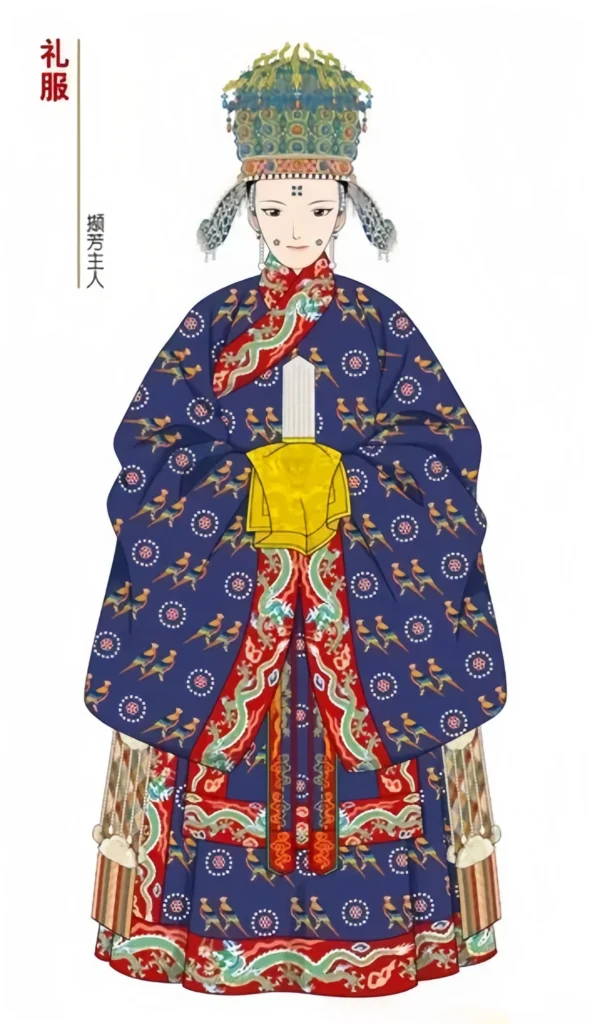
Ming empress ritual robes were the formal garments worn by Ming Dynasty empresses during major ceremonies such as investitures, ancestral rites, and court assemblies. In the first year of the Hongwu reign, the court referenced earlier dynasties to establish the empress’s official Ming empress ritual robes, choosing the Hui Robe and the Nine-Dragon Four-Phoenix Crown as the main components. In the 24th year of Hongwu, the crown-and-robe system was revised. The empress’s Ming empress ritual robes were then set as the Nine-Dragon Four-Phoenix Crown, the Di Robe, and the Fu-collar undershirt, a system that continued afterward.
Nine-Dragon Four-Phoenix Crown
This Ming phoenix crown served as the empress’s ritual headwear. It was designed in early Ming based on the Song Dynasty empresses’ dragon-and-phoenix hair ornaments. Although the Ming version used fewer decorative pieces, it was still very ornate. The Ming Hui Dian records the detailed structure of the Ming empress crown (Yongle Year 3 regulations):
“Nine-dragon four-phoenix crown, made with a bamboo-silk frame coated in black lacquer, covered in kingfisher feather gauze. It is decorated with nine kingfisher dragons and four gold phoenixes. The central dragon holds a large pearl in its mouth, with a kingfisher canopy on top and a pearl tassel beneath. The remaining dragons and phoenixes also hold pearl drops.
There are forty kingfisher-and-pearl cloud motifs; twelve clusters of large pearl flowers (all peonies, each with two blossoms, two pearl centers, and nine kingfisher leaves); small pearl flowers in the same number (spray-branch style, each branch with one full bloom, one half-bloom, and five kingfisher leaves); three pairs of earflaps on both sides; and a kingfisher rim set with twelve pearl-and-gem ornaments and twelve kingfisher inlays; with a gold inner rim beneath.”
The crown body was made from lacquered bamboo-silk, covered with kingfisher feather gauze. Although early Ming records describe nine kingfisher dragons and four gold phoenixes, surviving portraits and excavated pieces show all dragons made in gold and phoenixes decorated with kingfisher feathers. A large central dragon held a major pearl, topped with a kingfisher canopy and a pearl tassel.
Other dragons and phoenixes carried pearl or gemstone drops. The upper section was decorated with forty kingfisher clouds inlaid with pearls. The lower section held twelve large pearl peony flowers, each with two blossoms and kingfisher leaves, and twelve spray-style small pearl flowers above them. The rim was edged with kingfisher inlays and twelve pearl-and-gem ornaments. The Ming phoenix crown included three pairs of bo bin (earflaps) at the back, each decorated with gold dragons, kingfisher clouds, and pearls, with pearl tassels hanging at the lower edge.
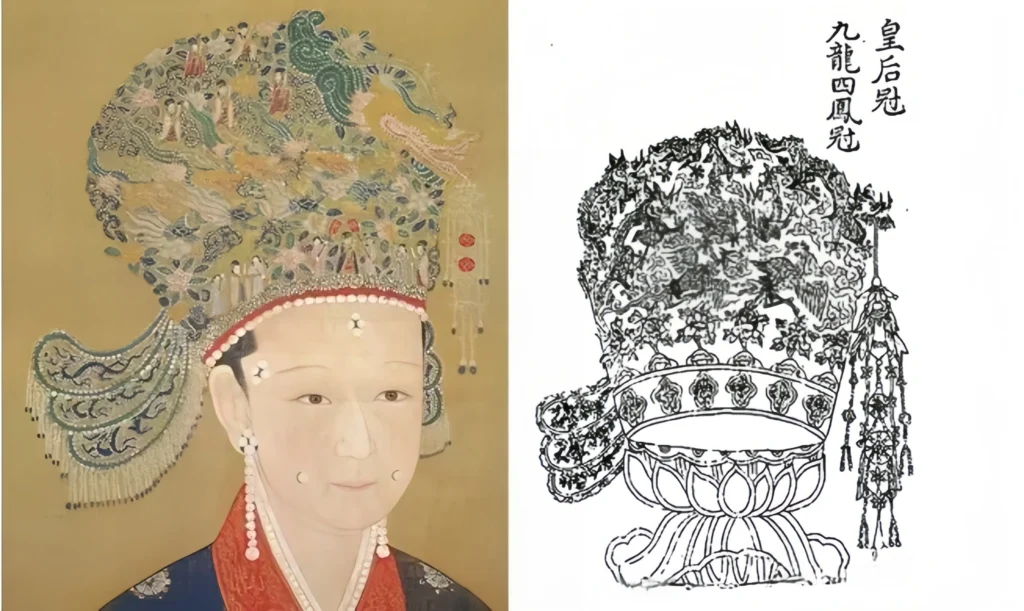
Right: Early Ming Nine-Dragon Four-Phoenix Crown (Ming Ji Li illustration)
Two Ming empress crowns were excavated from the Dingling tomb: the Nine-Dragon Nine-Phoenix Crown of Empress Xiaoduanxian, and the Twelve-Dragon Nine-Phoenix Crown of Empress Xiaojing. Their structures differ slightly from textual descriptions but closely match depictions in empress portraits. The Ming Veritable Records also note a crown made for the Empress Dowager in Wanli Year 34, describing a “twelve-dragon twelve-phoenix crown with kingfisher work, gold filigree, gemstones, and pearls,” similar to surviving artifacts.
Empress Xiaoduanxian’s Ming phoenix crown measures 48.5 cm high, with a 23.7 cm outer diameter. The top layer features nine gold dragons, the middle layer eight kingfisher phoenixes, and the lower layer nine clusters of jewel-set pearl flowers, bordered by pearls, with an additional phoenix on the back. All dragons and phoenixes hold pearl-and-gem drops. The crown contains 44 kingfisher cloud pieces, over 4400 pearls, and 115 gemstones, weighing 2320 grams.
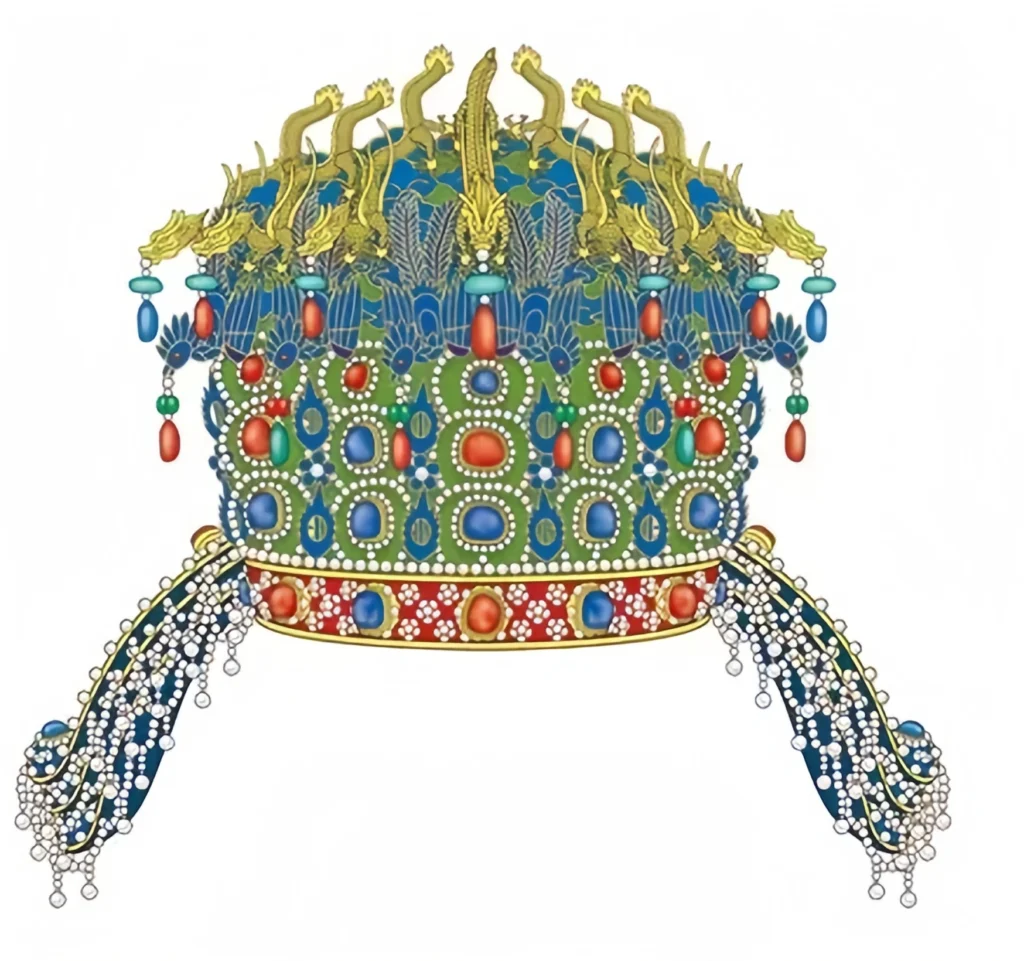
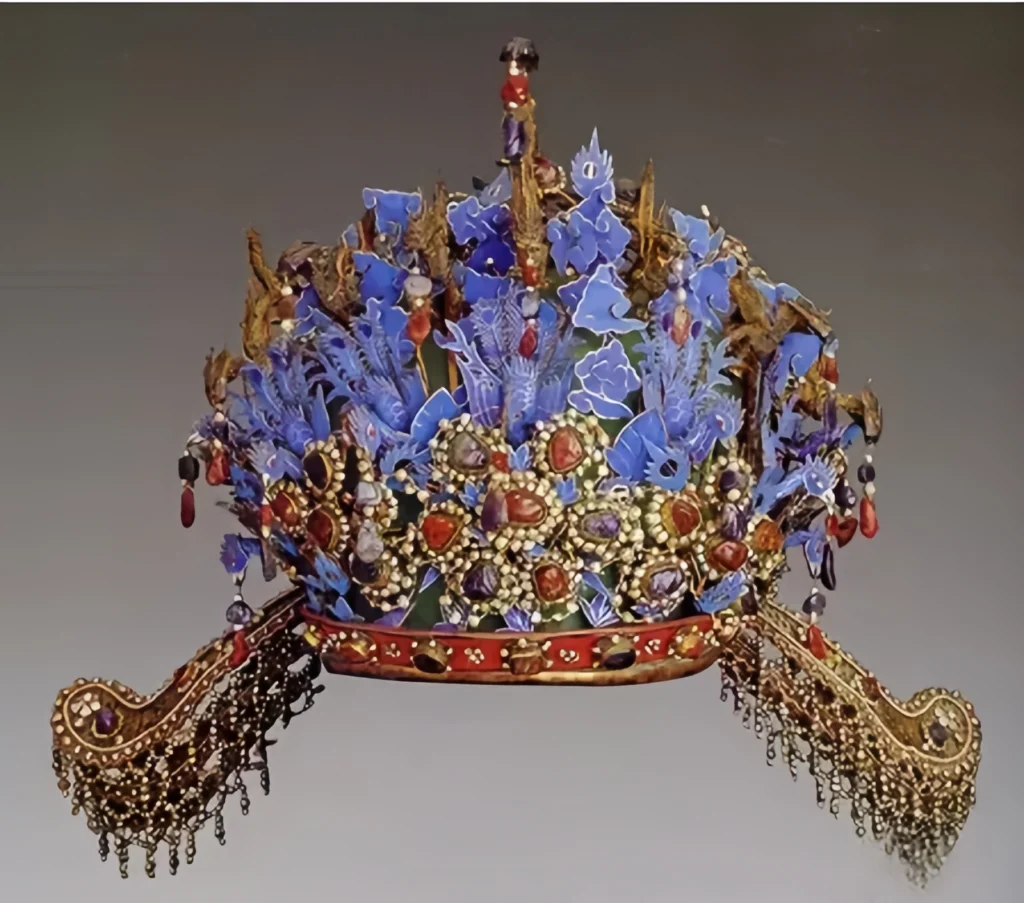
Face Ornaments, Pearl Earrings, and Black Gauze Forehead Band
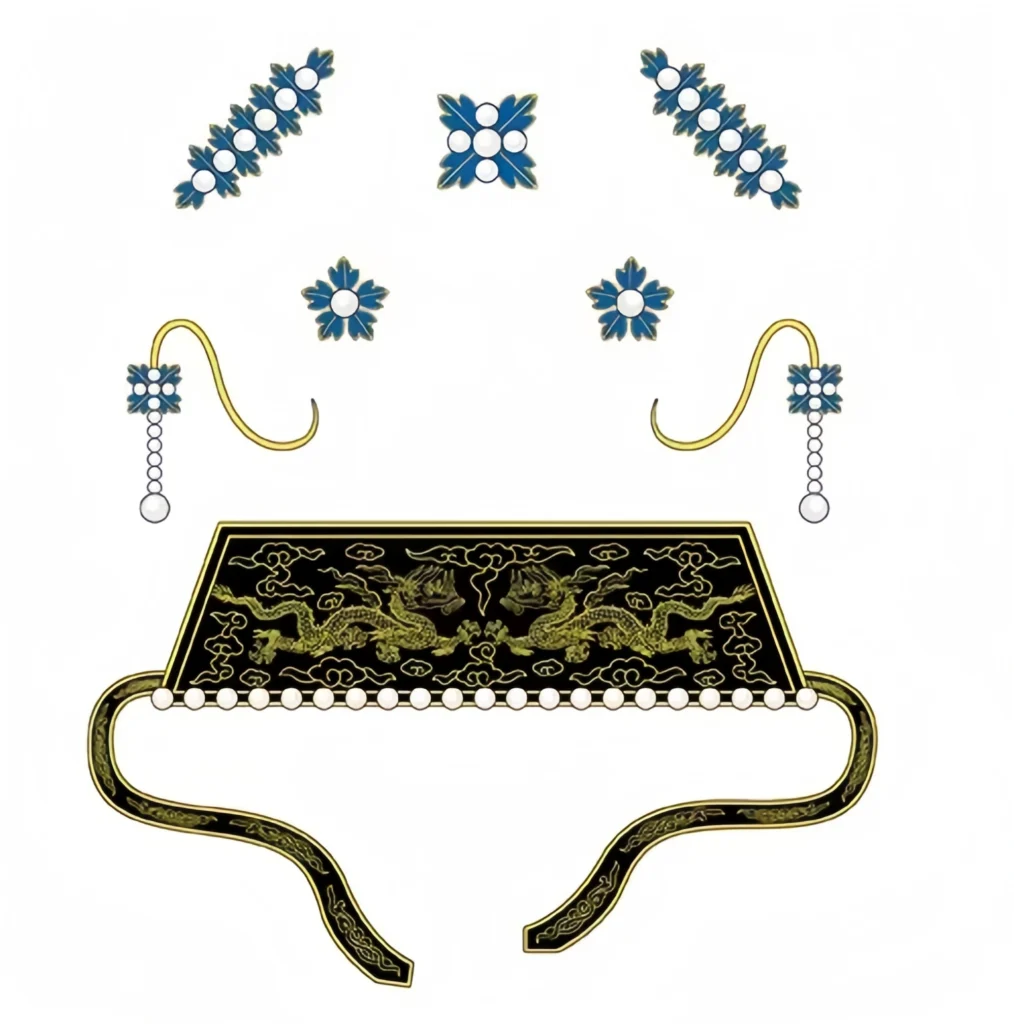
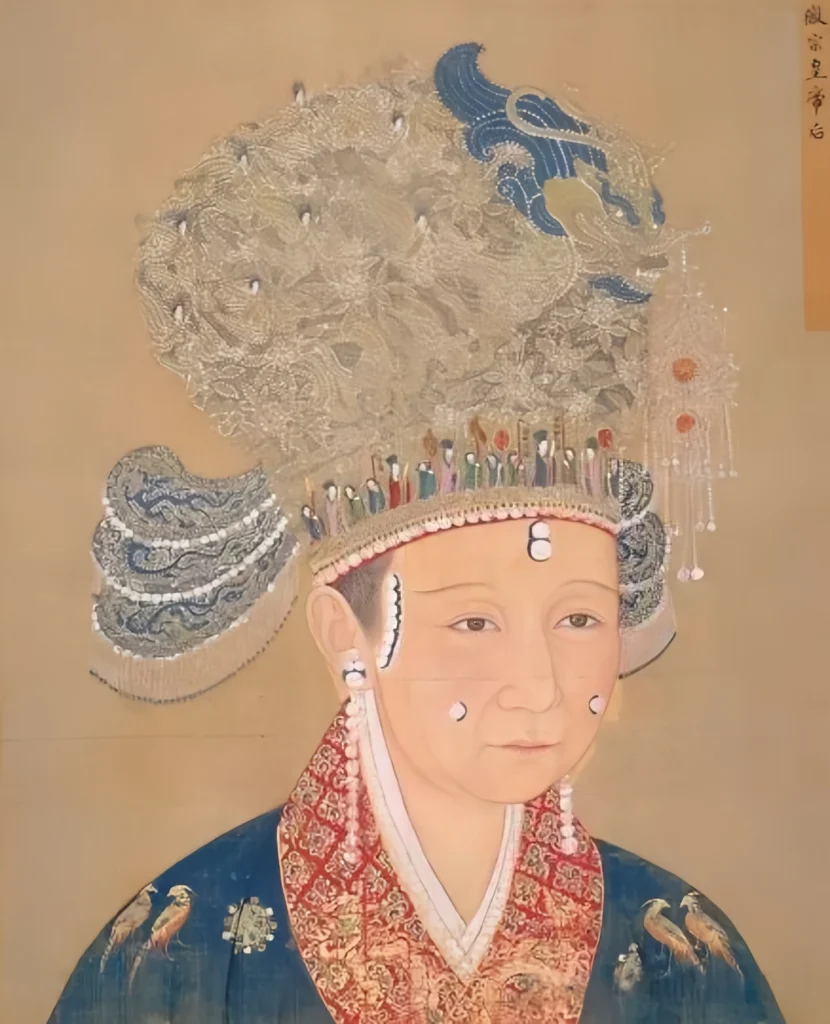
Ming Hui Dian states: “Five pearl-and-kingfisher face ornaments; one pair of pearl-strand earrings; one black gauze forehead band with painted gold dragon pattern and twenty-one pearls.” The five face ornaments were placed on the forehead, cheeks, and eyebrow corners, based on earlier Song Dynasty practices. Only the portrait of Empress Xiaoke appears to show a forehead pearl; other early Ming empress portraits show no clear evidence.
The pearl-strand earrings were long pendants made of gold wire and pearls, ending with a large pearl. Variants are recorded in the Wanli Empress Dowager’s inventory.
The black gauze forehead band (mo’e) was rectangular, decorated with gold dragon clouds and edged with pearls. It appears in empress portraits as the visible pearl row beneath the Ming empress crown.
Di Robe
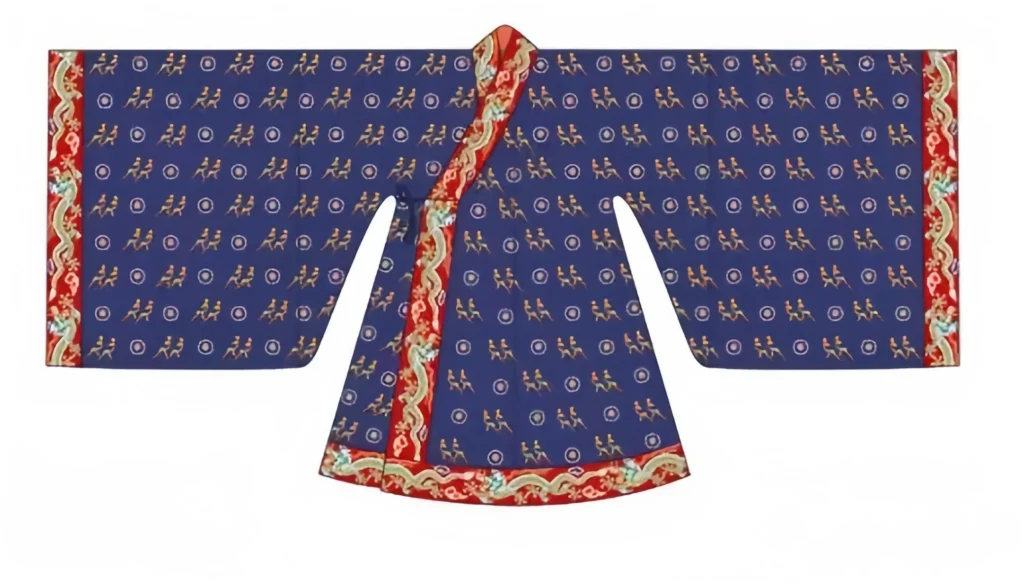
This deep blue Ming hanfu robe was made of zhusi, gauze, or silk damask. It had a straight collar, large sleeves, and right-side closing, with red trim and gold-woven dragon-and-cloud patterns. The Ming hanfu robe featured twelve rows of di-bird motifs, each row containing twelve pairs (144 total), though overlapping panels may lead to 148 as recorded. The front and back panels mirror each other with opposite orientations, and the small circular floral motifs filled the spaces between the di-birds. The robe reached the feet and was worn without a separate skirt.
Undershirt, Apron Panel, Great Belt, and Secondary Belt
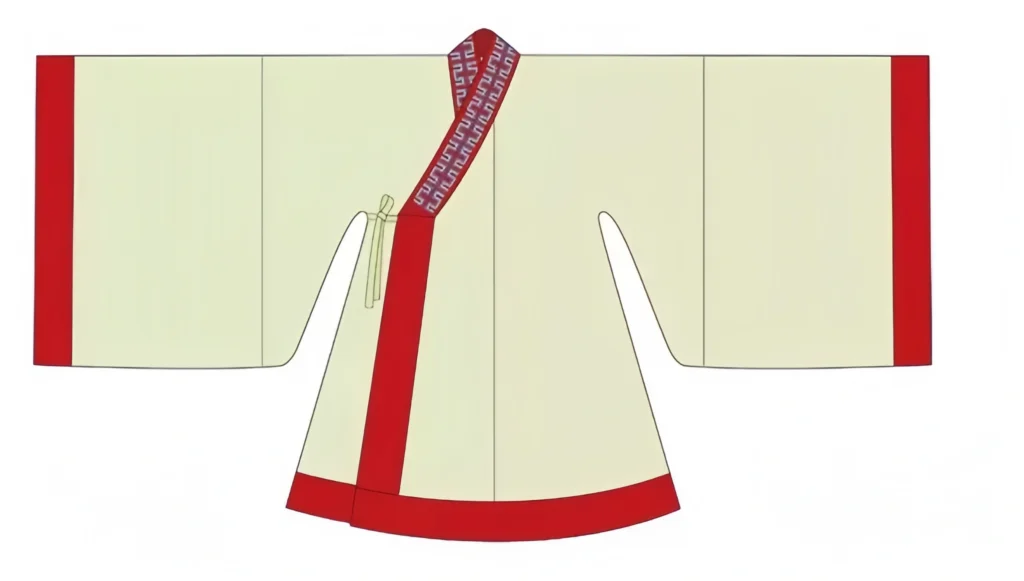
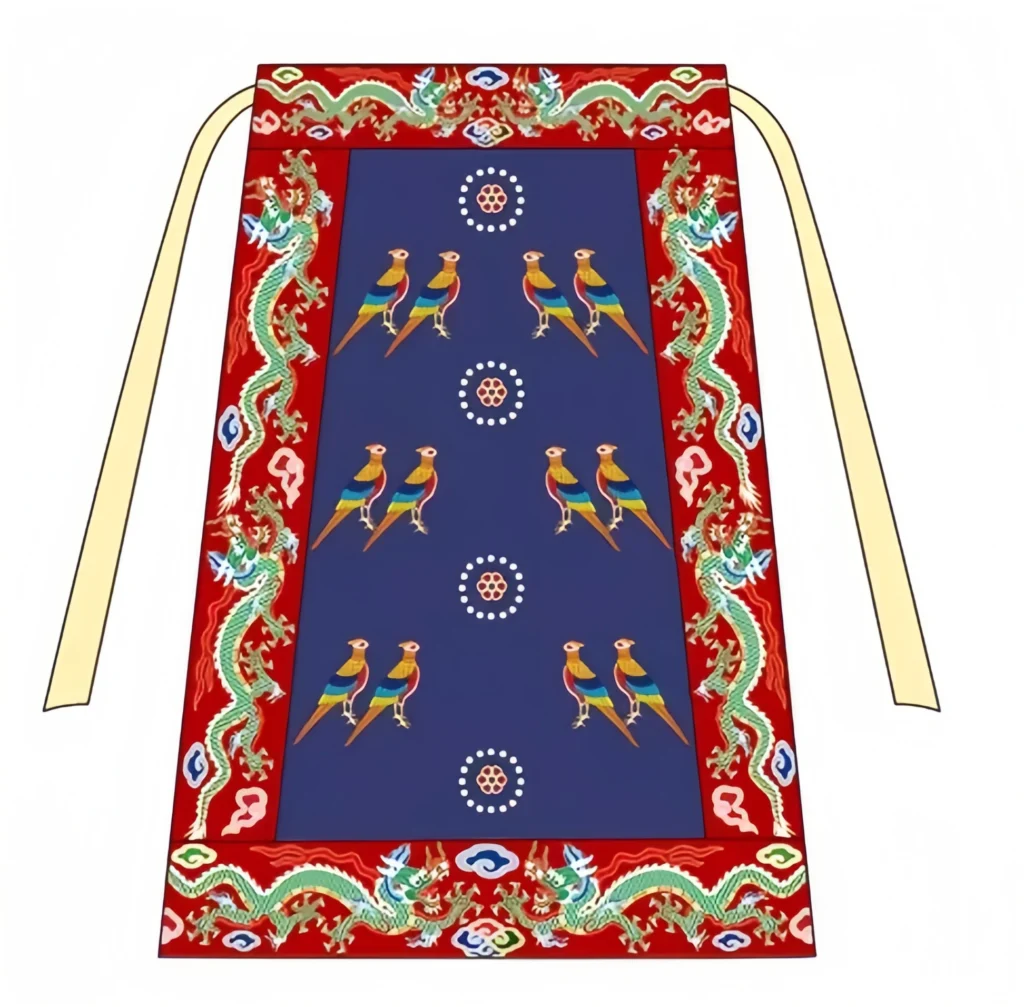
The undershirt was made of pale jade-colored gauze with red trim and thirteen fu-patterns on the collar. The apron panel was deep blue silk, decorated with three rows of di-birds (two pairs per row) and small circular flowers. The edges were trimmed in blue-red borders with woven dragon-and-cloud patterns.
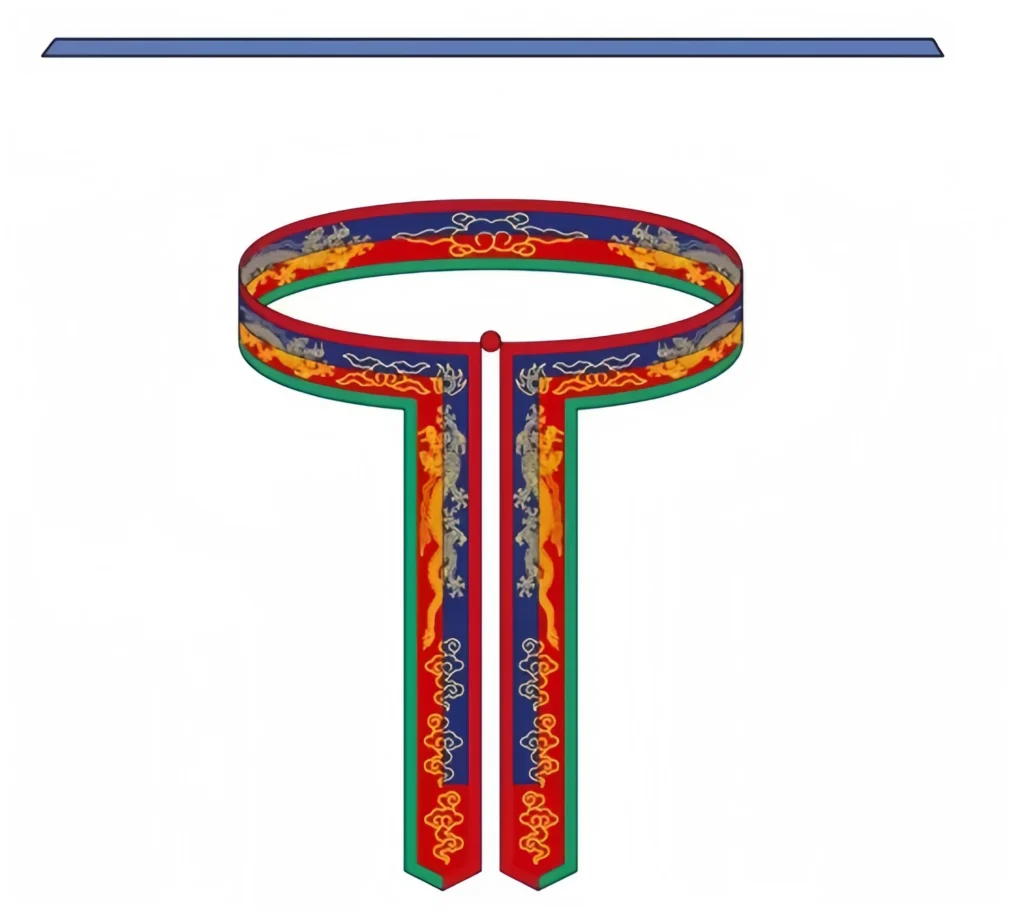
The great belt was half blue, half red, with gold-woven dragon motifs. Its long ends were pointed, trimmed in red above and green below. The waist section fastened with buttons. The secondary belt, likely made of blue silk damask, may have been used to suspend the jade pendants or other accessories beneath the great belt.
Jade Pendants, Small Ribbons, Great Ribbons, and Jade Gui
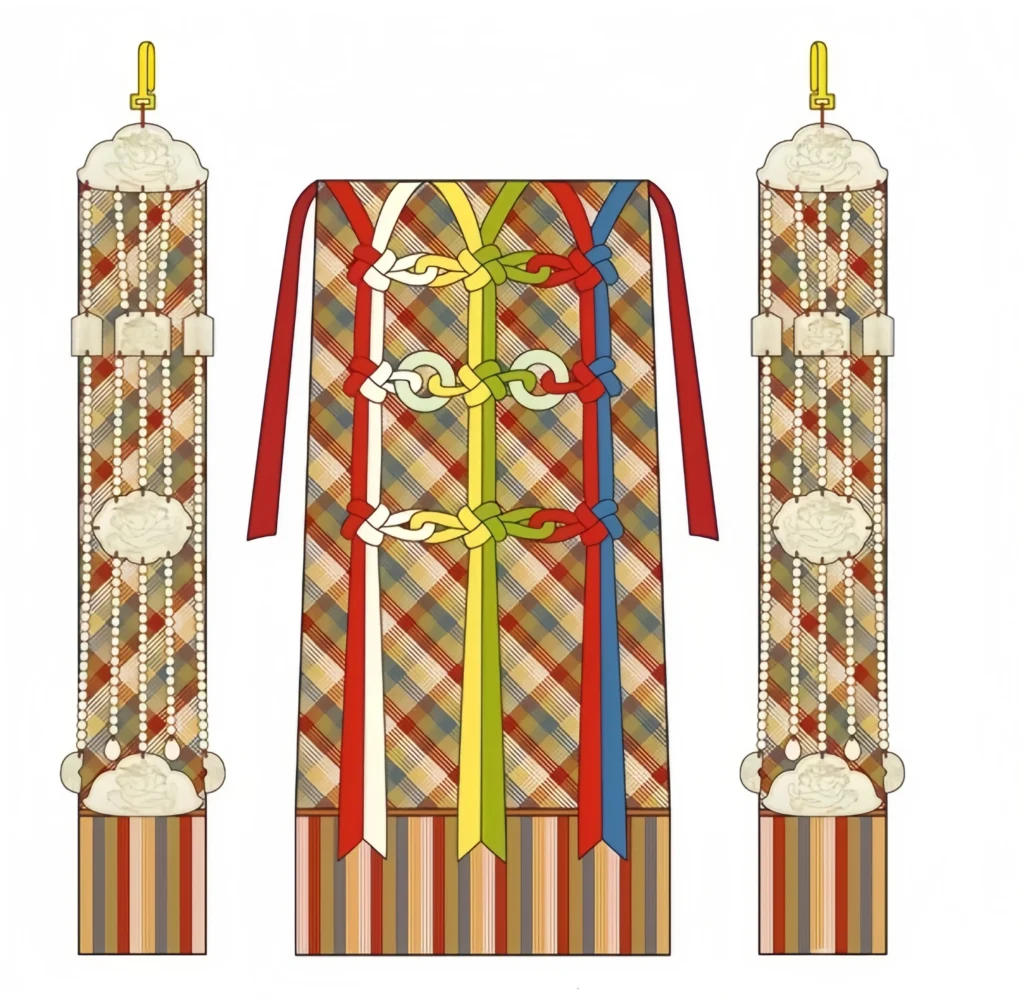
The jade pendants matched the emperor’s set: two groups each containing a heng, yu, ju, jade flower, two huang, fang-shaped ornament, and paired jade drops, connected by five strands of silk-threaded beads, all decorated with gold outlines and cloud or dragon motifs. A pair of small ribbons hung beneath them. The great ribbon was rectangular, woven in five colors, with six matching hanging bands used to suspend jade rings.
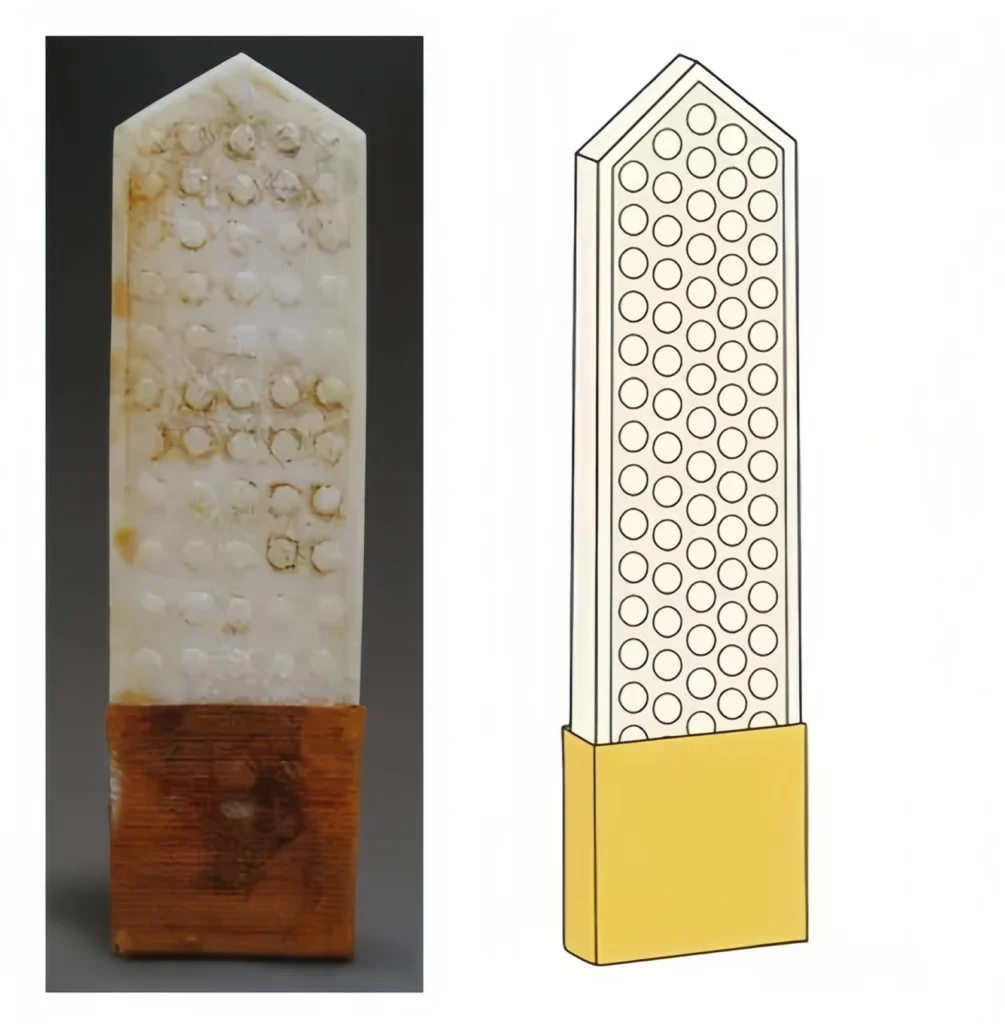
The jade gui was 7 inches long (Zhou measurement), symbolizing grain sprouting, and stored in a yellow patterned silk pouch.
Jade Belt
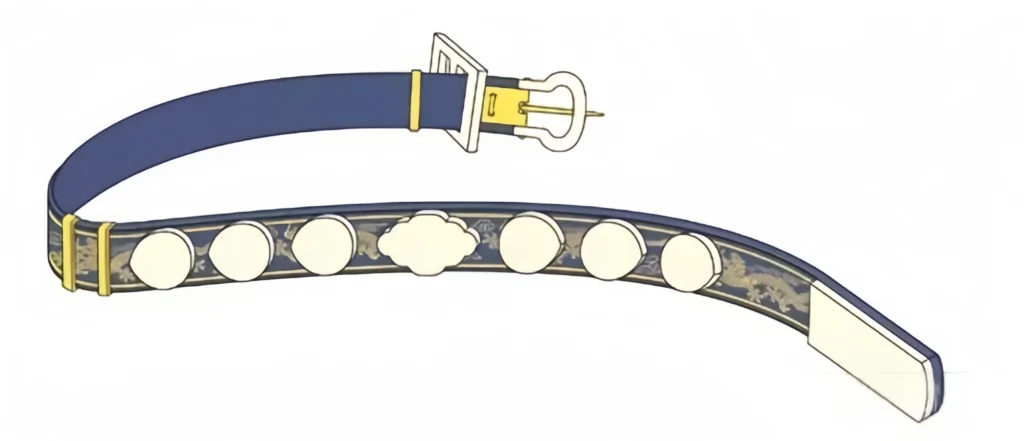
Ming Hui Dian notes: “Jade belt with blue damask covering and gold-painted cloud-dragon motifs; ten jade ornaments and four gold ornaments.” Based on illustrations and excavated pieces, the belt included a jade buckle, jade tailpiece, several circular jade plaques, oval plaques, and gold fittings. Two nearly identical belts were found in Dingling, decorated with gold-painted dragons and twelve white-jade plaques.
Socks and Xi Shoes
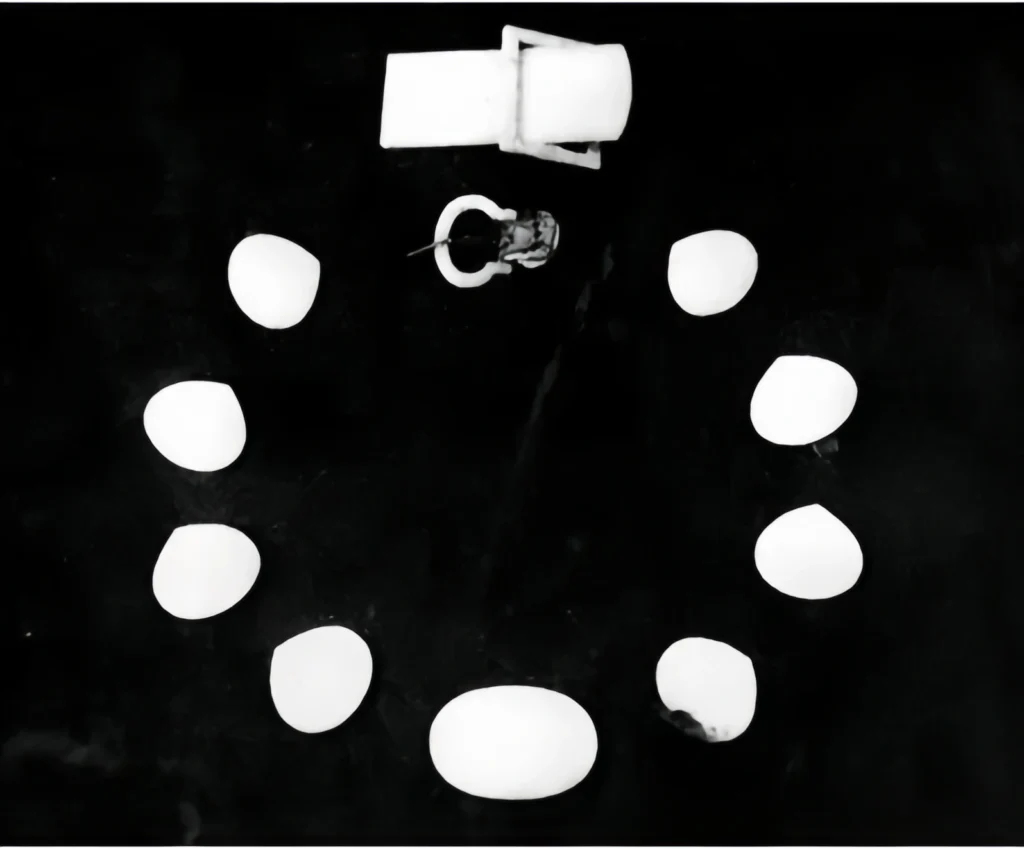
Socks were made of blue silk gauze with ties. Xi shoes used blue damask with gold-painted dragon clouds and black edging. The upturned toe ended in a ruyi-shaped tip decorated with pearls. The Wanli Empress Dowager’s inventory records: “Blue zhusi xi shoes with gold-painted dragon clouds and pearl drops.”
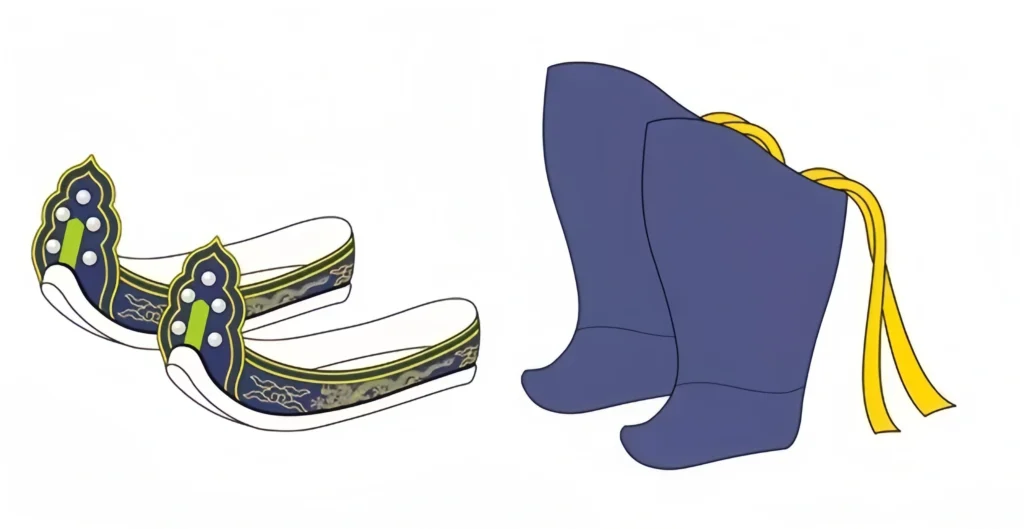
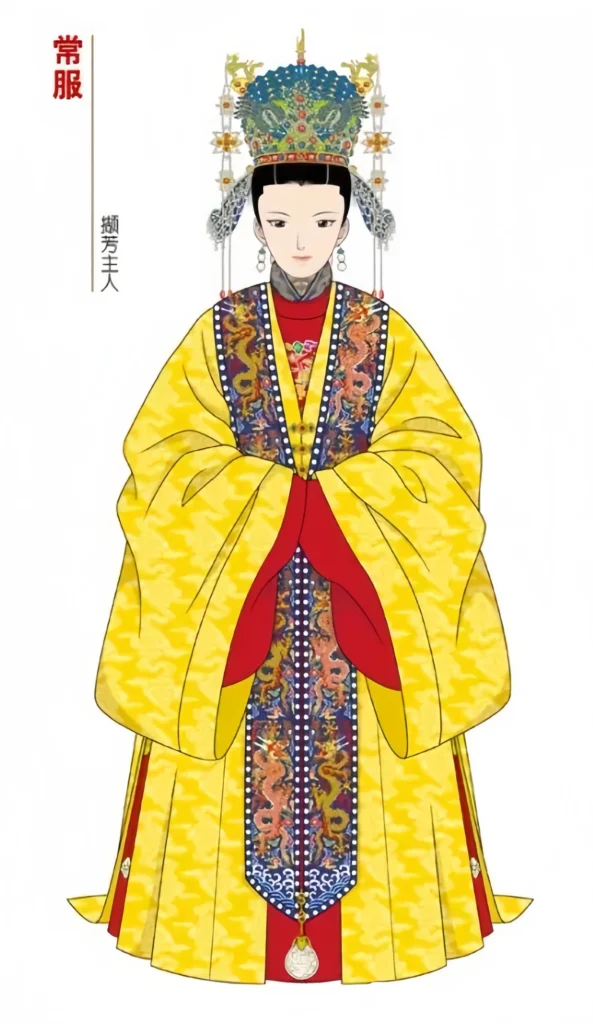
Wearing the Full Ritual Set The complete Ming queen dress included: black gauze forehead band and Ming phoenix crown; face ornaments and earrings; fu-collar undershirt and Ming hanfu robe; secondary belt, great belt, and jade belt; apron panel in the front; great ribbon in the back; jade pendants on both sides; socks and xi shoes; and the jade gui held in hand.
In existing portraits—such as those of Empress Xiaoding (Empress Dowager Cisheng) and Empress Xiaoduanxian—an additional red cloud-dragon xiapei is worn over the Ming queen dress. Although Ming Shi Lu records xiapei as part of regular dress rather than ritual attire, two pearl-set xiapei were excavated from Dingling, suggesting late-Ming variations in practice. Their structure matches Ming Shi Lu descriptions with 412 pearl-set floral ornaments.
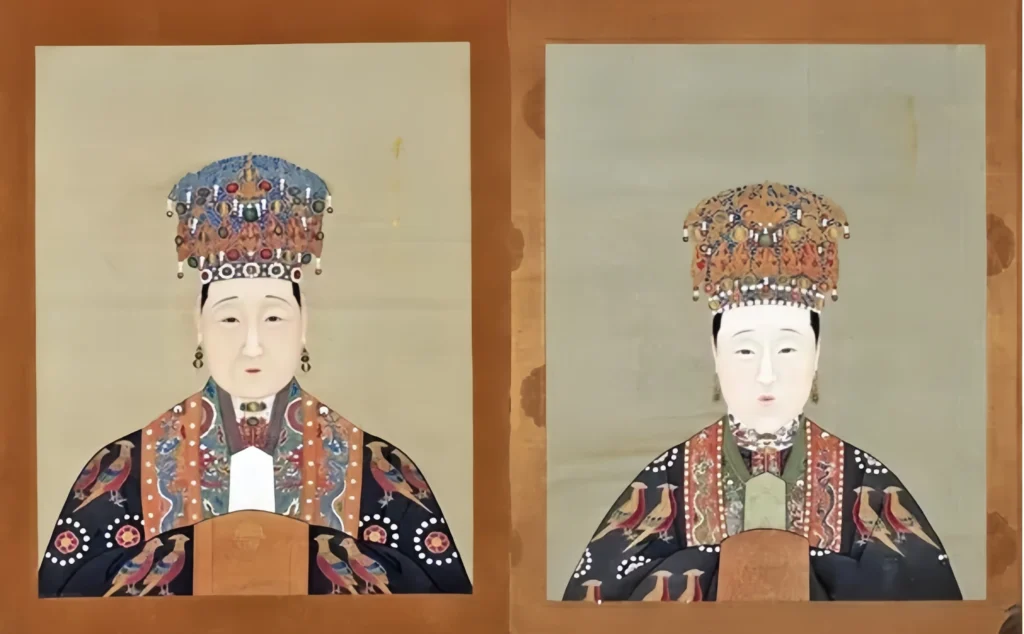
Other texts, such as Chen Yuanlong’s Gezhi Jingyuan, quoting Shiwu Ganzhu, note: “The empress’s di robe is dark, while that of the consorts is blue.” Portraits of four late-Ming empresses show a darker shade compared to earlier depictions. These differences suggest that the empress’s Ming empress ritual robes underwent changes in the late Ming, which were not fully documented. Further study combining excavated artifacts and surviving texts is still needed.
Want to style Ming queen dress today?
Check our Ming Hanfu styling guide!
Responses