Ming Emperor Informal Attire: The Yanbian Crown Attire and Martial Cap Attire

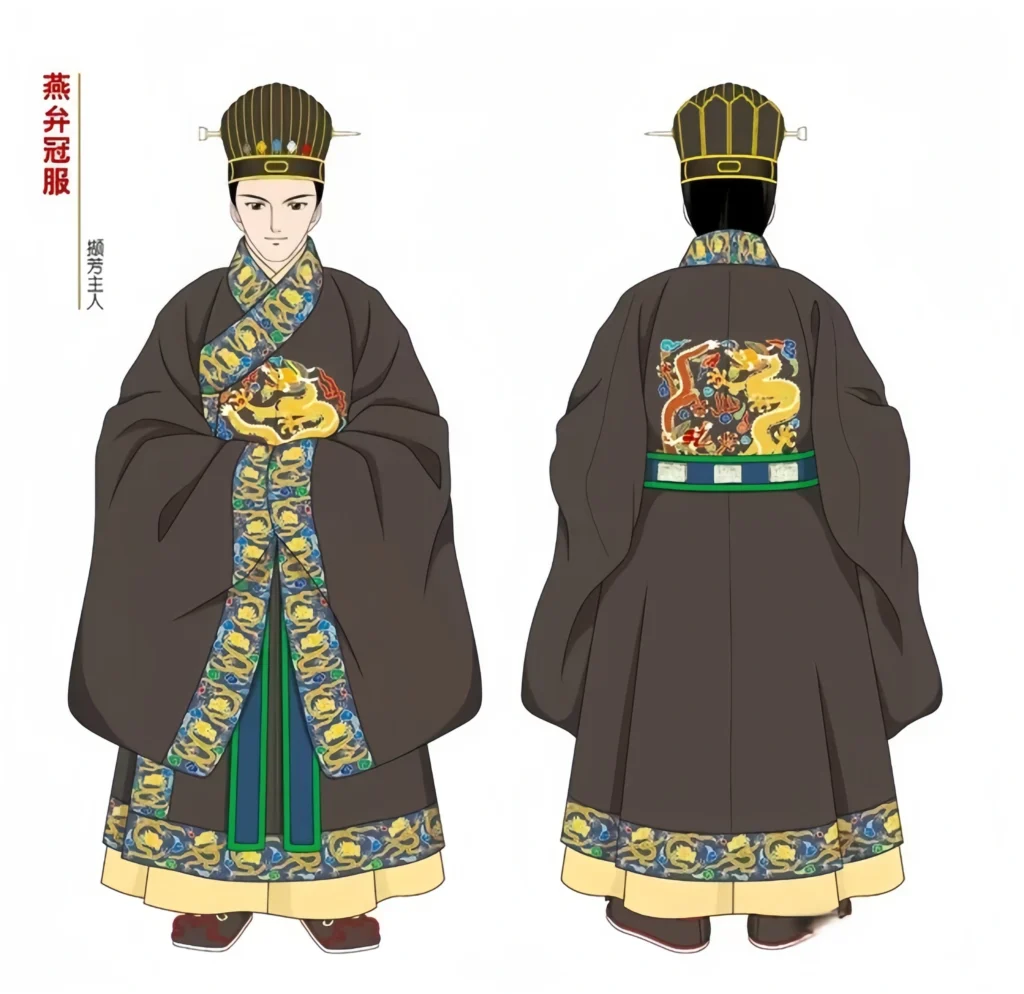
Ming Emperor Informal Attire
Yanbian Crown Attire
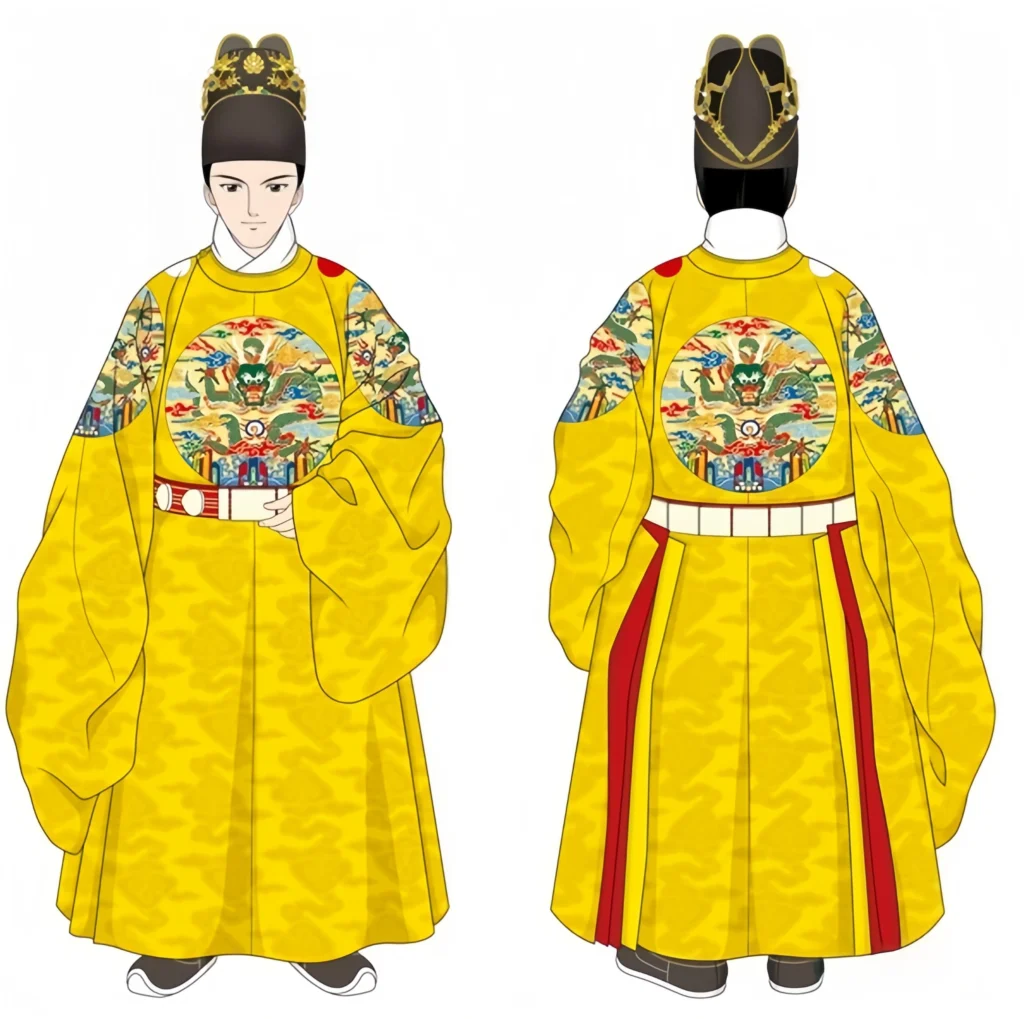
The Yanbian crown attire was a special set of Ming emperor informal attire created by Emperor Shizong of the Ming dynasty together with Grand Secretary Zhang Cong. It was inspired by the ancient “Xuanduan” attire and used as the emperor’s Ming emperor informal attire.
In the seventh year of the Jiajing reign, after Emperor Shizong revised the crown attire system, he felt that the emperor’s casual crown attire looked “too common and lacking elegance.” So he ordered Zhang Cong to examine the attire worn by ancient rulers during informal court occasions. Based on the description of the “Xuanduan deep robe” in classical texts, Zhang Cong produced illustrated notes and presented them to the emperor. Shizong approved them and ordered craftsmen to make the Yanbian attire accordingly, adding simple patterns and using yellow as the color of the deep robe. It was stored in the Imperial Wardrobe Bureau and formally included in the official system as part of Ming emperor informal attire.
The Yanbian attire recorded in the Da Ming Hui Dian was based on Emperor Shizong’s original instructions. Later, Zhang Cong made a few detailed adjustments and carved the final version as the Illustrated Explanation of the Yanbian Crown Attire, which was distributed nationwide. As a result, the written descriptions in Hui Dian do not completely match the illustrations, which follow the later Illustrated Explanation. This is an important detail for researchers studying Ming emperor informal attire.
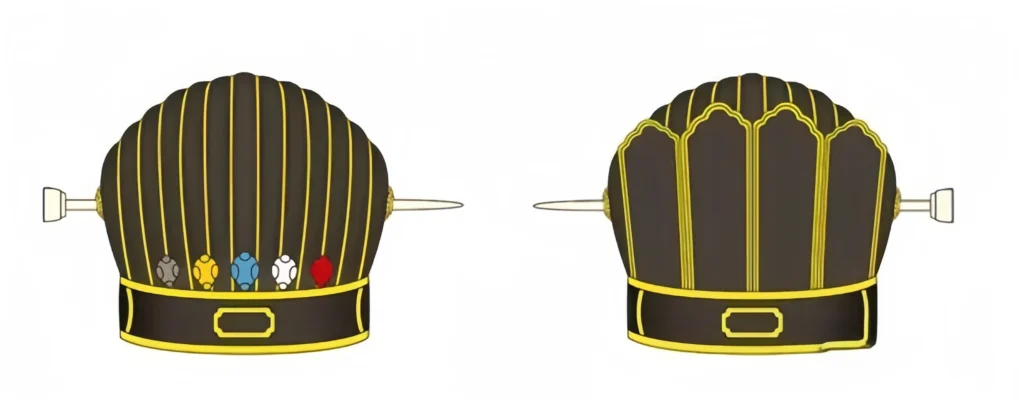
Yanbian Crown
Its structure is similar to the leather bian cap, covered with black gauze, making it a distinctive Ming emperor crown. The crown has twelve stitched sections on both the front and back, each pressed with gold thread (without jade beads). A multicolored jade cloud is placed at the front, and four mountain-shaped decorations stand at the back, making the Ming emperor crown distinctive.
The five jade clouds symbolize the Five Elements, while the four mountains represent stability. Emperor Shizong originally named it the “Xuan Crown” and intended to use red tassels and double jade hairpins. But Zhang Cong argued: “The Xuan Crown and red tassels belong to the emperor’s formal crown… since this one is for informal use, it should not have tassels.” Thus, the Yanbian crown has no tassels. Both the official illustration and the Hui Dian show only one jade hairpin, not two.
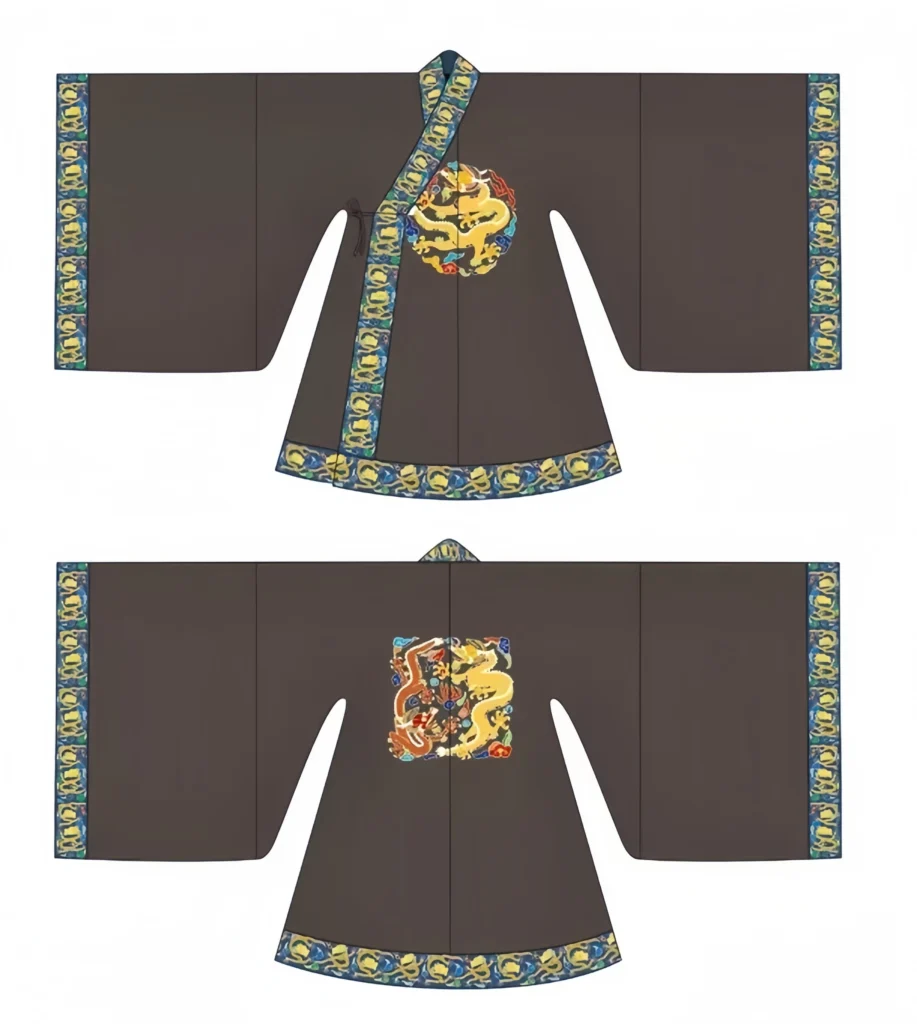
Xuanduan Robe
“Xuan” symbolizes deep virtue; “Duan” symbolizes uprightness. The robe body is dark-colored, while the collar, sleeves, and edges use blue borders. A coiled dragon roundel is embroidered on the chest, and a double-dragon square badge on the back—one dragon in front and two at the back—symbolizing the “Three Powers.” The front round badge represents Heaven, and the square back badge represents Earth, a classic in Ming emperor outfit.
The borders carry eighty-one dragon motifs: forty-five on the collar and sleeve edges, and thirty-six on the front and back hems. The number eighty-one corresponds to the numerology of “Huangzhong.” Emperor Shizong initially wanted to add sun and moon emblems on the shoulders, but Zhang Cong insisted that these should only appear on formal crown attire. Since the Yanbian attire was for private, restful moments, sun and moon symbols were removed.
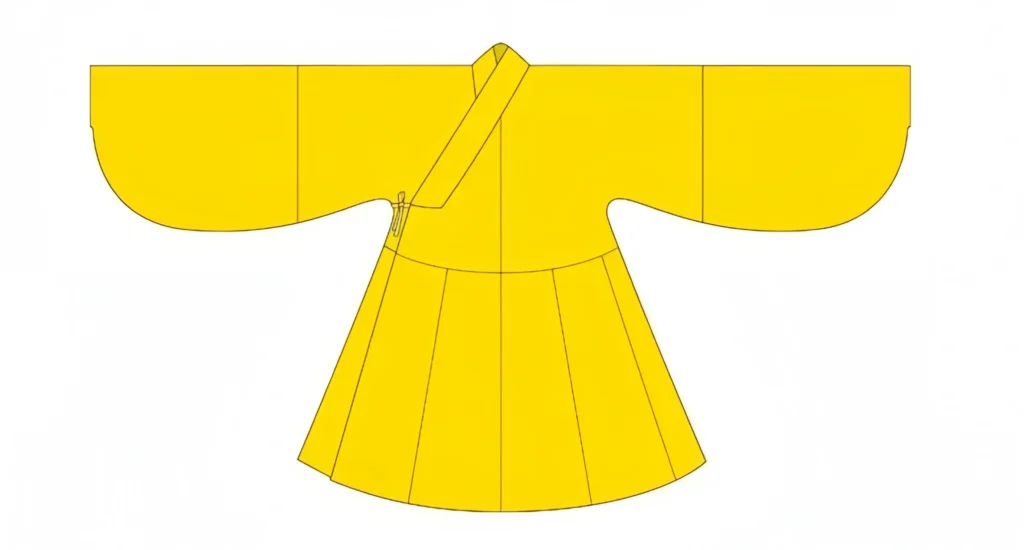
Shenyi(Deep Robe)
This robe is worn under the Xuanduan robe as part of Ming emperor informal attire. It is yellow in color. The sleeves are rounded, and the cuffs are square. The lower part (the “skirt” section) is composed of twelve panels with a straight hem. The seams of the upper and lower garments align perfectly, and the length reaches the ankles, reflecting Ming court dress elegance.
Zhang Cong explained its symbolism in detail:
- yellow for “center” (Earth in the Five Elements),
- twelve panels for the twelve months,
- round sleeves for the compass,
- square cuffs for the carpenter’s square,
- aligned seams for uprightness,
- straight hem for balance. This deep robe differs from the traditional deep robe mainly in its color and lack of decorative borders.
Plain Belt
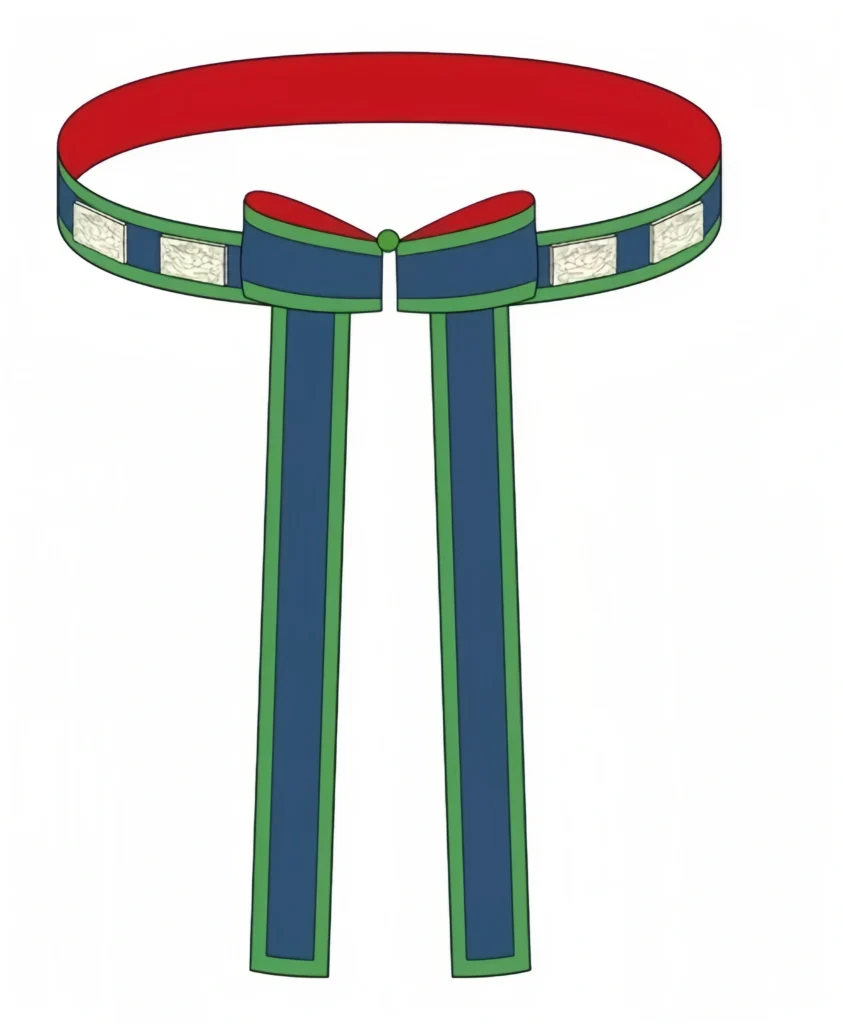
The outside of the belt is blue, the inside red, with green edging. Nine rectangular jade plaques with dragon motifs hang from it—four in front and five at the back. According to the Illustrated Explanation, the number nine follows yang numerology. Ancient versions did not include jade, so it was added to distinguish rank in Ming emperor informal attire.
Dark Shoes and White Socks
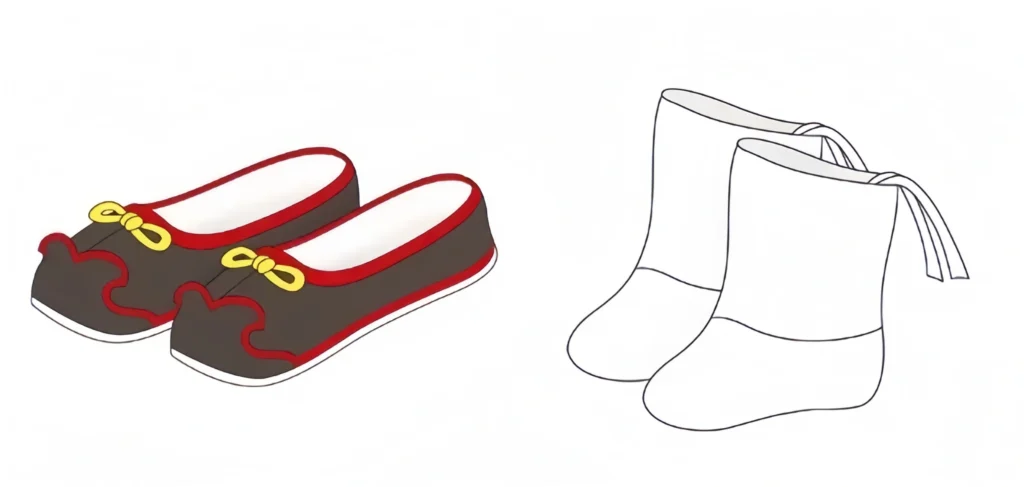
The shoes are dark-colored with a red border and a yellow knot at the front. The socks are white. Zhang Cong also explained their symbolism: dark shoes for purity, red laces following the red ceremonial shoes, yellow knot for Earth, white socks for clarity and simplicity.
In his edict to the Ministry of Rites, Emperor Shizong stated that people often behave carefully in public but become lax in private. Ancient rulers valued self-discipline, so the Xuanduan was created for private wear. He believed that even in informal settings, the emperor’s attire should maintain proper rank. Although the Yanbian attire was meant to remind the emperor to remain cautious in private, historical records show no evidence that it was ever actually worn.
Martial Cap Attire
In early Ming, the emperor wore the Martial Cap attire during military campaigns, dispatching generals, and performing related rituals.
According to the Ming Veritable Records: “In the first year of Hongwu… ancient regulations were examined and the rituals for imperial military expeditions were established. Before a campaign, the emperor made offerings to Heaven and the ancestral temples wearing the Martial Cap attire.”
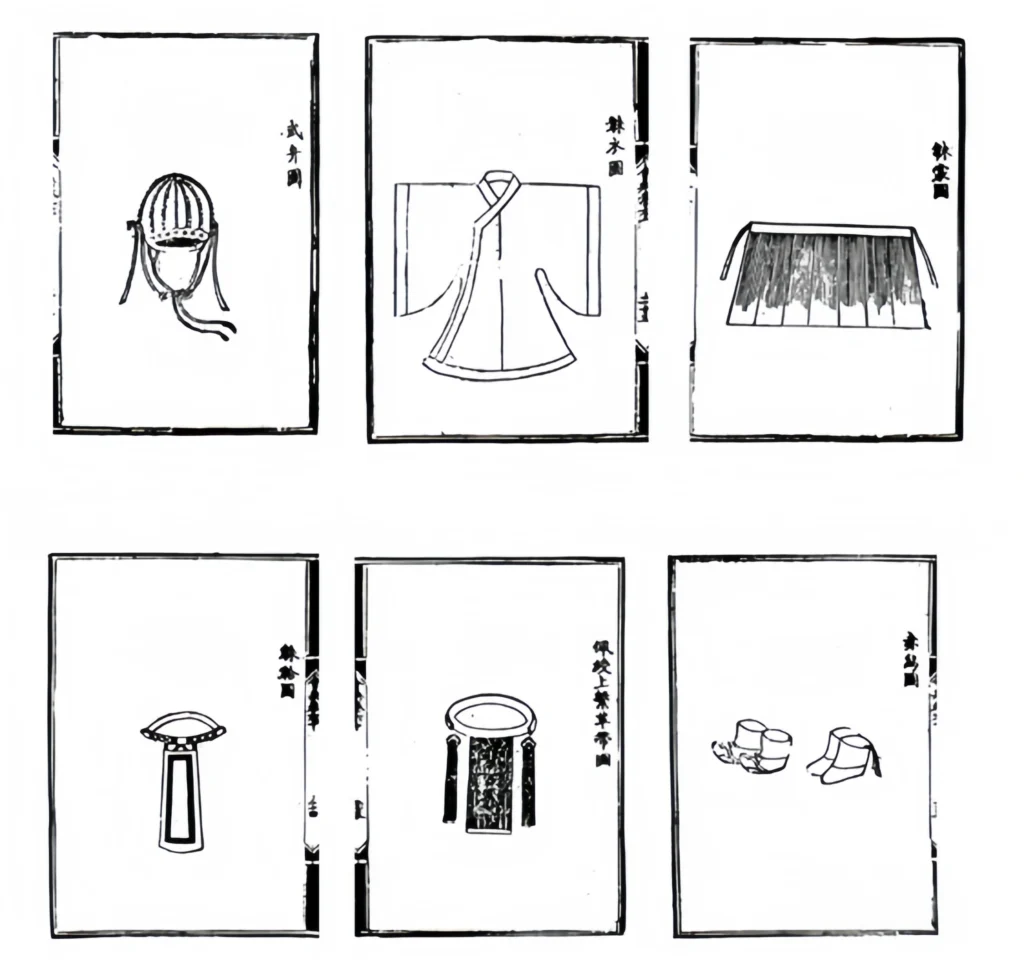
However, detailed rules for this attire were not recorded, a unique part of Ming emperor outfit. In the sixth year of Jiajing, Emperor Shizong asked his ministers about its structure. Minister Yang Yiqing replied only: “The Martial Cap is made of red leather and decorated with multicolored jade.” By the eighth year, Shizong told Zhang Cong that the Martial Cap attire should be properly established. Zhang Cong later submitted illustrations. After repeated discussions with the emperor, the final version was confirmed.
Components of the Martial Cap Attire
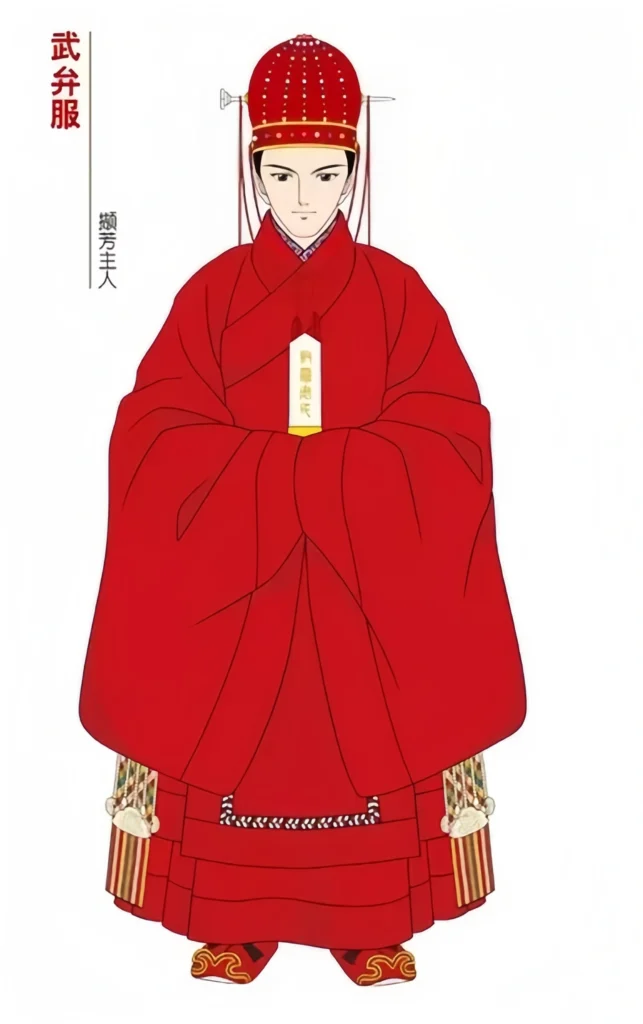
- Martial Cap: red, pointed at the top, with twelve stitched sections decorated with multicolored jade beads like stars, a standout Ming emperor crown.
- Leather Robe, Leather Skirt, Leather Gaiters (wei yi, wei chang, wei ge): all in red, with the same structure as other ceremonial robes.
- Accessories: belt ornaments, ribbons, and leather belt identical to those used for other formal attires; pendants hang from both the belt and gaiters.
- Shoes: same color as the skirt.
- Jade Gui: similar to the ceremonial jade tablet of crown attire but smaller, engraved with the words “Punish Evil and Bring Peace.” The Martial Cap attire does not use the large ceremonial belt.
Love rare Ming court dress?
Check our Ming Hanfu styling guide for authentic tips!
Responses