Basic Etiquette for Wearing Hanfu

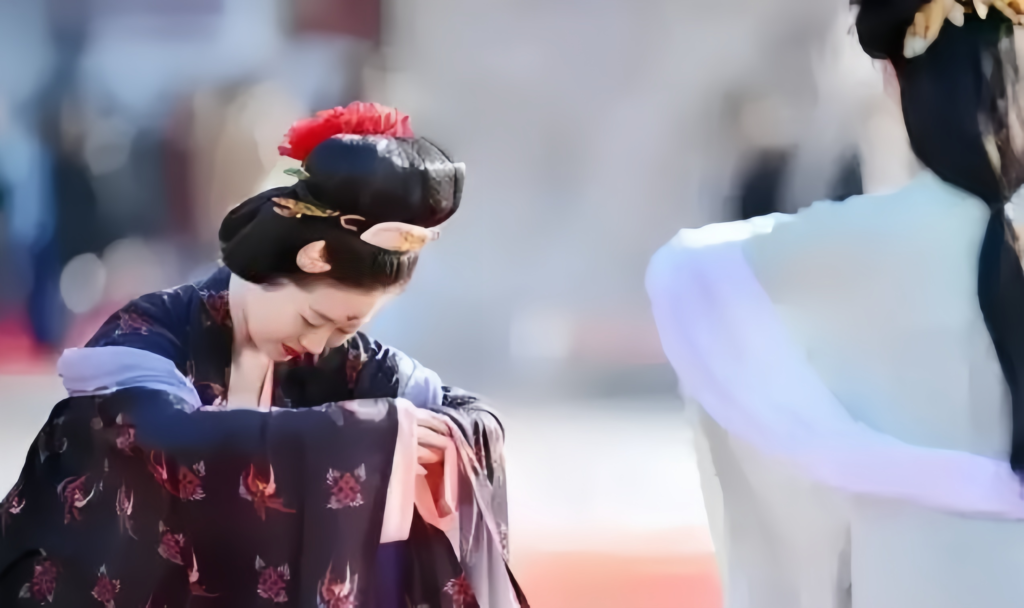
【One】Basic Requirements for Wearing Hanfu:
Attitude When Wearing Hanfu:
Anyone slipping into Hanfu needs to have a ‘sincere and respectful’ vibe. The core of this is making sure everything you do is neat and proper, a key part of Hanfu etiquette and a reflection of Traditional Chinese clothing values.
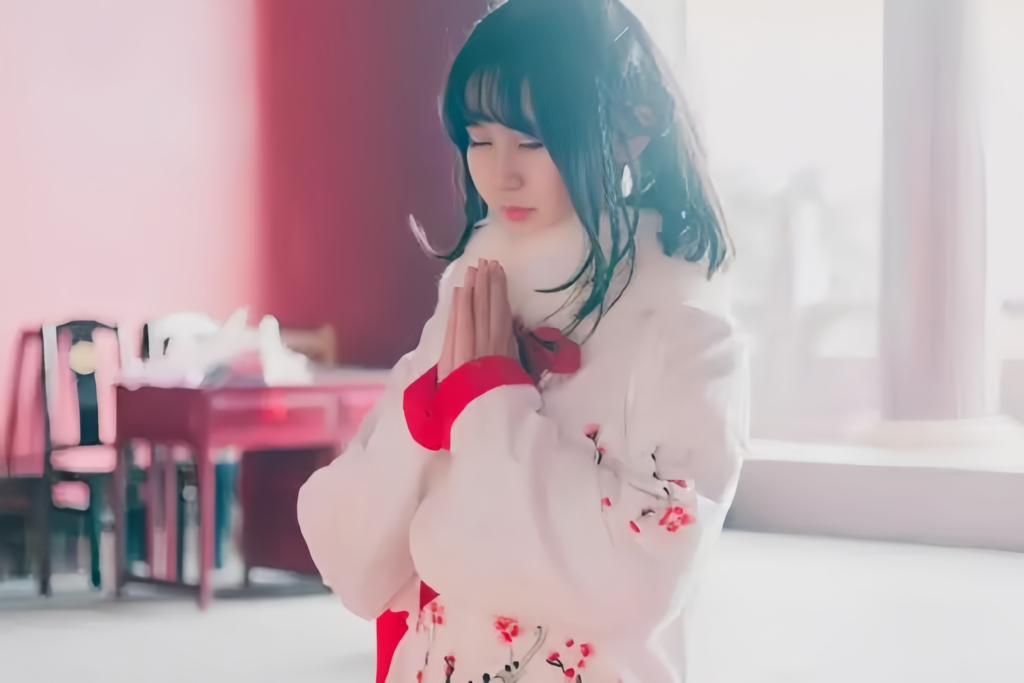
Appearance and Grooming:
Neatness: When you’re in Hanfu, keep the whole outfit clean and smooth—no stains or wrinkles allowed! This reflects the elegance of Traditional Chinese clothing.
Nails: Keep your nails clean, no long ones or funky colored polish—stick to clear, protective stuff if you need it, a handy Hanfu wearing tip that enhances Hanfu etiquette.
Hair: Make sure your hair is tidy, clean, shiny, and dandruff-free, no wild styles or dyed colors. It’s better to rock your natural hair color. Ladies should style their hair to match the Hanfu they’re wearing or toss on a fake bun. Guys with long hair should tie it up.
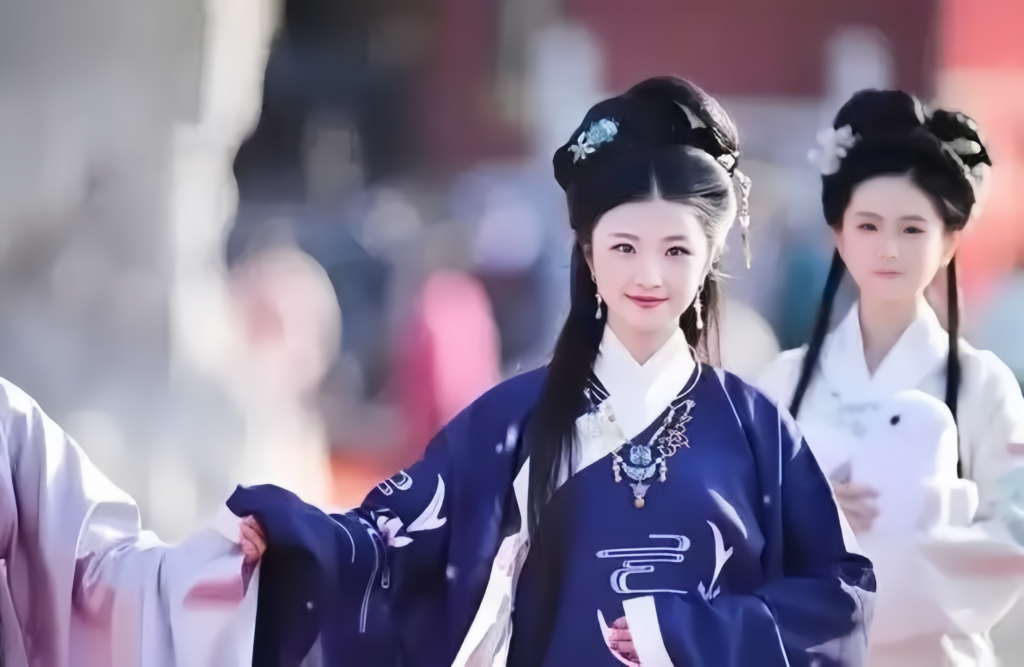
Face: Keep your face fresh, no gunk in your eyes or ears, and an even complexion. Guys should trim their beards now and then; ladies should go for a light makeup look.
Socks: Stick to black or dark socks, and make sure they’re hole-free.
Pants: Dark dress pants are cool, but skip jeans or striped track pants.
Shoes: We love the idea of wearing cloth shoes with Hanfu—black for guys, and ladies can pick any color except pure white (unless it’s a funeral). If you’re not at a big Chinese cultural rituals event, ladies can wear flat or heeled leather shoes, and guys can go for laced black leather ones.
Perfume: If you’re using perfume, pick something light and fresh, and dab it behind your ears or on your wrists.
Personal Hygiene: Keep your body, mouth, hands, and shoes clean with no funky smells. No food stuck in your teeth—stay fresh all over!
Precautions:
No pure white Hanfu outer layers, except at funerals.
No sneakers, athletic shoes, or tall boots when wearing Hanfu.
Don’t wear underwear on the outside with Hanfu.
Always wear a middle layer (undergarment) with Hanfu—keep modern undies out of sight.
No high-neck sweaters or collared shirts under Hanfu.
Don’t let your hair hang loose—show off your forehead and ears.
Tie up your shoe laces, waist belts, and hat cords nice and tight when in Hanfu.
No smoking or eating while wearing Hanfu, especially during rituals, work, or walking around.
【Two】On Standing and Sitting Posture
Standing Posture:
Jiazi says: Hold your chin steady, look straight ahead, keep your shoulders even, back straight, and arms like you’re hugging a drum. Feet about two inches apart, face calm, hat in place. Stand with solid legs, body still, elbows relaxed—this is jingli (proper standing). A little bow is gongli (shared standing); a deeper bow is sulii (solemn standing); and with pendants hanging, it’s beili (humble standing). Checking out old artifacts, jingli means standing tall, looking forward, with hands clasped and tucked in your sleeves—anywhere from chest to lower belly works, even holding or leaning on something (ancient folks were pretty laid-back about it ^_^).
Tip: Chinese culture loves a natural flow, not stiff poses—keep your arms soft to let Hanfu fall into smooth curves, showing off that Hua Xia charm and enhancing Hanfu posture guide, a key Hanfu wearing tip that reflects Hanfu etiquette.
You often see Confucius doing the crossed-hands salute—but that’s meant for sulii with a 30-degree bow to show respect. Artists sometimes paint it straight for looks. How to use it: I think jingli is a must for Hanfu fans, and gongli fits for elders. Since deep bows aren’t common now, adjust how much you bow depending on the vibe—but a respectful nod is a must, a core part of Hanfu posture guide.
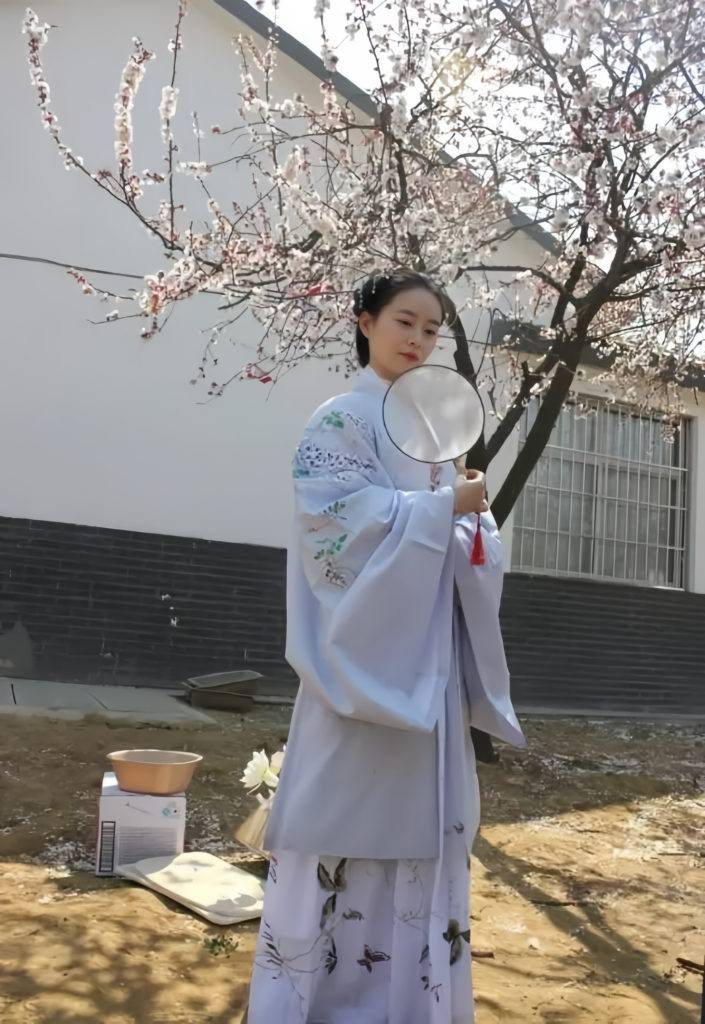
Sitting Posture:
Jiazi says: Sit with the jingli vibe, legs not spread out, feet steady, eyes level for jingsuo (proper sitting), slightly looking down at an elder’s knee for gongsuo (shared sitting), head up within normal sight for susuo (solemn sitting), or head down with elbows low for beisuo (humble sitting).
Looking at old relics, Han jingsuo (what they called sitting back then, now dubbed elegant sitting) means knees tight together, butt on your heels, feet flat, hands on knees, eyes ahead. For huzuo (cross-legged sitting), same deal—stay upright, legs closed, hands on knees. Hands can be fists facing forward or clasped at your belly. How to use it:
With Han culture making a comeback, elegant sitting will pop up more. In fancy settings, you can shift your knees a bit to rest. For casual hangouts with friends, jiju (butt on the ground, legs apart) or zuozuo (Buddhist cross-leg style) is fine, all part of mastering Hanfu posture guide and honoring Chinese cultural rituals.
【Three】Basic Etiquette for Wearing Hanfu
Standing:
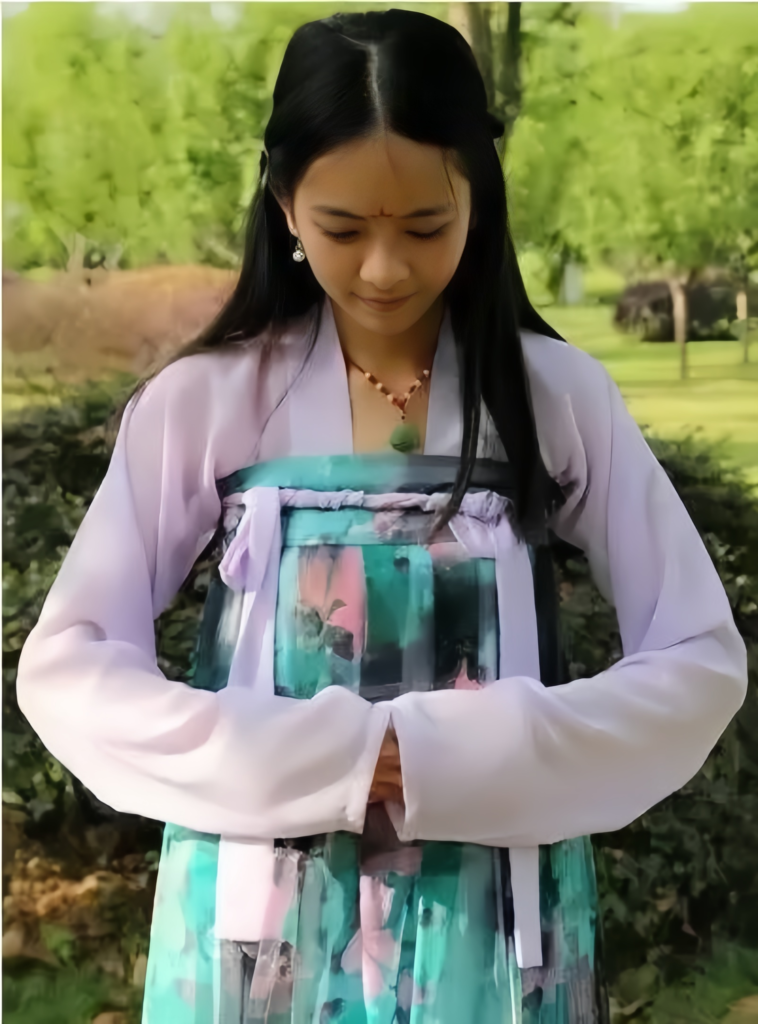
Jingli: Stand straight, look ahead, hands clasped (guys left over right, ladies right over left), tucked in sleeves between your navel and chest, with a little space from the chest.
Sulii: Start with jingli, then give a slight waist bow and lower your head to show respect, a key element of Hanfu etiquette.
Sitting and Walking:
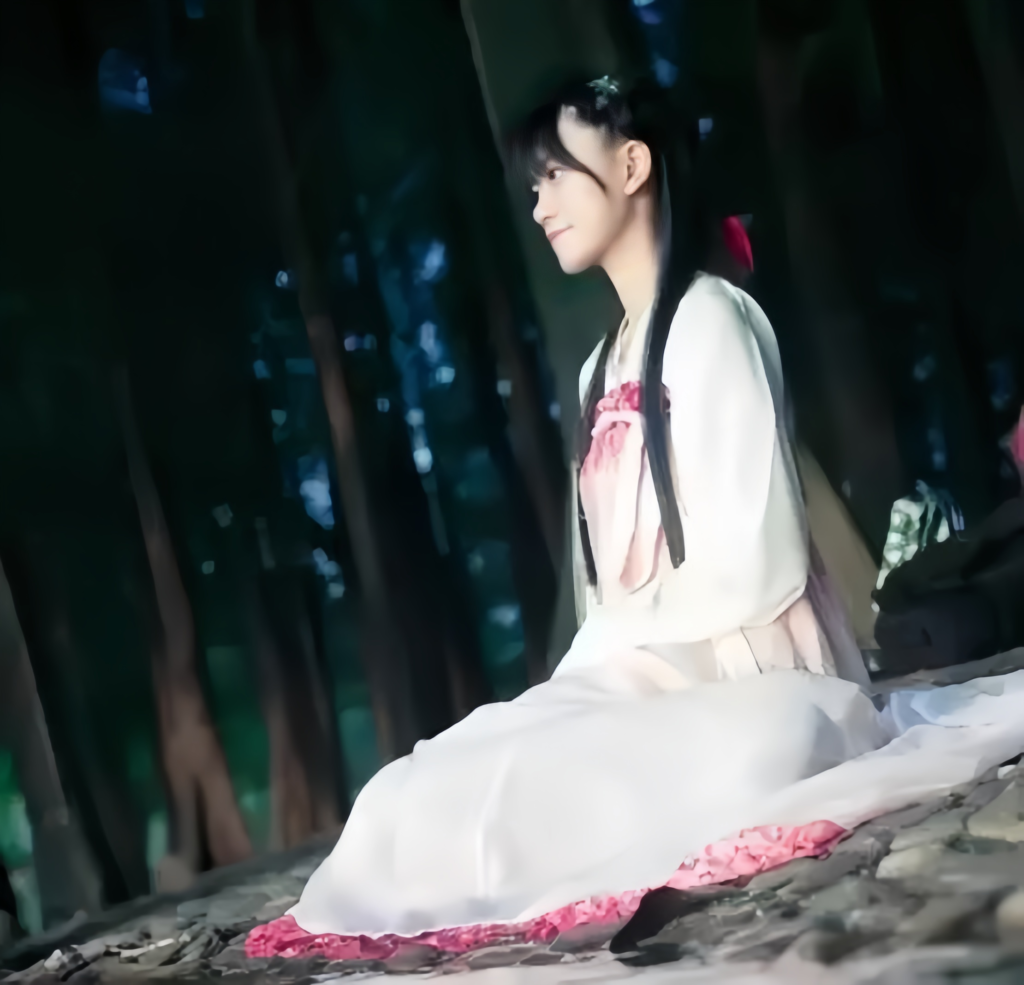
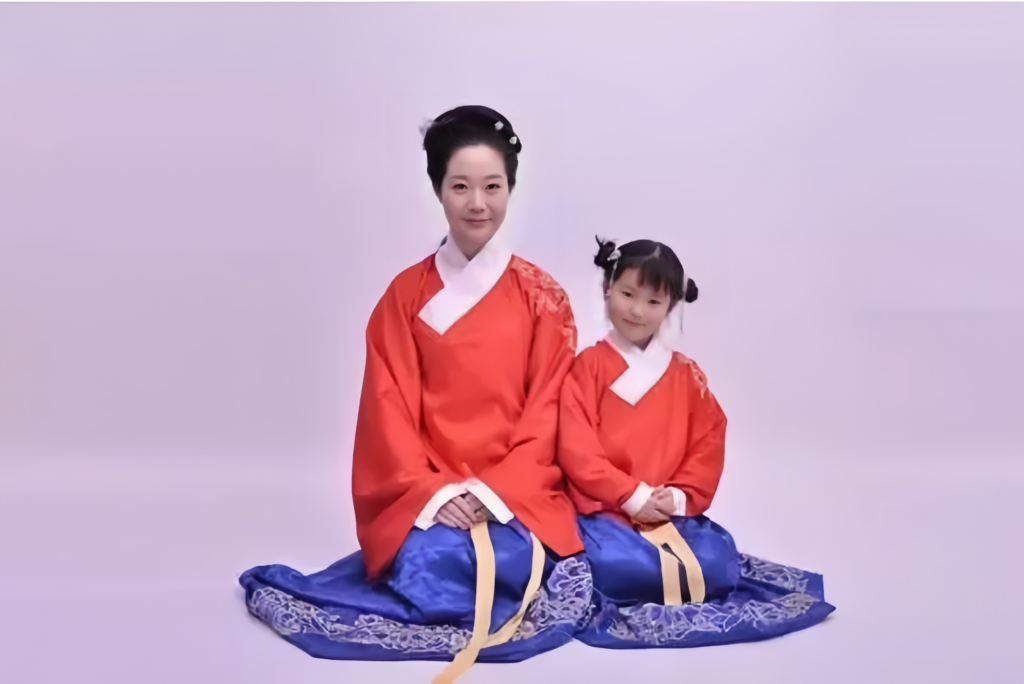
Proper Sit (Kneeling/Elegant Sit): Knees together, butt on heels, feet flat, hands on knees, eyes forward, back straight.
Upright Sit (Cross-Legged): Keep your back straight, legs closed, hands on knees—fists forward or clasped at the belly, butt taking up about a third of the chair.
Walking: In formal ritual spots, keep hands like jingli, stand tall, look ahead, and step with a steady beat.
Bowing:
Nod: Stand in jingli, dip your head a bit, and bend your body about 15 degrees to say hi. Use this when elders thank juniors or ritual folks with stuff in hand reply during Chinese cultural rituals.
Arch Hands: Stand with feet together, left fingers straight with thumb bent, right hand a fist, left palm over the right fist at chin level, right fist angled toward your chest, elbows slightly down, fist-palm 20-30 cm from your chest. Great for daily hellos, a classic Hanfu etiquette move.
Scholar’s Greeting: Stand tall, arms straight out, right hand a little curved, left hand on top, slide from forehead to chest with a 30-degree bow. Perfect for friends or peers at fancy events.
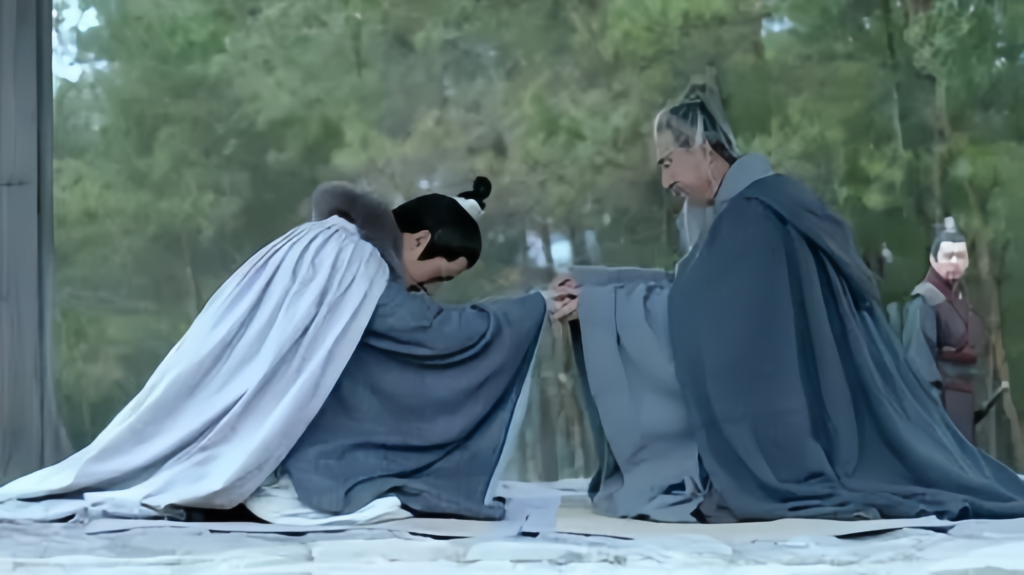
Deep Bow: Left over right (ladies right over left), hands in sleeves, raise to forehead, bow 45 degrees, stand up, hands to eyebrows again, then drop them. Use this for elders or thanking guests.
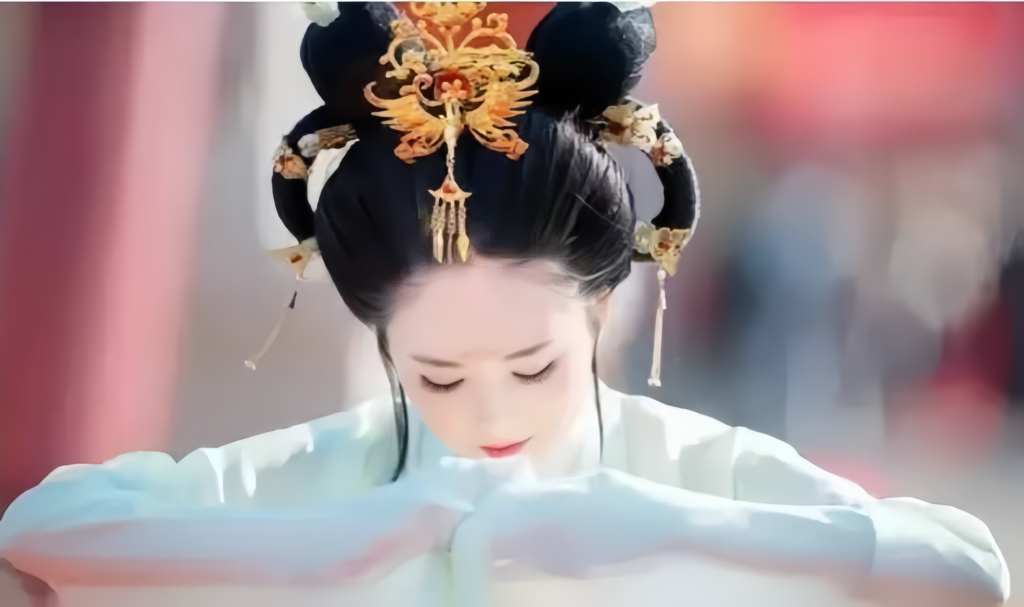
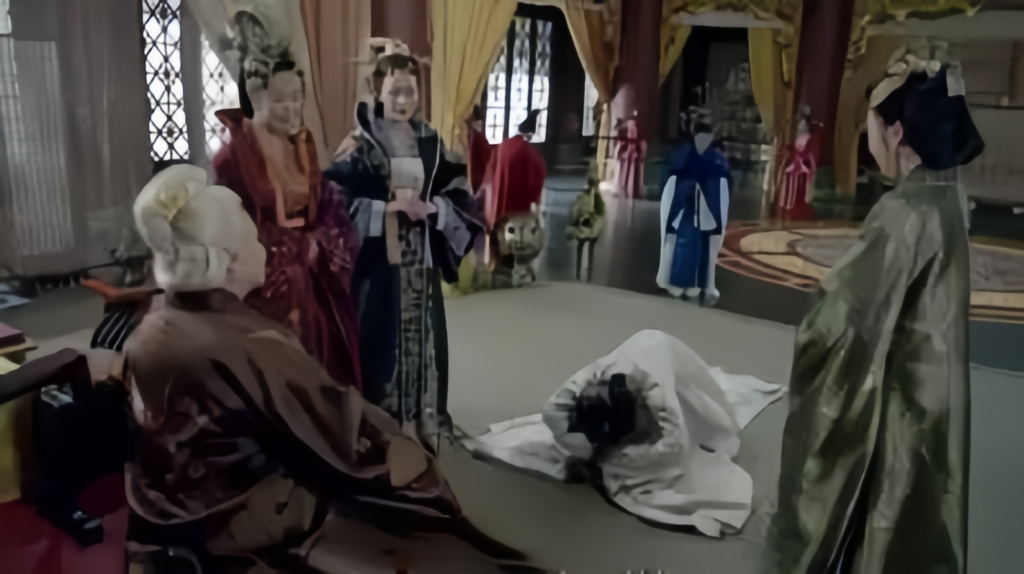
Kneel and Bow: Stand tall, raise hands to forehead like a bow, bow 90 degrees, then stand straight (that’s the bow part), hands to eyebrows again. Kneel with both knees, lower slowly with palms and forehead to the ground (that’s the bow), rise with hands to eyebrows (that’s the rise)—then stand or bow again depending on the ritual. Stand with hands at eyebrows, rise, hands down. Do this for big ceremonies honoring elders or spirits.
Other Bows:
Formal Bow: Left over right (ladies right over left), hands in sleeves, raise to forehead, bow 90 degrees, rise, hands to eyebrows again, then drop them.
Casual Bow: Stand tall, arms straight out, right hand a little curved, left on top, slide from forehead to chest, bow 45 degrees. Good for friends at formal spots.
Arch Hands: Like a bow but keep your body and arms still.
Head Nod to Greet.
Formal Kneel and Bow: Stand tall, raise hands to forehead like a bow, bow 90 degrees, rise (that’s the bow part), hands to eyebrows again. Kneel with both knees, lower slowly with palms and forehead to hands (that’s the bow), rise with hands to eyebrows (that’s the rise)—then stand or bow again depending on the ritual. Hands at eyebrows, rise, hands down.
Casual Kneel (for Elegant Sit): Lift your butt, rise with knees holding you up, then bow with hands to the ground, forehead to hands, or do a long keishou (head to ground) or short tonshou (quick head tap).
Women’s Bow: With equality in mind, no special rules for ladies. But for a polite touch—clasp hands at your chest, bend your knees a bit, lower your head; for a bow, stay straight, kneel, hands down, head slightly low.
Application:
5 works for sacrifices or super respectful moments. 6 is for elegant sitting. 1 to 4 are your go-to daily Hanfu bows, depending on how much you respect the other person and what the setting allows. Most people today aren’t big on etiquette, so no need to be too strict, but nailing the arch hands is a good start. If you’re chatting and someone new shows up, check the nearby person’s status to decide how deep to bow, refining your Hanfu posture guide skills and following Hanfu wearing tips.



Responses