Ancient Women’s Skirts in Hanfu

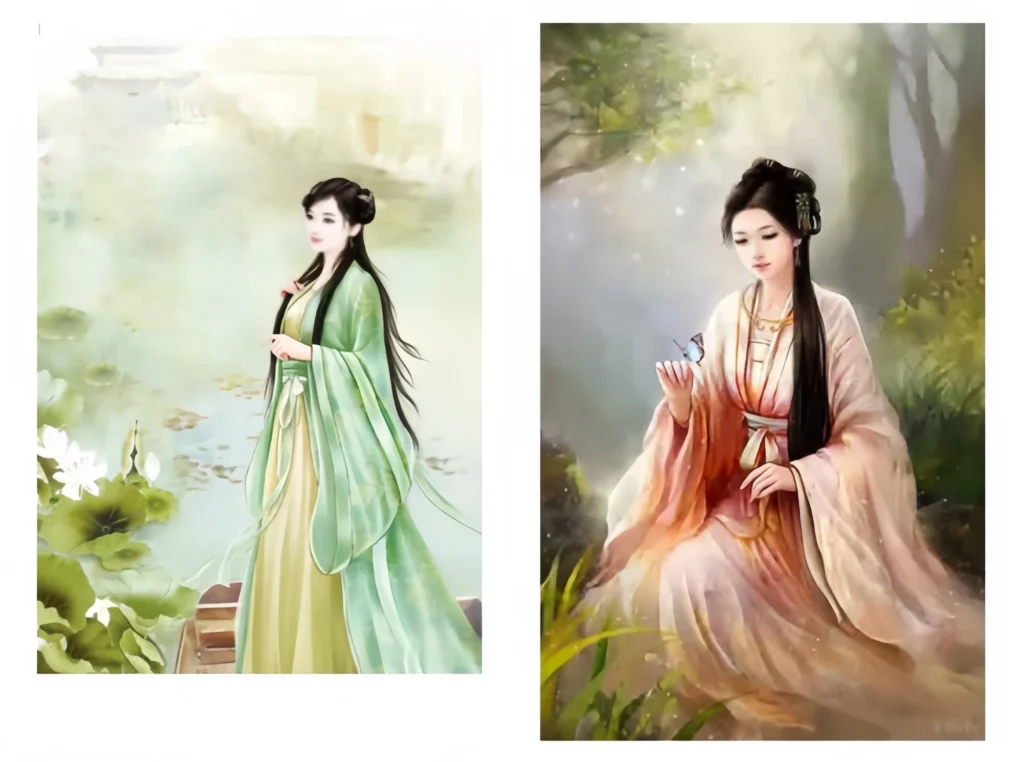
Ancient Hanfu Women’s Skirts
In ancient literature, descriptions of Hanfu women’s skirts often appear in poetic lines—sleeves like flowing water, hems swaying with grace, creating vivid and elegant imagery. Within Hanfu traditions, the names and types of ancient Hanfu skirts are just as beautiful as the visual effect they create.
Luo Skirt (Luó Qún)
A luo skirt is a skirt made from luo, a type of lightweight silk fabric.
Luo refers to a loosely woven silk textile that is thin, breathable, slightly sheer, and softly crinkled in texture. It was commonly used in summer clothing. Related terms include luo quilts, luo robes, luo scarves, luo handkerchiefs, and luo belts, all referring to garments or accessories made from this airy silk material.
Pleated Skirt (Baizhe Skirt)
The pleated Hanfu skirt, also known in ancient times as the Liuxian Skirt (“Skirt of the Immortal”), features evenly spaced pleats all folded in the same direction.
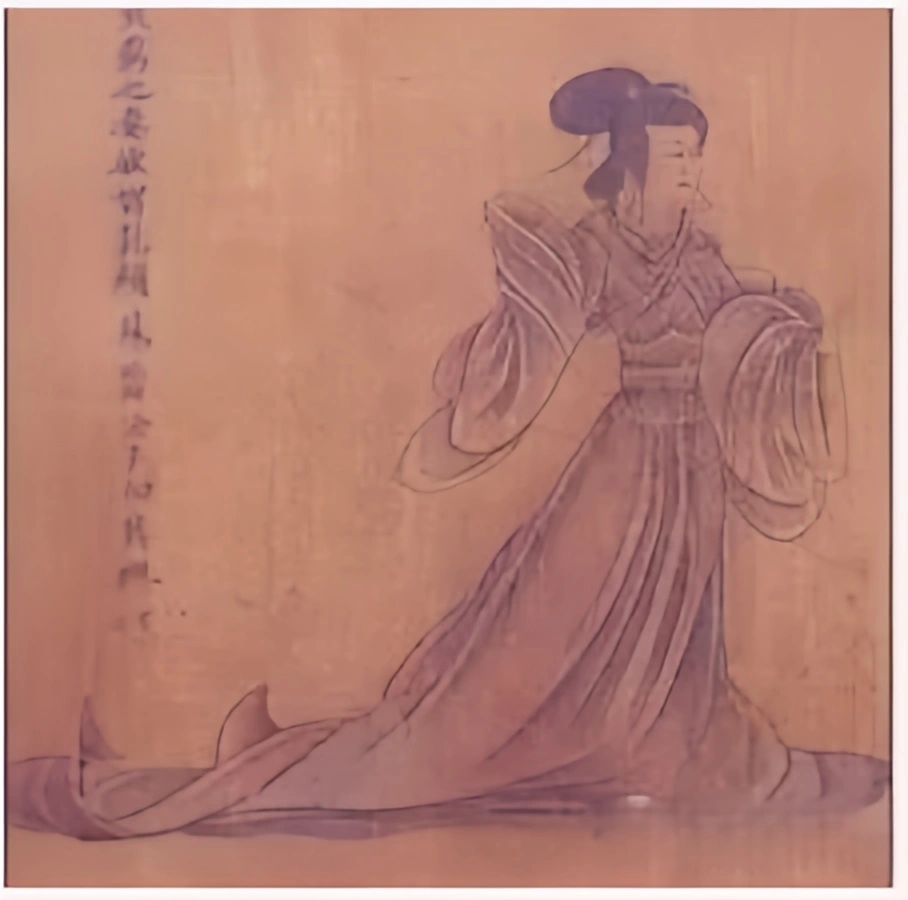
According to Miscellaneous Records of the Western Capital, during the reign of Emperor Cheng of the Western Han dynasty, Zhao Feiyan—later made empress—once wore a Yunying purple Hanfu skirt while strolling with the emperor by the Taiye Pool. As she danced to music, a sudden gust of wind lifted her like a swallow. Alarmed, the emperor ordered attendants to grab her skirt. Zhao Feiyan was saved, but the skirt was pulled into many creases.
The emperor noticed that the pleated Hanfu skirt looked even more beautiful with wrinkles than before. From then on, palace women favored skirts folded with multiple pleats, leading to the popularity of pleated Hanfu skirt.
Moonlight Skirt (Yuehua Skirt)
By the late Ming dynasty, ancient Hanfu skirts became increasingly refined. Skirts expanded to ten panels, with tighter pleats at the waist. The Moonlight Skirt is said to have been a lightly painted skirt in pale tones, consisting of ten panels, each pleat dyed a different soft color.
The colors were subtle and elegant, and when the Hanfu skirt moved in the wind, it shimmered like moonlight—hence the name Moonlight Skirt.
Floral Panel Skirt (Huajian Skirt)
The Floral Panel Skirt is made by cutting two or more fabrics of different colors or patterns into long, narrow strips. These strips are then arranged alternately and densely stitched together to form the ancient Chinese skirts. The finished Hanfu women’s skirts displays vertical bands of varied colors and patterns, which is why it is also called “striped panel clothing.”
When making a floral panel skirt, artisans often intentionally cut the fabric strips narrower at the top and wider at the bottom. This creates a fitted waist and a gradually flaring hem, visually slimming the waist and expanding toward the skirt’s lower edge. The result resembles a bell-shaped or flared Hanfu skirt, with a long, flowing hem that reaches the ground, giving an especially elegant and graceful appearance.
Emperor Gaozong of the Tang dynasty once issued an edict stating: “Floral panel skirts and garments are extravagant and labor-intensive, harming women’s work. The Empress, my equal, often wears seven-panel skirts. Is she unaware that more luxurious clothing exists? She simply follows the principle of frugality.”
This passage shows that floral panel ancient Chinese skirts were extremely popular in the early Tang dynasty. Even Wu Zetian, honored as Empress Regnant, regularly wore seven-panel skirts. Her Hanfu skirts, made from only seven colored fabric strips, were considered modest compared to the even more extravagant versions of the time.
In fact, Tang dynasty regulations stated that striped panel garments should not exceed twelve panels. This suggests that many ancient Hanfu skirts exceeded twelve panels. More luxurious versions featured gold-thread embroidery along the seams or were adorned with small jeweled ornaments. The skirt panels themselves were often further embellished with gold embroidery and other ornate decorations.

Phoenix Tail Skirt (Fengwei Skirt)
The Phoenix Tail Skirt is made by cutting silk satin into evenly sized strips, each embroidered with floral or bird motifs and edged with gold thread. These strips are then pieced together into a Hanfu skirt and finished with colorful tassels along the hem, creating a layered, feather-like effect reminiscent of a phoenix’s tail.
Floral Cage Skirt (Hualong Skirt)
The Floral Cage Skirt is made from single-thread gauze, a light, soft, and transparent silk fabric. Gold-thread embroidery of flowers and birds decorates the surface. This Hanfu skirt is worn as a short outer layer over another skirt, creating a delicate, layered look.
Ruqun (A Combination of Two Garments)
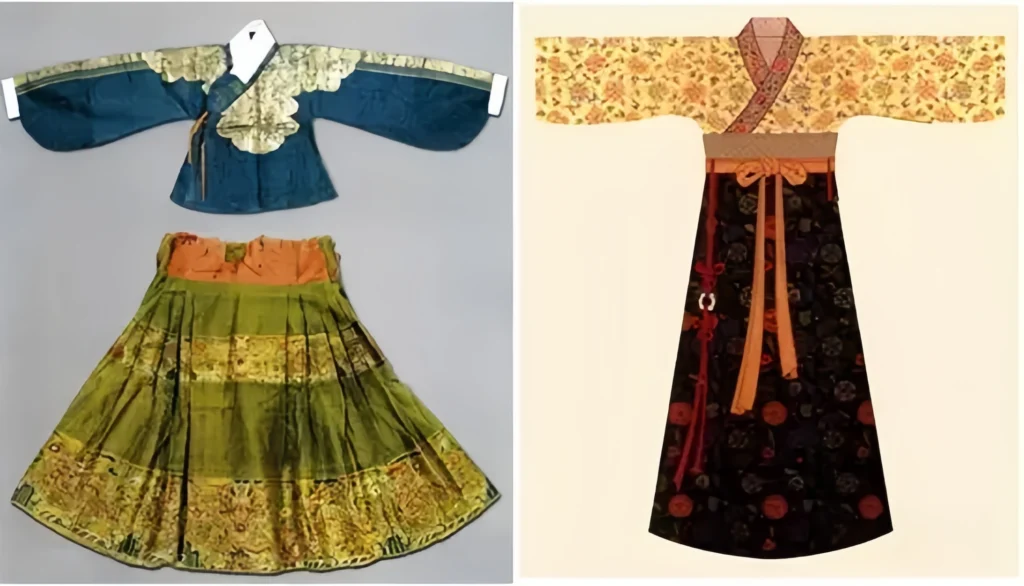
Ruqun actually refers to a combination of two garments: a short upper jacket (ru) and a skirt worn on the lower body (qun). Together, they represent the classic Chinese clothing structure of “upper garment and lower skirt” — the foundation of Hanfu women’s skirts.
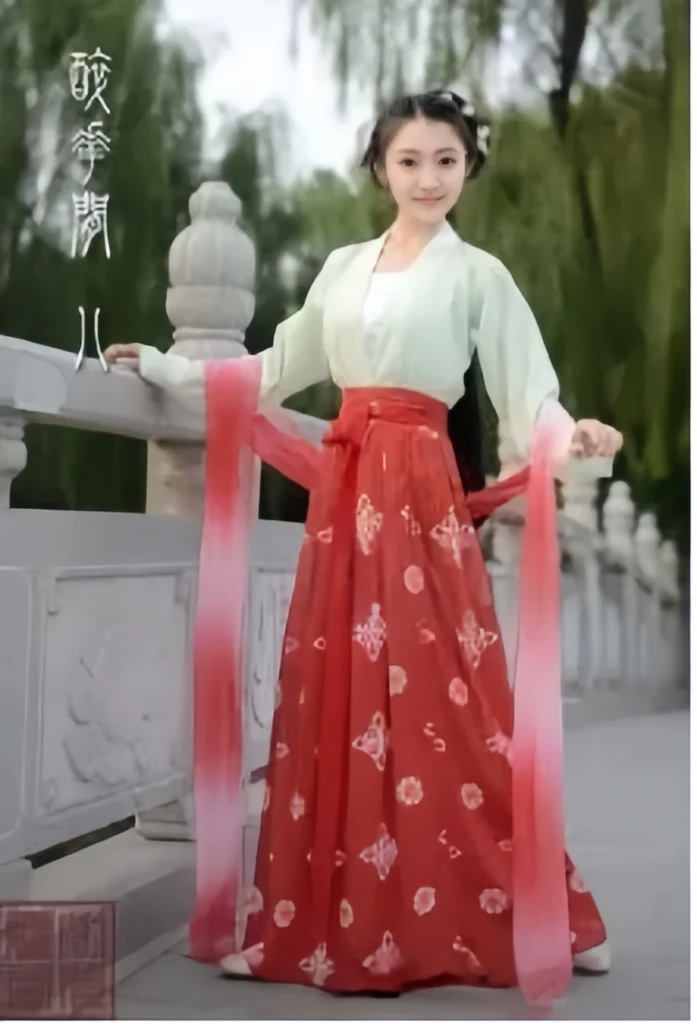
Want to style your own Hanfu skirts?
Check our Hanfu Skirts Styling Guide for authentic tips!

Responses