Basic Etiquette and Important Notes for Wearing Hanfu

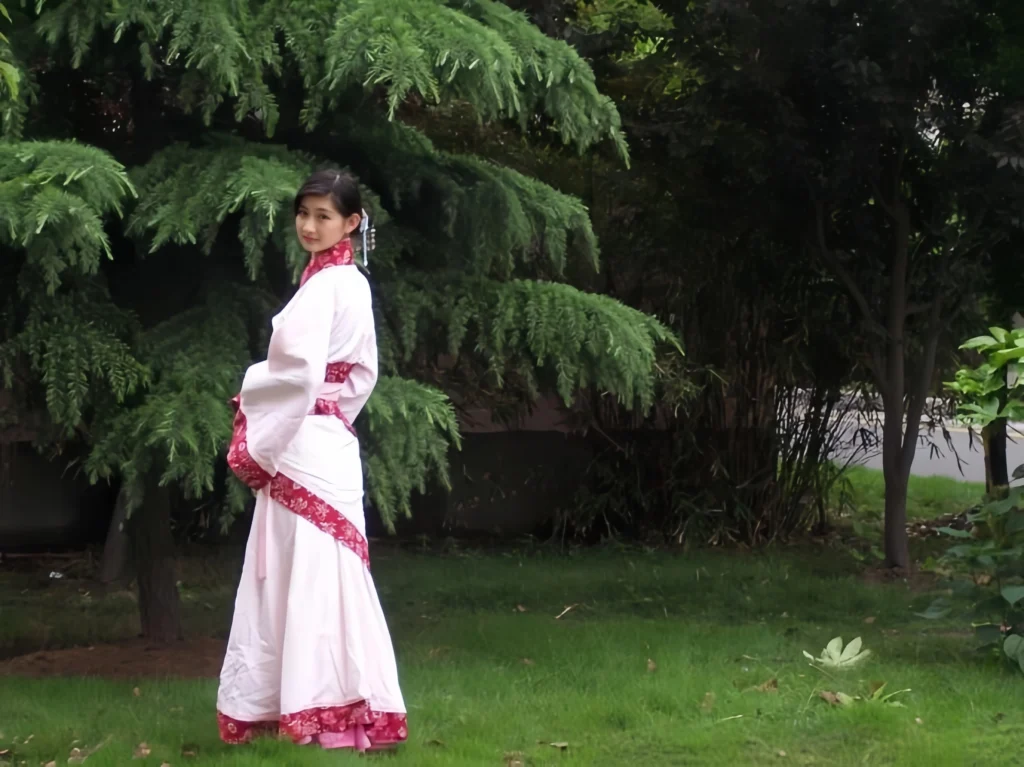
I. Basic Requirements for Wearing Hanfu
1. Attitude When Wearing Hanfu
When wearing Hanfu, one should maintain a sincere and respectful mindset. A sense of respect and mindfulness is considered fundamental, and one’s behavior should remain proper and composed throughout.
2. Appearance and Grooming
1) Cleanliness
Hanfu should always be clean and well-kept, with no visible stains or heavy wrinkles.
2) Nails
Keep nails clean and neatly trimmed. Long nails are discouraged, and colored nail polish should not be worn. Clear protective nail polish is acceptable.
3) Hair
Hair should be tidy, clean, shiny, and free of dandruff. Avoid messy or overly unconventional hairstyles, as well as brightly dyed hair. Keeping one’s natural hair color is encouraged.
Women should arrange their hair according to the Hanfu style they are wearing, either with an appropriate traditional hairstyle or by using a wig. Men with long hair should tie it up properly.
4) Face
The face should be clean, with no visible eye or ear residue, and an even complexion. Men should trim their facial hair regularly. Women are encouraged to wear light, natural makeup.
5) Socks
Black or dark-colored socks are recommended. Socks should be free of holes.
6) Pants
Dark-colored trousers may be worn underneath. Jeans and striped sports pants are not appropriate.
7) Shoes
Wearing traditional cloth shoes with Hanfu is strongly encouraged. Men typically wear black cloth shoes, while women may wear cloth shoes in any color except pure white (unless attending a funeral).
If not participating in formal rituals (especially sacrificial ceremonies), women may wear flat leather shoes or heels, and men may wear black lace-up leather shoes.
8) Perfume
If perfume is used, choose a light and fresh scent. Apply sparingly, such as behind the ears or on the wrists.
9) Personal Hygiene
Maintain good overall hygiene. The body, mouth, hands, shoes, and socks should be clean and odor-free. Teeth should be clean, with no food residue.
3. Important Notes
1) When wearing Hanfu, pure white outer garments are strictly not allowed, except for funerals.
2) Athletic shoes, sneakers, and tall leather boots should not be worn with Hanfu.
3) Modern undergarments must never be worn on the outside.
4) A middle garment (zhongyi) must be worn under Hanfu, and modern underwear should not be visible.
5) High-neck sweaters and modern collared shirts should not be worn with Hanfu.
6) Hair should not be worn loose. The forehead and ears should remain visible.
7) Shoe ties, waist sashes, and headwear ties should be properly secured.
8) Smoking is not allowed while wearing Hanfu, and eating during rituals, work, or walking is also discouraged.
II. Basic Etiquette When Wearing Hanfu
1. Standing
1) Jing Standing (Formal Standing)
Stand upright with the body straight and eyes looking forward. Hands are folded inside the sleeves—men place the left hand over the right, while women place the right hand over the left. Hands should rest between the lower abdomen (dantian) and the chest, with some distance from the body.
2) Solemn Standing
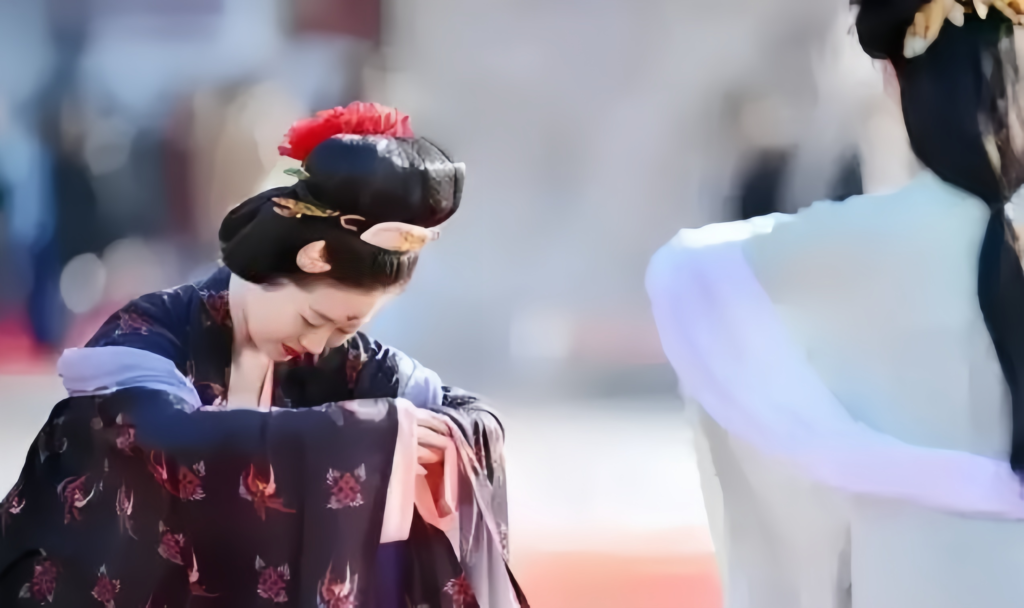
Based on formal standing, slightly bend the upper body and lower the head to show respect.
2. Sitting and Walking
1) Proper Sitting (Kneeling or Elegant Sitting)
Knees are kept together, hips rest on the heels, and the tops of the feet touch the ground. Hands rest on the knees, eyes look forward, and the back remains straight.
2) Upright Sitting (Cross-Legged Sitting)
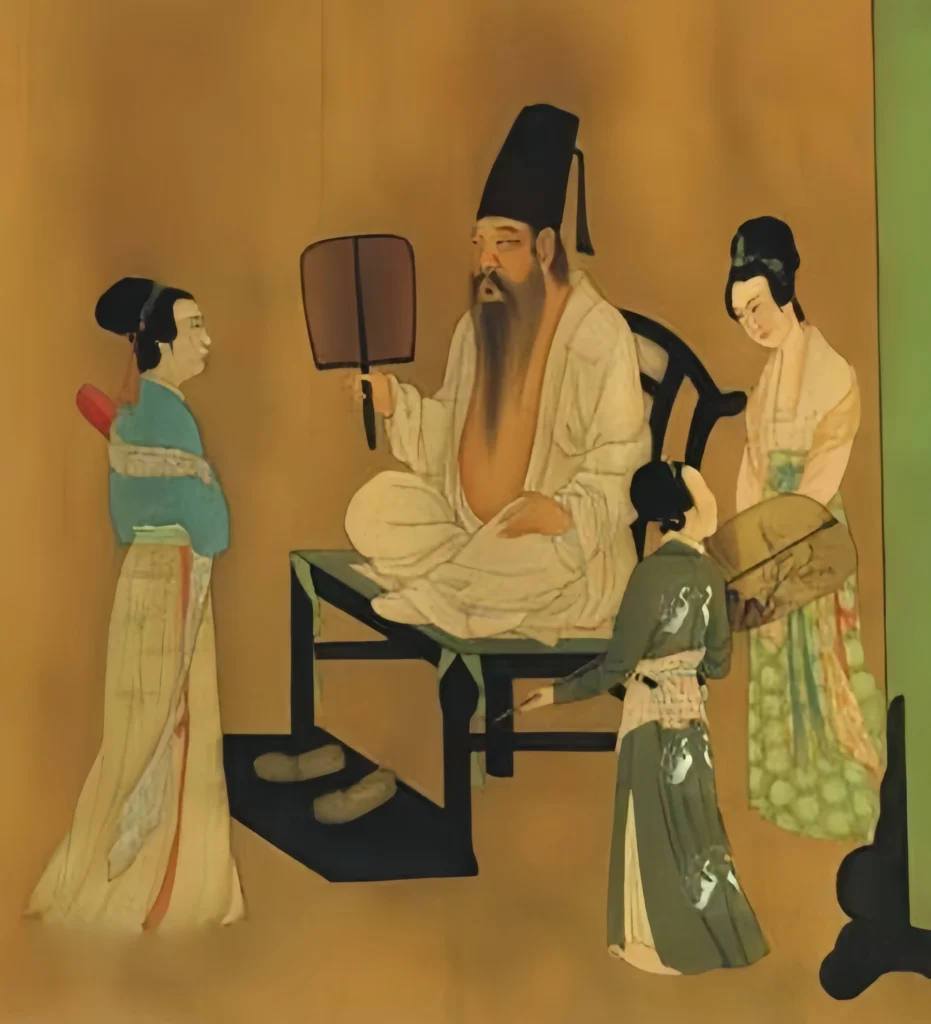
Keep the back straight and avoid spreading the legs. Hands rest on the knees. Hands may be lightly clenched and placed forward, or gently folded at the abdomen. Sit on about one-third of the seat.
3) Walking
In formal ceremonial settings, walk with the body upright and eyes forward, hands positioned as in formal standing, moving at a steady and controlled pace.
3. Saluting and Greeting
1) Nodding Salute
Stand upright in formal posture, slightly lower the head, and bend the body about 15 degrees. This is mainly used when elders return a salute from juniors, or during rituals when the hands are occupied.
2) Fist-and-Palm Salute
Stand with feet together. The left hand forms an open palm with fingers straight, while the right hand forms a fist. The left palm covers the right fist, with the fingertips aligned near the chin. The salute is held in front of the chest, about 20–30 cm away. This gesture is commonly used in daily interactions.
3) Scholar’s Greeting
Stand upright and extend both arms forward. The right hand is slightly curved, with the left hand placed over it. The arms move from forehead level down to the chest while bowing about 30 degrees. This greeting is used in formal settings between peers or friends.
4) Deep Bow (Da Yi)
Men place the left hand over the right, while women reverse the order. Hands remain inside the sleeves. Raise the hands to the forehead, bow about 45 degrees, then straighten up as the hands rise to eyebrow level before lowering them. This is used in formal occasions when greeting elders or thanking guests.
5) Kneeling and Prostration
Stand upright and raise the hands to the forehead as in a bow, then bend forward about 90 degrees. Straighten the body as the hands rise again to eyebrow level.
Next, both knees touch the ground, the body slowly bows forward, hands touch the ground, and the forehead touches the floor. Then rise back up, hands lifting to eyebrow level. Depending on the ritual, one may stand or repeat the bow. This礼 is used in major ceremonial occasions, especially when paying respect to teachers or deities.

Responses