Song Dynasty Hairstyles and Hair Accessories: Two Song Periods (Northern & Southern Song)

Song Dynasty Hairstyles: Hanfu Hairstyles and Hair Accessories for Women
The Song dynasty placed huge emphasis on Confucian rituals and propriety. When Emperor Taizu (Zhao Kuangyin) was in power, scholar Nie Chongyi presented the Three Rites Illustrated, which set clothing styles based on Zhou dynasty precedents. Everyone—from officials to their wives and daughters—had to dress according to strict rank rules, no exceptions or crossing lines allowed. Emperors repeatedly issued frugal edicts banning women from flashy outfits or super-expensive jewelry across all classes.
Yet Song women, with their love for beauty, kept inventing fresh Song dynasty hairstyles and Hanfu hair accessories. They weren’t as over-the-top luxurious as Tang styles, but the variety was colorful and full of life, contributing to the rich tradition of ancient Chinese hairstyles and Hanfu hairstyles for women.
Song girls took the “ji li” (hair-pinning ceremony) very seriously—it marked the shift from loose girl hair to an adult updo (hair bun). Zhu Xi’s revised Family Rituals describes the ceremony in detail, and Song History records princesses going through it too. During the event, relatives showed up to celebrate, bringing gifts and well-wishes. This rite was an important step in Hanfu hairstyles for women and Song dynasty hairstyles during the Song era.
Weddings were a big deal as well, with customs that feel familiar even today in some places. The bride got fully made up and styled first, then was welcomed to the groom’s home. The couple bowed to ancestors, to parents, to each other, tossed candies during “scattering the bed,” drank from linked cups (he jin), and of course did the “tying hair together” ritual (he ji).
Southern Song writer Wu Zimu’s Dreams of Liang describes wealthy families including “three golds” in the bride price to the girl’s family: gold hairpin, gold bracelet, gold pendant. They also sent “pearl-and-jade special buns, pearl-and-jade round caps, seasonal flower-and-pearl rings,” etc. Three days before the wedding the groom’s side delivered “催妆花髻” (催妆 flower buns) and “销金盖头” (gold-embossed red veil). The flower bun was probably similar to Tang’s “false buns” decorated with floral hairpins. The gold-embossed veil is basically today’s red wedding veil, with applied gold leaf or woven gold patterns.
On the big day the bride wore the veil to the groom’s house for the ceremony; the groom lifted it to reveal her face. These wedding looks featured elaborate Song dynasty women hairstyles paired with luxurious Hanfu hair accessories and ancient Chinese hairstyles.
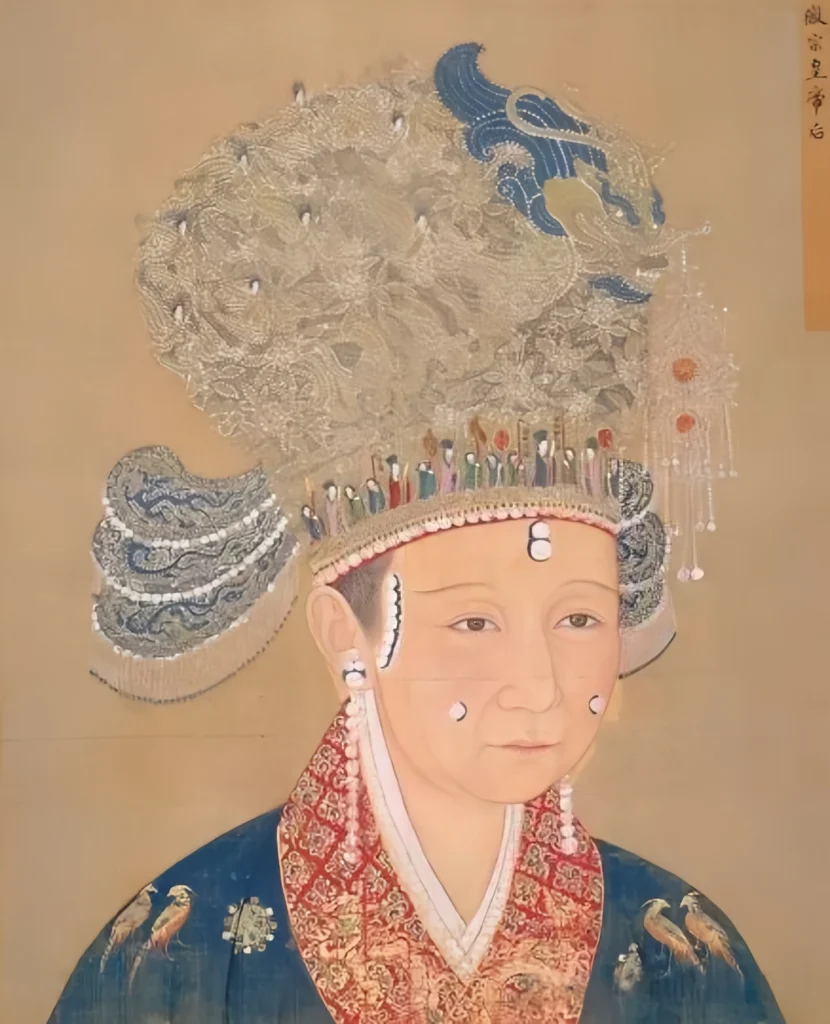
High-ranking ladies’ Song dynasty hairstyles and Hanfu hair accessories got special attention. Song empresses wore the famous “dragon-phoenix floral hairpin crown,” inlaid with tiny pearls forming cloud-dragon, immortal figures, and pearl flowers. They had two wide side pieces (博鬓) on each side, sparkling with pearls all over.
The portrait of Empress of Emperor Renzong shows exactly this phoenix crown style. Empress of Emperor Huizong’s portrait has a crown with three 博鬓 on each side, covered in human-faced bird immortals (飞天), huge pearl flowers, and a dangling green dragon dropping strings of pearl droplets from its mouth, plus colorful painted immortals along the crown rim. These crowns are classic examples of Hanfu hair accessories in royal ancient Chinese hairstyles and Song dynasty hairstyles.
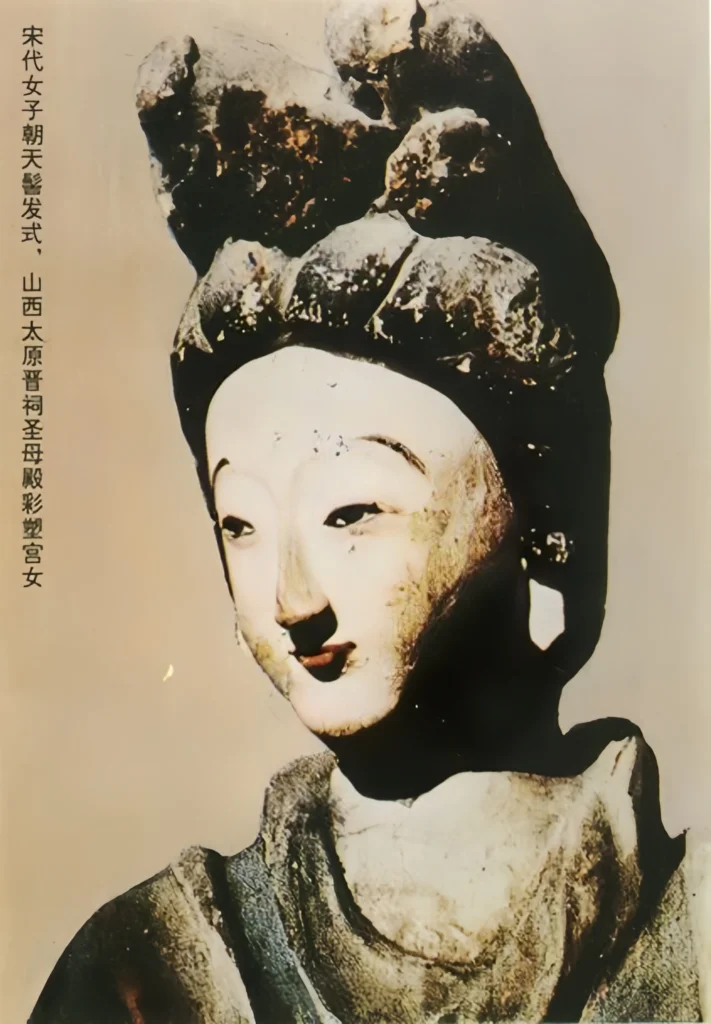
Many buns were wrapped in fabric—called “wrapped buns” (包髻). The cloth was tied into all kinds of flower-like shapes, looking both elegant and charming. Records of the Splendor of the Eastern Capital mentions matchmakers wearing yellow wrapped buns with headscarves. The painted serving girls at Jinci Temple (Jin Shrine) in Shanxi show orange-yellow, blue, or red fabric wrapped buns, often with a gold floral diadem pinned in front. One young attendant has a red-wrapped bun that looks like a butterfly spreading its wings, centered with a flower ornament. Wrapped buns represent a practical yet beautiful side of Song dynasty hairstyles and Hanfu hairstyles for women.
There was a “coiled fortune dragon bun” (盘福龙髻), also nicknamed “convenient sleep bun” (便眼觉), popular during Emperor Huizong’s Chongning era (early 1100s). It was large and flat so it didn’t get in the way when sleeping—basically a side-sleeping-friendly style. Some ladies in the anonymous Illustrated Classic of Filial Piety wear this, with a small white horn comb stuck in.
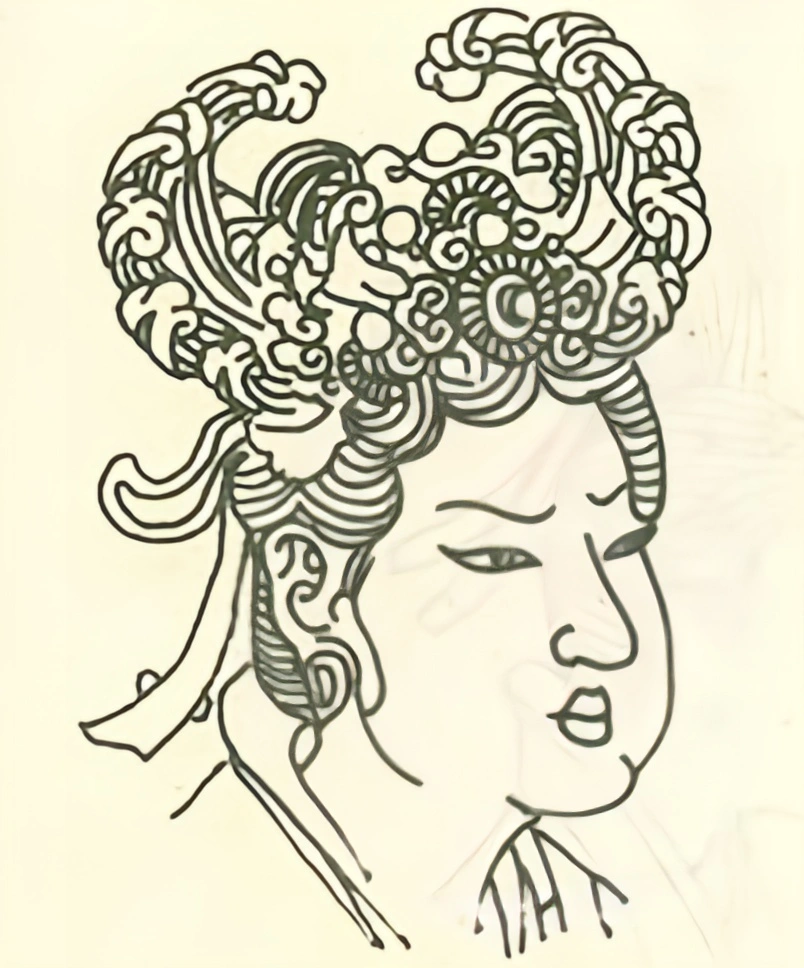
High buns were super popular among Song women, with tons of variations. The “face-the-sky bun” (朝天髻) appears in over forty Song dynasty painted clay serving-girl statues at Jinci Temple in Taiyuan, Shanxi. Hair was piled high on top, shaped into two forward-leaning cylinders, bound with a gold band, then decorated with floral pins and jewels. This dramatic style is one of the most recognizable Hanfu hairstyles for women from the Song dynasty hairstyles tradition.
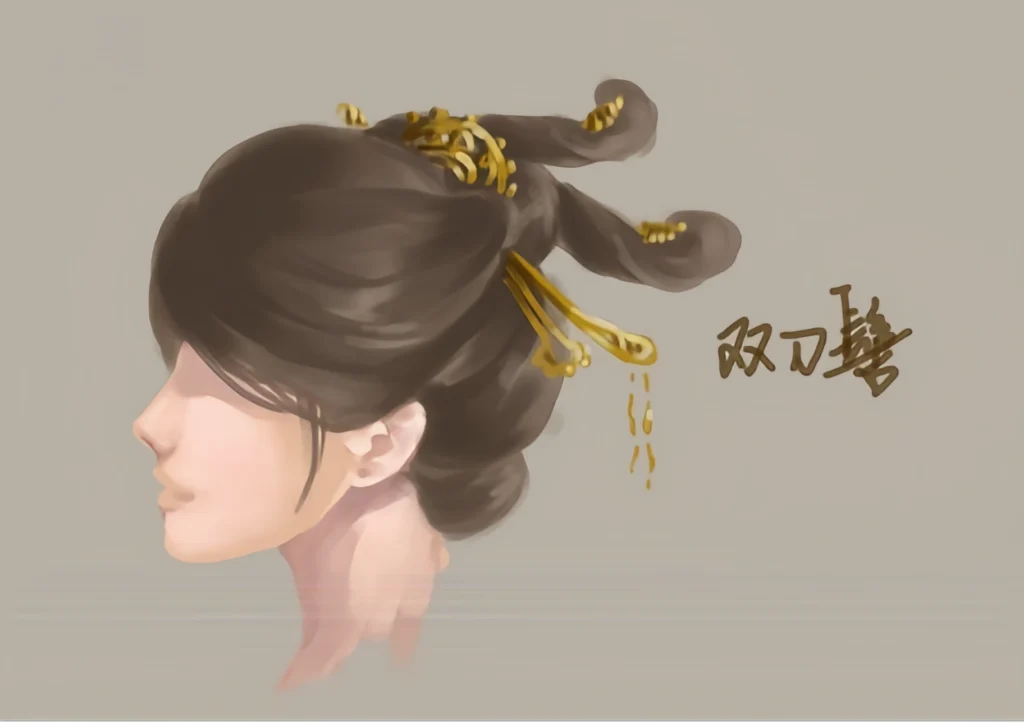
The “double coiled bun” (双蟠髻), also called “dragon-bud bun” (龙蕊髻), looked like flattened looped buns tied with colorful ribbons. Su Shi wrote about “dark coiled double buns.” The Song People Enjoying Autumn Leisure painting shows this style topped with floral pins and pearls. It had a bold, lively dragon-and-phoenix vibe, blending perfectly with Hanfu hair accessories.
The “tassel bun” (流苏髻) was supposedly created by a beauty named Qingyun with super-long hair. According to Xie Shi Poetry Source: “Qingyun’s hair was extremely long; even after braiding it into a bun, the leftover strands on each side were as thick as a finger. She tied them into matching-heart knots, let them hang over her shoulders, and decorated with pearls and kingfisher feathers—called tassel bun.”
Imagine standing on a bed to comb hair that still brushed the floor—then after making the main bun, leaving two thick side locks hanging down, tying each into a heart knot, and adding jewels. It was a romantic symbol of wishing for true love. The “matching-heart knot” was traditionally made with silk ribbons, but here it used her own hair—way more meaningful. Would a clueless guy even get the sentiment? Tassel buns showcase the emotional depth often found in ancient Chinese hairstyles and Song dynasty women hairstyles.
Lu You’s Record of Entering Shu notes that in Southern Song Sichuan, unmarried girls wore “matching-heart buns” up to two feet tall, stuck with six silver hairpins and a back ivory comb. It was a hopeful style for young girls dreaming of lifelong partnership. Yan Jidao’s Picking Mulberries lyric says: “Double snail buns not yet learned to tie as matching hearts, already famous for singing.” It describes an innocent girl still wearing simple double-snail buns, not yet aware of the deeper emotions that come with the matching-heart style.
Chao Buzhi’s lyric Down the River Boat paints a vivid scene: a guest arrives, startling a sleeping beauty behind a silver screen. She leans on her vanity, lazily untying her silk bun, fingers twirling the cloud-like hair. In the mirror her eyes flow like autumn water. She quickly fixes the fallen phoenix hairpin, tucks in fragrant flower branches, lightly dusts on powder, straightens her silk dress and green brows. Yet despite all the tender feelings, nothing gets said…
The “phoenix bun” (鸾髻) resembled a mythical luan bird or was decorated with luan-phoenix hairpins. Xuanhe Remnant Affairs describes the famous beauty Li Shishi as having “drooping brows and luan bun hanging like dark clouds, bright eyes overflowing with autumn water.” Her long luan bun draped to the shoulders, glossy black, perfectly setting off her peach-blossom face and jade skin. Phoenix buns highlight how Song dynasty women hairstyles often incorporated symbolic Hanfu hair accessories.
The “banana-leaf bun” (芭蕉髻) was oval-shaped with green kingfisher feather edges, according to Zhou Xibao. A lady in the Song painting Walking Under the Moon on the Jade Terrace seems to wear this drooping style.
Loop buns (鬟髻) were hugely popular in both Northern and Southern Song. Huang Tingjian wrote of “newly combed twelve loops in the morning mirror.” The Baisha Song tomb has high buns with single loops, evolved from Tang round-ring cone buns. Girls often wore double or triple loops; one lady in Moonlit Under the Forest has three loops.
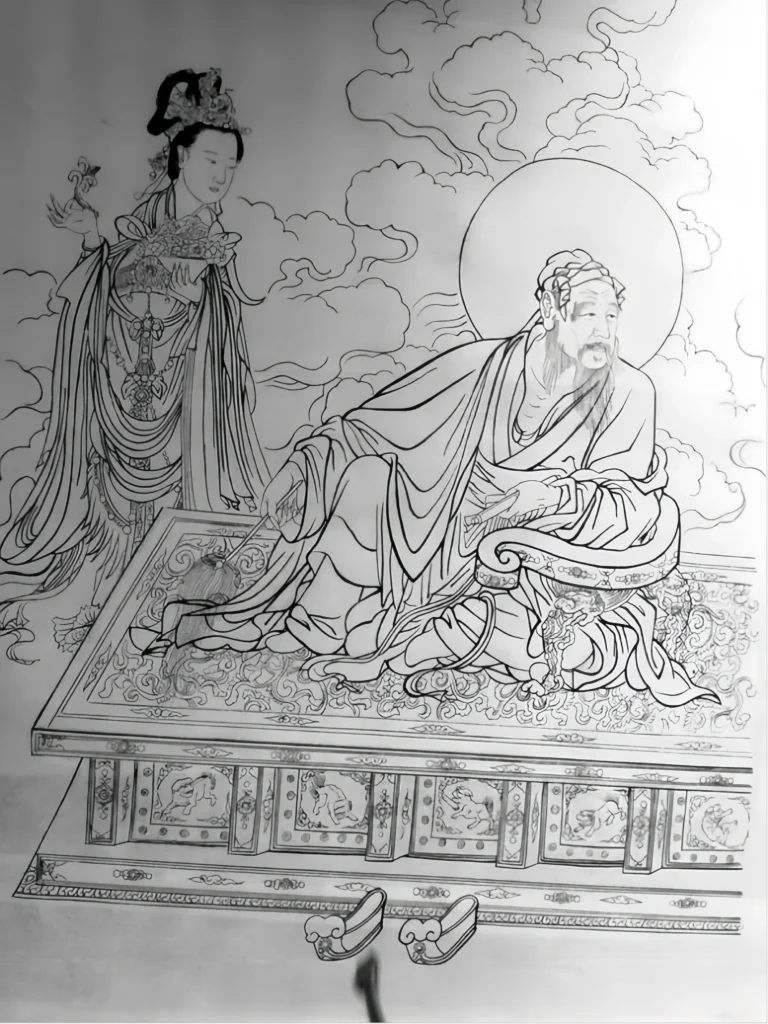
Multi-loop buns were associated with immortals and jade maidens, so they were also called “immortal buns.” In the scroll attributed to Li Gonglin’s Vimalakirti Preaching, a serving girl beside Vimalakirti has double loops supported by internal frames, pinned with a pearl-dropping phoenix hairpin and floral ornaments—very luxurious.
Miscellaneous Notes from the Eastern Qi mentions the “lazy comb bun” (懒梳髻), where black hair was divided into strands, loosely gathered, and tilted to one side—later called “lazy head” in Ming times.
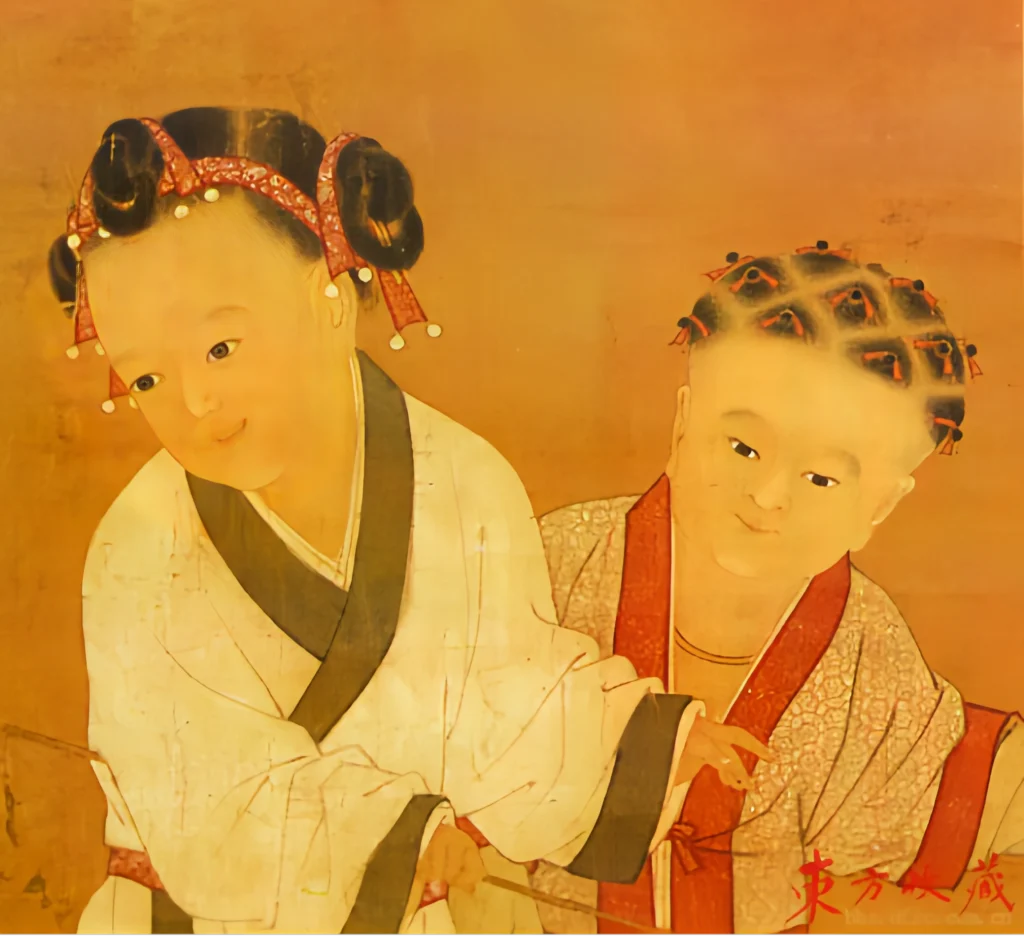
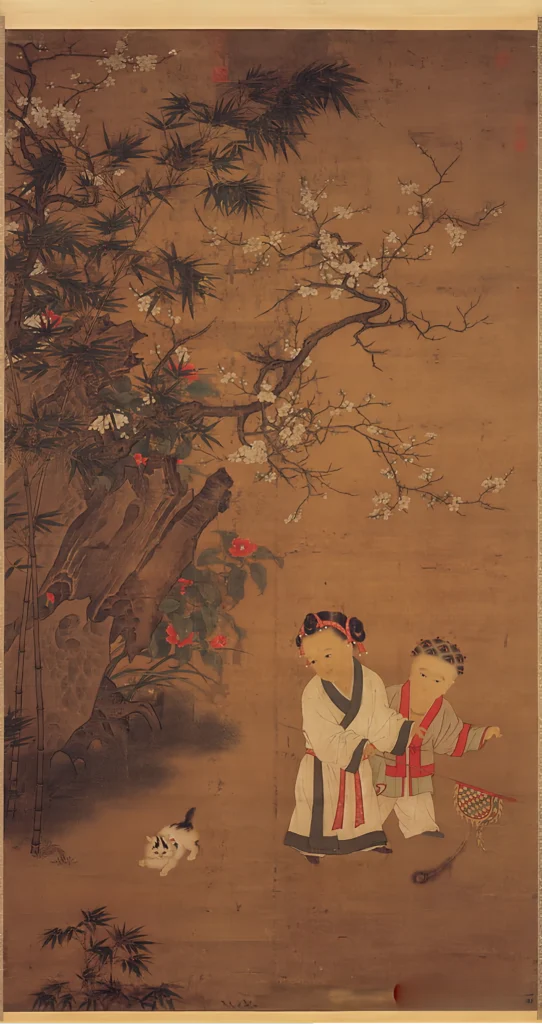
Double-yoke and triple-yoke buns were still around, especially for little girls. They used a pearl-dangling head rope to tie them. In Southern Song Su Hanchen’s Children Playing on a Winter Day, one girl has a triple-yoke bun with three short gold hairpins, red silk head rope, and hanging pearl strands.
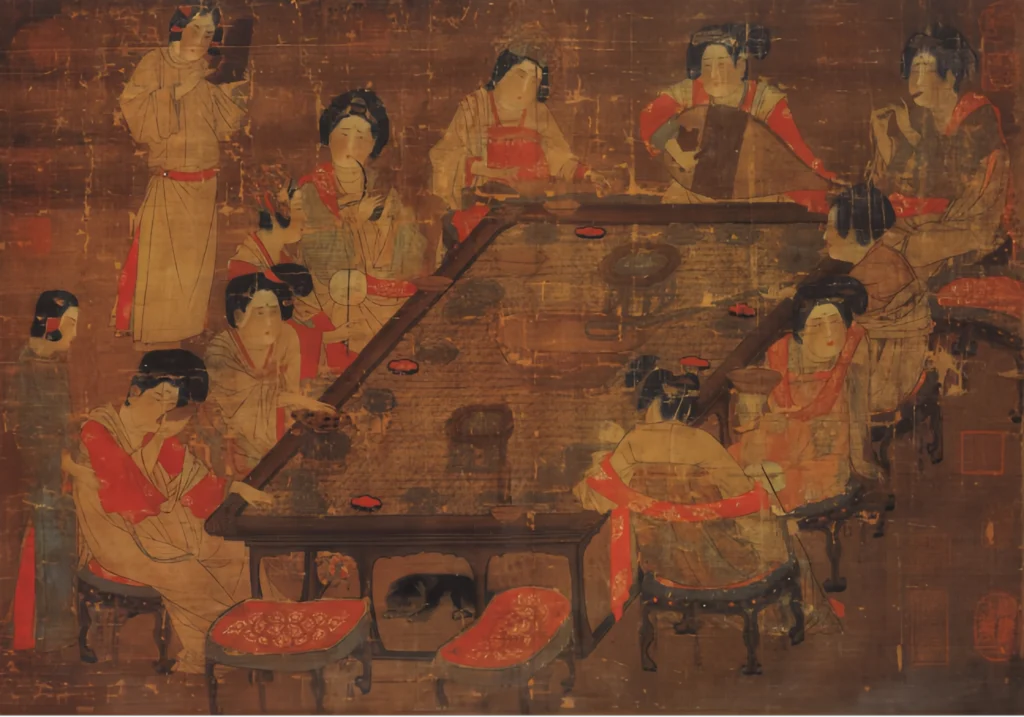
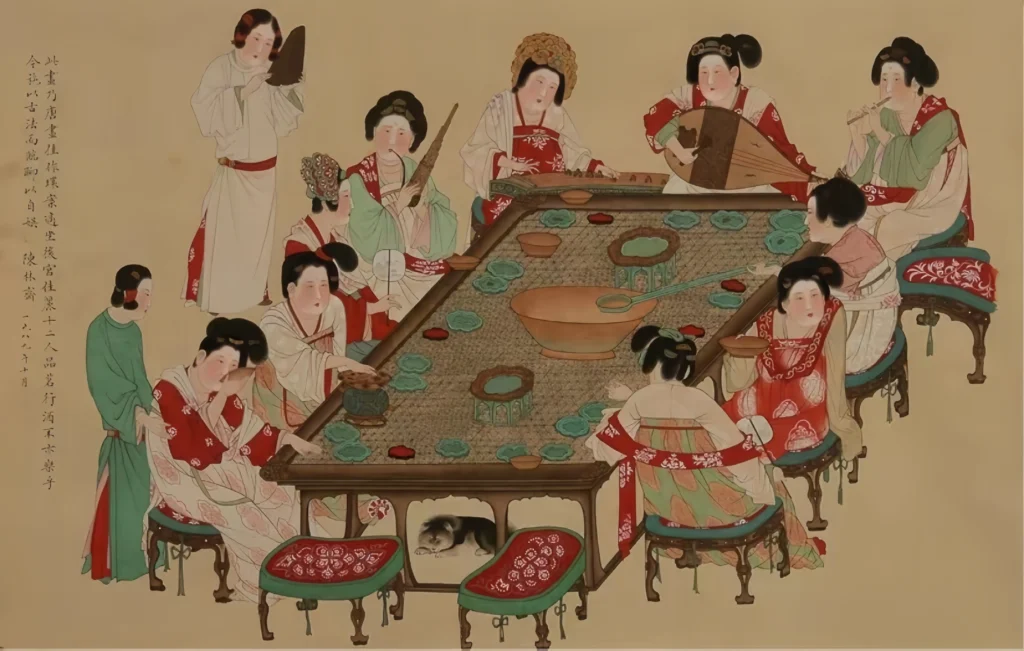
“Fallen horse bun” (堕马髻) remained trendy. Hou Zhen’s Bodhisattva Barbarian lyric: “Green window just waking from sleep, fallen horse lazily combed bun. Slanted purple luan hairpin, fragrance wafting from the temples.” Compared to Tang versions, Song ones changed a bit—like in Palace Music paintings, where women pile a high bun then let it droop sideways, adding small combs and pearls for a lazy-cute look.
Maple Window Sketches records late Northern Song trends: Chongning era loved big square buns and square foreheads; Xuanhe-Zhenghe era shifted to tight-tied shoulder-drooping buns, then “cloud-tip clever foreheads” (either forehead hair coiled into clouds across the brows, or trimmed into sharp points aimed at the center brow), with gold phoenix temple supports.
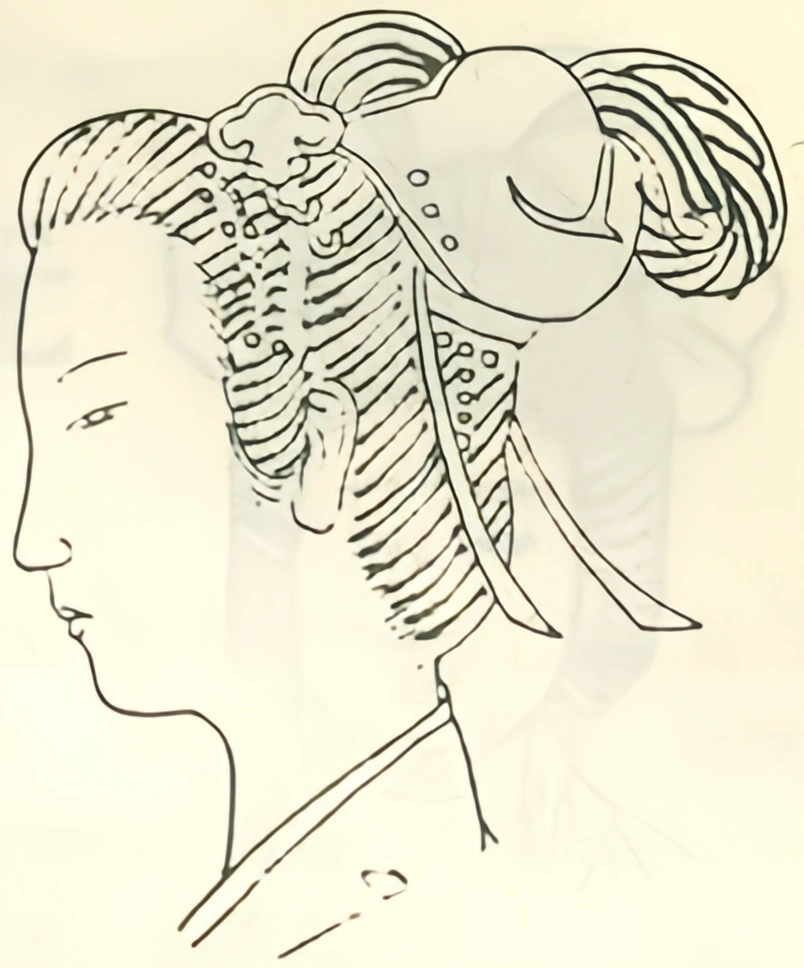
The tight-tied shoulder-drooping style appears in murals from Baisha Tomb No. 1 in Yuxian, Henan—the mistress and her maids all have small drooping buns to the shoulders, tied with silk bands. Some add an extra loop and wear round caps.
Song jewelry used hammering, wire carving, etc. Phoenix hairpins were cut from gold sheet, hammered for relief, then finely engraved with feathers. A gold phoenix hairpin from a Jin dynasty hoard in Lintong, Shaanxi, has flared wings and delicate pin stems.
Women’s hair ornaments included hairpins (chai), sticks (zan), combs, etc. Yang Zhishui’s study on Song-Yuan-Jin gold-silver jewelry lists many hairpin types: folded-branch (twisted strips folded in half), bamboo-joint style, flower-head (two hammered sheets rolled into trumpets, topped with dangling flower petals), dragon-tiger (folded-branch with double dragons or chi-dragons, peony on the bridge), linked-three (thick silver wire bent into continuous double branches, each topped with a flower).
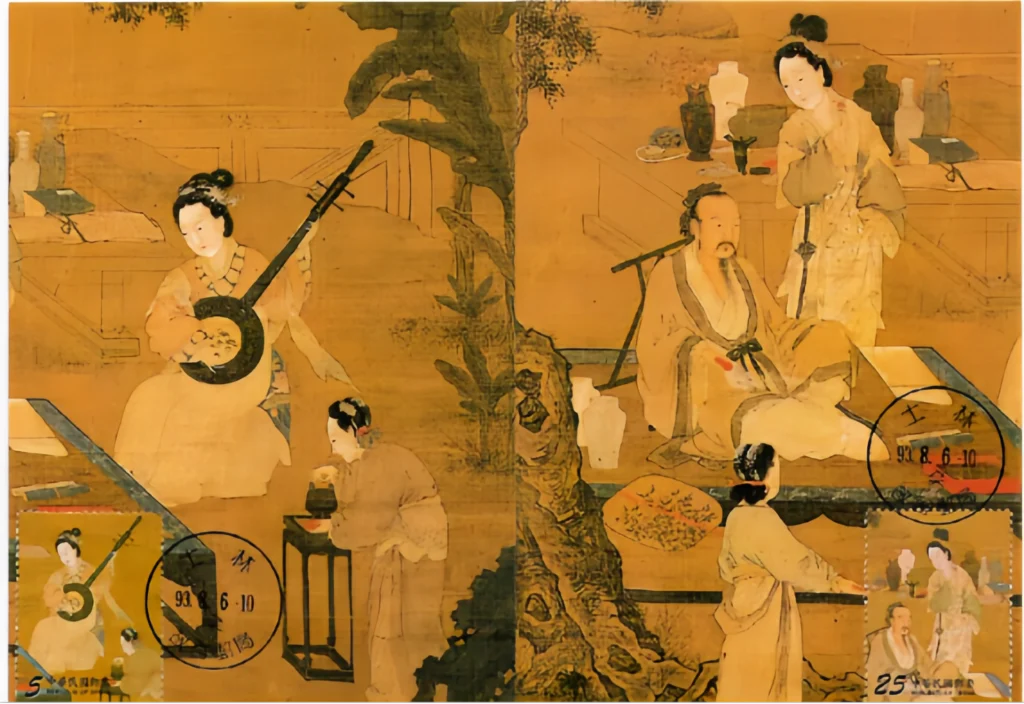
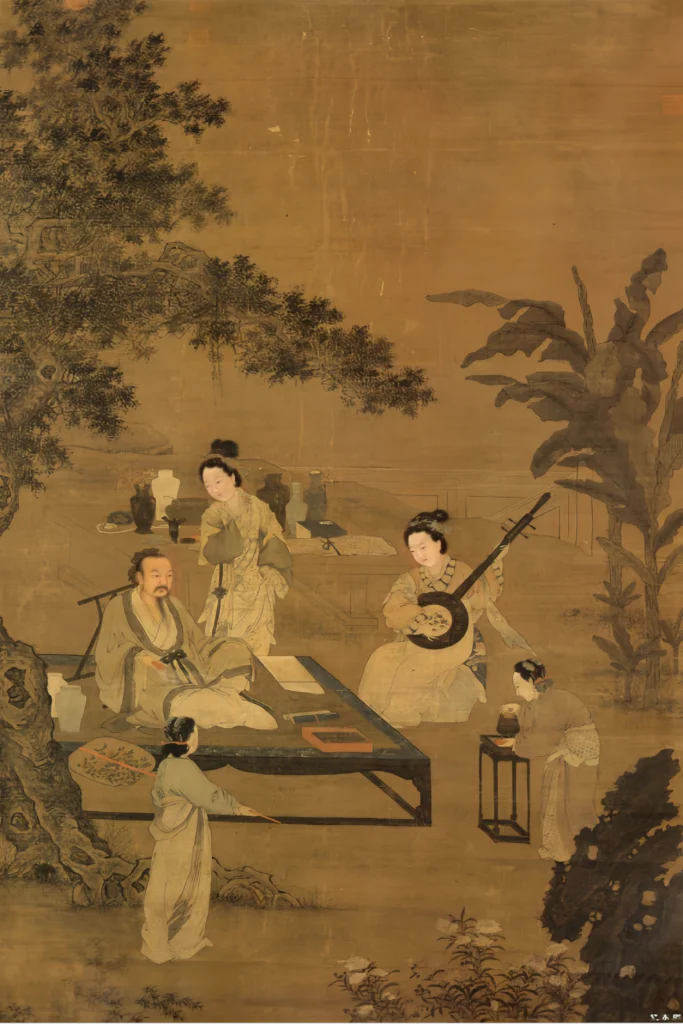
These were decorated with pearls, gems, kingfisher feathers shaped into flowers, luan-phoenix, etc.—when fully loaded it was called “head face” (头面). Eastern Capital Splendor says princess dowries included dozens of palace ladies with “real pearl hairpins, dangling clusters, exquisite pearl-and-silk head faces.” Also “flower clusters, pearl-jade head faces, colored gold-embroidered hats, special bun crowns.” Dreams of Liang mentions “flying luan running phoenix,” “seven-treasure pearl-jade,” “flower-cluster crown combs”—all exquisitely made. Emperor Huizong’s palace poem: “Jade kingfisher palace flowers on head, precious cicadas and butterflies seem ready to fly.” A lady in Listening to the Pipa painting wears flying-luan-running-phoenix ornaments. All these elements form the core of Hanfu hairstyles for women and Hanfu hair accessories in Song dynasty hairstyles.
Song women’s Song dynasty hairstyles mostly carried on late Tang and Five Dynasties traditions, still favoring high buns. A real high bun was excavated from Southern Song Lady Huang Sheng’s tomb in Fuzhou—often padded with cut hair from others mixed in, or fully fake buns made from someone else’s hair that could be worn like a modern hairpiece (“special bun crown” or “false bun”). Different styles for different occasions and social levels. Fake buns became so common that big cities had dedicated shops making and selling them.
Beyond that, Song dynasty hairstyles were incredibly diverse and full of personality.
Face-the-Sky Bun (朝天髻): A very era-specific high style. Song History – Five Elements – Wood notes that in early Jianlong (960s), women in Shu (Sichuan) competed to make sky-high buns called face-the-sky buns. Classic examples appear in the painted clay serving girls at Jinci’s Holy Mother Hall. Method: pile hair to the top, braid into two symmetrical forward cylinders, pad underneath with pins/combs to make the front rise dramatically, then decorate with flowers, jewels—very distinctive and unified look.
Wrapped Bun (包髻): Seen in Jinci painted statues. Eastern Capital Splendor says matchmakers wore yellow wrapped buns with caps. After shaping the bun, wrap with silk or plain cloth, tying it into flower shapes, floating clouds, etc., then add fresh flowers and jewels. Simple yet refined and elegant.
Double Coiled Bun (双蟠髻): Also “dragon-bud bun.” Big center with double roots tied in colorful ribbons. Su Shi lyric: “dark coiled double buns.” Appears in Half-Idle Autumn Leisure painting.
Triple Yoke Bun (三髻丫): Divide hair into three buns or loops at the top. Fan Chengda song: “White-haired old woman pins red flower, black-haired girl wears triple yoke.” Seen in Li Song’s Listening to the Pipa.
Face Ornaments: Song continued earlier customs of gluing floral diadems (hua dian) on forehead and cheeks—thin metal foil or colored paper cut into tiny flowers, birds, ducks, stuck with special glue (“breath glue”—melted by breathing on it). Later black glossy paper for round cheek patches. “Fish charmer” used tiny fish-gill bones as decoration. The legendary “plum makeup of Shouyang” from Emperor Huizong’s palace poems became a trendy look everyone copied.
Love Song dynasty women’s hanfu?
Check our Song dynasty Hanfu guide for authentic tips!

Responses