Hanfu Styles and Etiquette (Hanfu system)

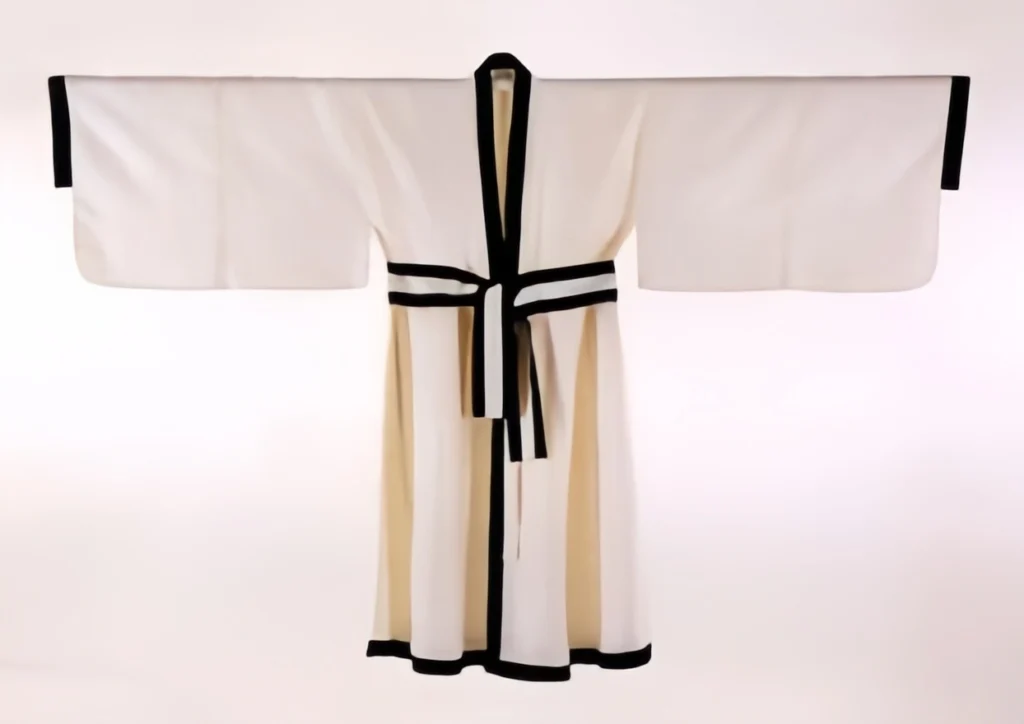
Hanfu is the traditional clothing of the Han Chinese, passed down for thousands of years. It is the form of dress that most clearly represents Han cultural identity and an important part of traditional Chinese clothing. Just as every ethnic group has its own distinctive traditional attire, Hanfu reflects the unique characteristics of the Han people. From the era of the Three Sovereigns and Five Emperors through the Ming dynasty, over several thousand years, the Han people used their wisdom and creativity to develop a rich and diverse Hanfu culture. This gradually formed a complete and distinctive clothing system known as the Hanfu system, which occupies a central place in Chinese clothing history.
Styles (Hanfu outfit types)
Xuanduan
Xuanduan was a formal court and ceremonial garment commonly worn during the pre-Qin period. It represents the classic Chinese “upper garment and lower skirt” clothing system that formed the foundation of ritual dress within the Hanfu system. After the popularity of the shenyi, Xuanduan gradually fell out of use, but the Ming dynasty later revived its structure in the creation of the Zhongjing robe.
Xuanduan consists of an upper garment and a lower skirt. The upper garment was made using fifteen units of cloth, each piece measuring about two chi and two cun in length. Due to the narrow width of ancient textiles, each piece formed a square shape, emphasizing straight lines and balanced proportions—hence the name “duan” (upright and square). Xuanduan garments were unadorned, without decorative patterns, symbolizing moral integrity and upright character. This style could be worn for sacrifices, ceremonies, or daily residence, from emperors down to scholar-officials.
Quju (Curved-Hem Robe)
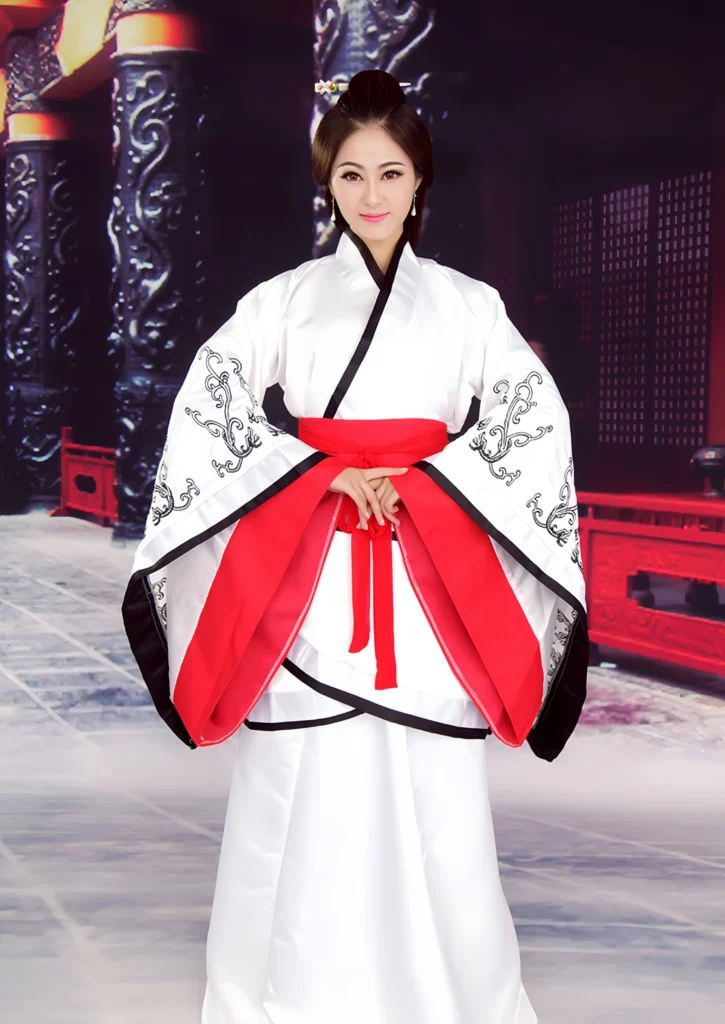
Quju is a type of shenyi within the Xia–Shang clothing system and an early example among traditional Hanfu outfit types. Based on whether the hem wraps around the body, shenyi can be divided into zhiju (straight hem) and quju (curved hem). In quju, the back panel of the robe is extended to form a triangular section that wraps around the body from the back to the front, secured at the waist with a wide belt, concealing the pointed hem.
Both men and women wore quju. Men’s versions had wider hems for easier movement, while women’s were more fitted. Quju garments were generally slim-fitting, long enough to trail the ground, with flared hems that covered the feet while walking. Sleeves varied, including wide sleeves, pipa sleeves, and hanging sleeves, with most cuffs edged in decorative borders.
Zhiju (Straight-Hem Robe)
Zhiju was worn by both men and women in ancient times. It features a straight, symmetrical garment body with a square structure, symbolizing uprightness and balance within the Hanfu system. The upper garment consists of four panels representing the four seasons, while the lower skirt has twelve panels symbolizing the twelve months. The wide sleeves convey the idea of broad-mindedness and inclusiveness, reflecting core values found throughout Chinese clothing history.
Zhizhuo (Zhiduō)
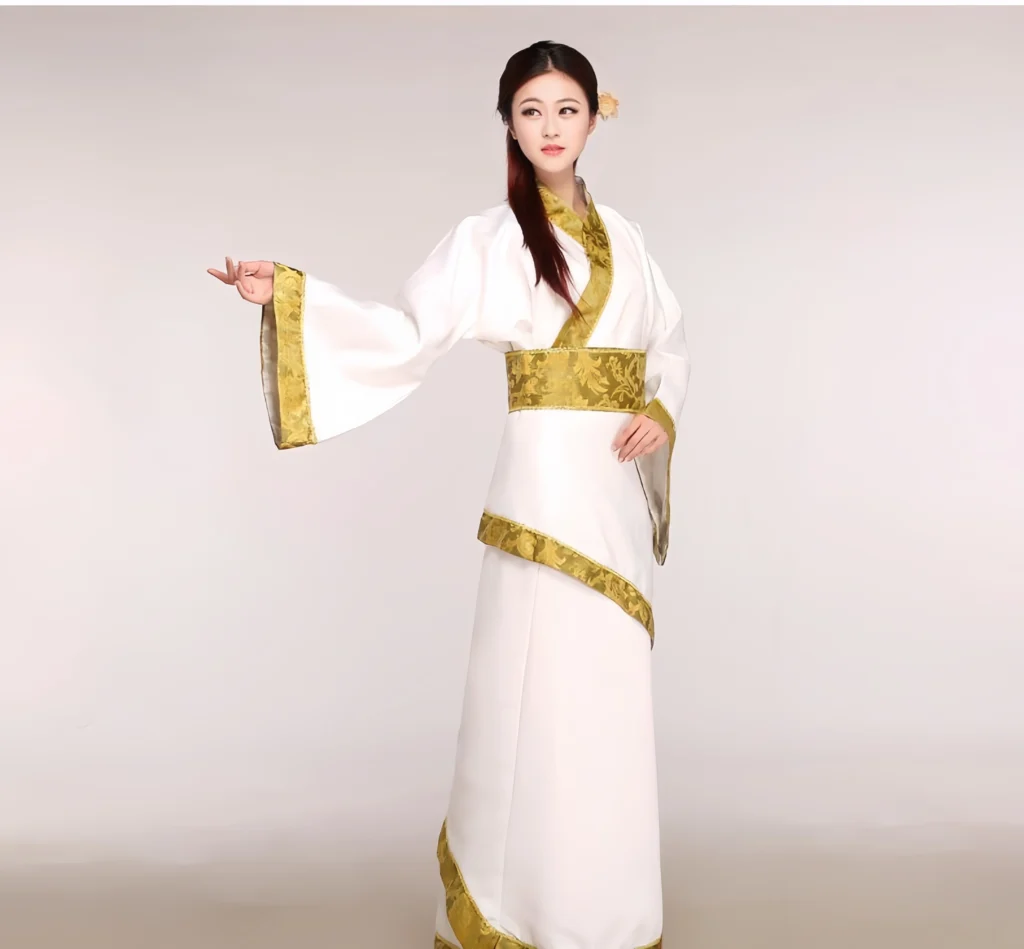
Zhizhuo, also known as zhiduo, originated as a monk’s robe, created by stitching together a slanted upper garment and a skirt. From the mid-Tang dynasty onward, it became widely used in Zen Buddhism. The earliest form of Japanese Buddhist robes was influenced by this style. During the Tang dynasty, the combination of the upper garment and skirt into a single piece became known as zhizhuo, showing the cultural spread of traditional Chinese clothing.
Ruqun consists of a short upper garment (ru) and a skirt (qun), and was one of the most common forms of daily wear for the Han people. It is also one of the earliest and most fundamental structures among Hanfu outfit types. From the Warring States period through the Ming dynasty—over two thousand years—its proportions changed, but its basic form remained consistent within the Hanfu system.
Based on collar style, ruqun can be divided into cross-collar and straight-collar types. Based on skirt waist height, it includes mid-waist, high-waist, and chest-high (qixiong) styles.
Beizi
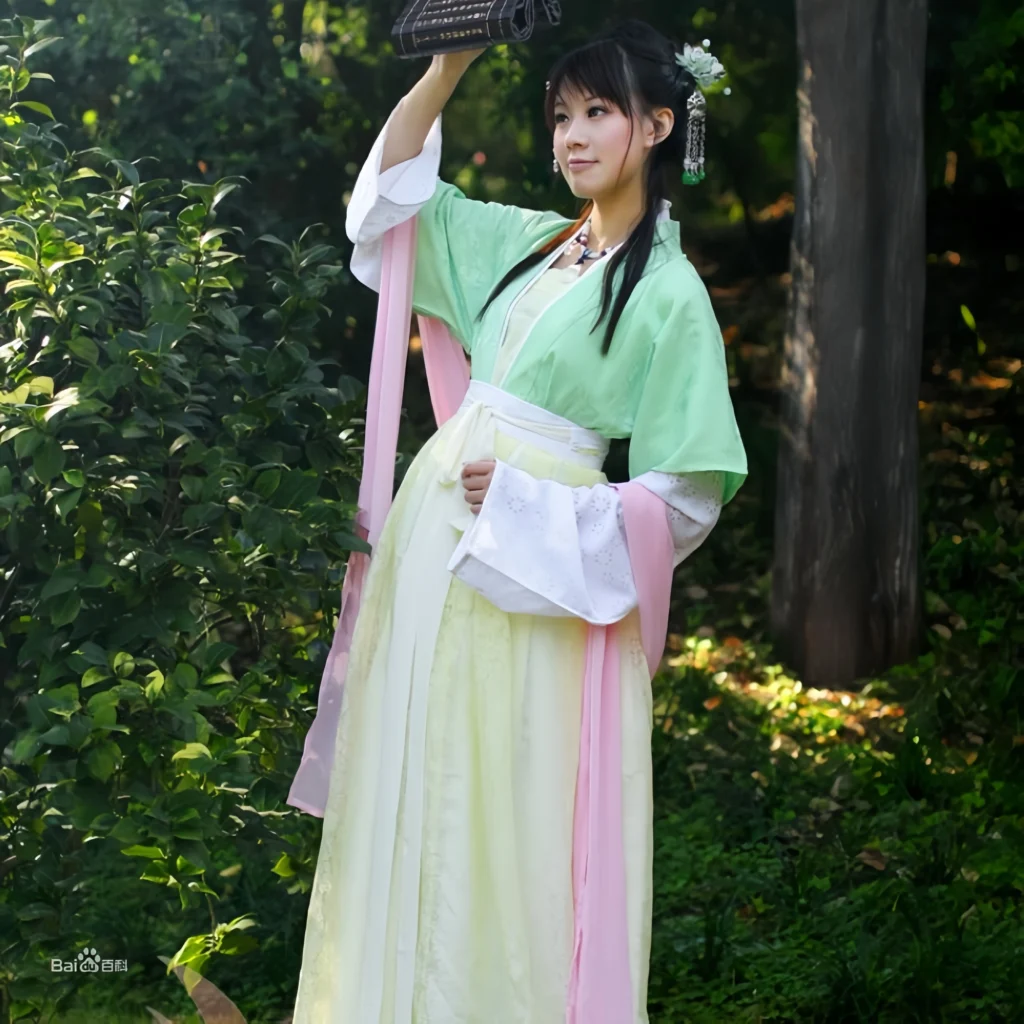
Beizi evolved from the upper garment of ruqun. Its defining features include a length extending below the knees, wide sleeves, side slits reaching the armpits, and a straight collar. Initially, beizi was mainly worn by women as formal attire paired with skirts, but it later became part of everyday wear in the broader context of traditional Chinese clothing.
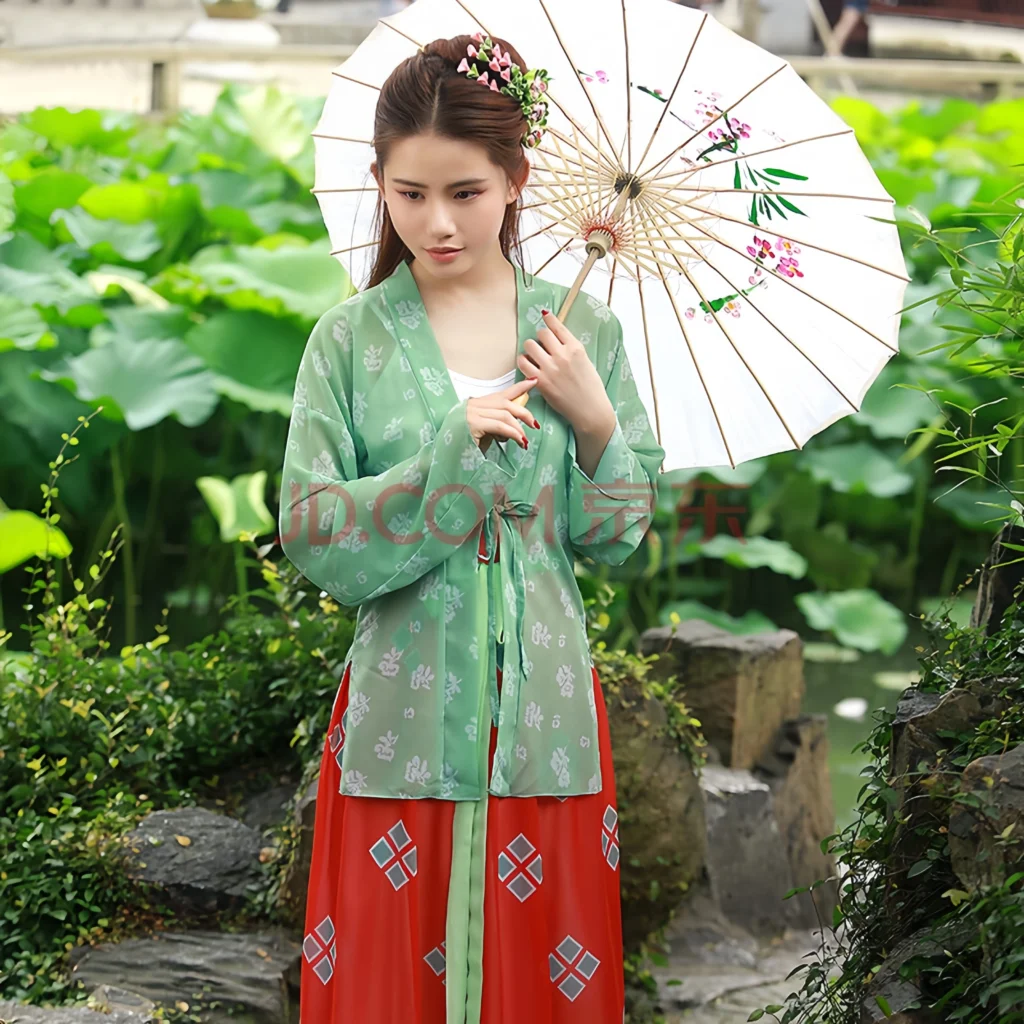
Banbi (Half-Sleeve Garment)
Banbi emerged as a new Hanfu style during the Ming dynasty and is essentially a short-sleeved or sleeveless version of the ru or beizi. It features a straight collar and chest ties and was worn by both men and women, enriching the diversity of Hanfu outfit types.
Originally popular during the Sui and Tang dynasties, banbi—also known as half-sleeve—came in styles such as front-opening, pullover, turned-collar, or collarless designs. Sleeves typically reached the elbow, with the garment length around the waist. It was often worn over inner garments and was first popular among palace attendants before spreading to the general public.
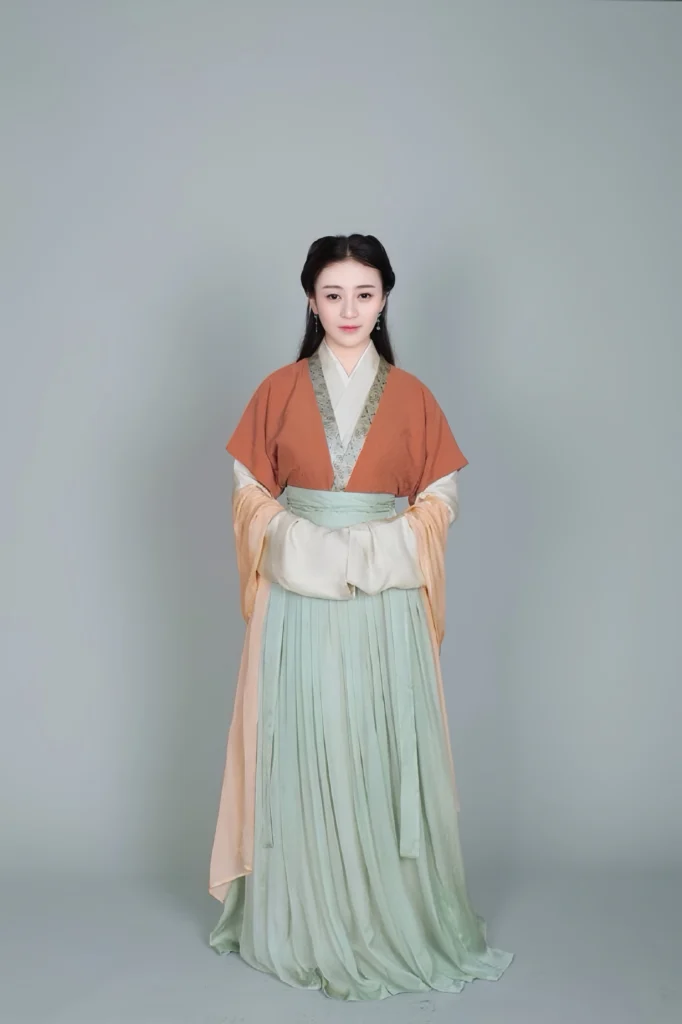
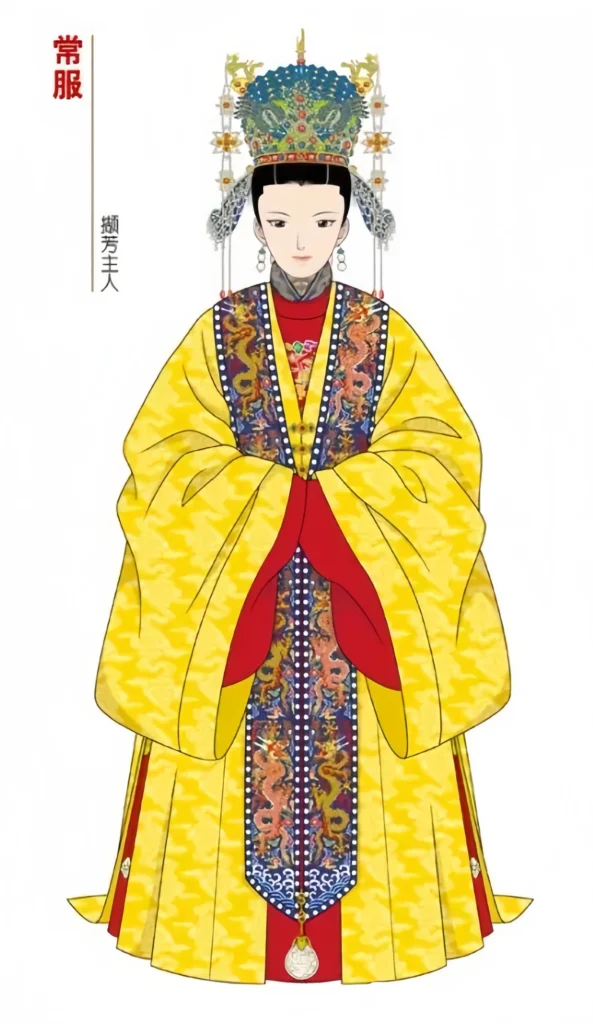
Aoqun originated in the early Ming dynasty. It features a cross-collar top tied below the armpits, with a longer upper garment worn outside the skirt, without a waistband. The sides are slit, with a center seam, and it is usually paired with pleated skirts or mamian skirts, becoming a representative style in later Chinese clothing history.
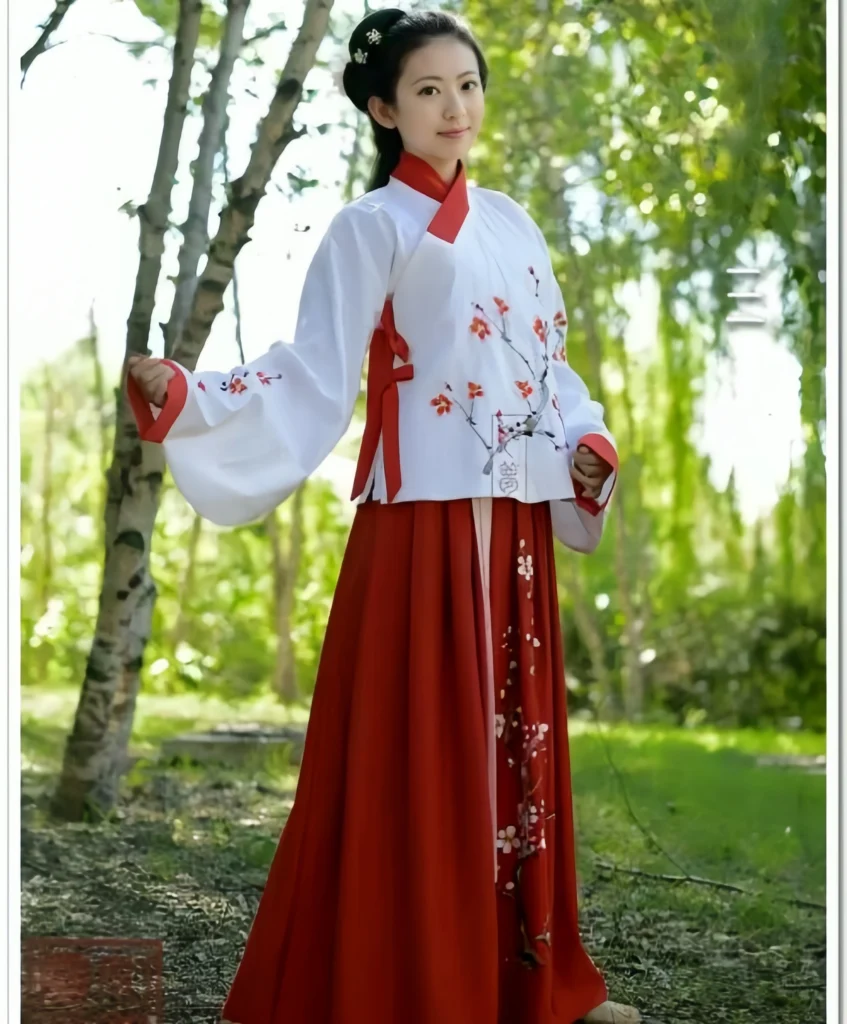
Yuanling Shan (Round-Collar Robe)
The round-collar robe became popular during the Sui and Tang dynasties and developed into standard official attire. This style continued through the Tang, Five Dynasties, Song, and Ming periods, and had a strong influence on clothing in Japan and Korea. Wearing a futou headpiece with a round-collar robe was typical daily attire for Tang dynasty men and an important branch of the Hanfu system.
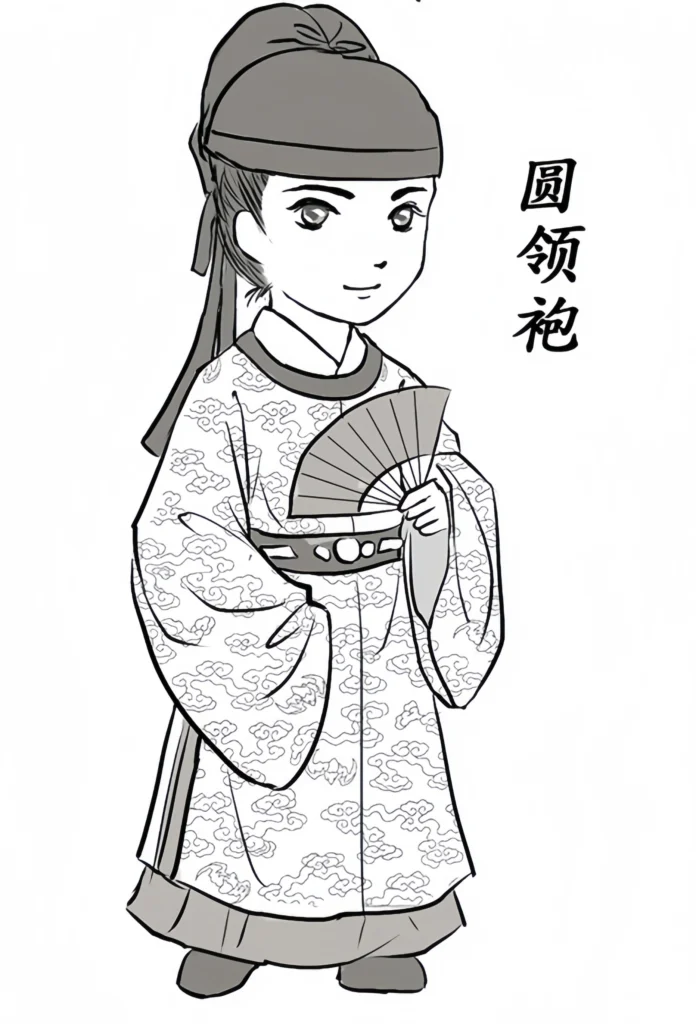
Duanda (Short Outfit)
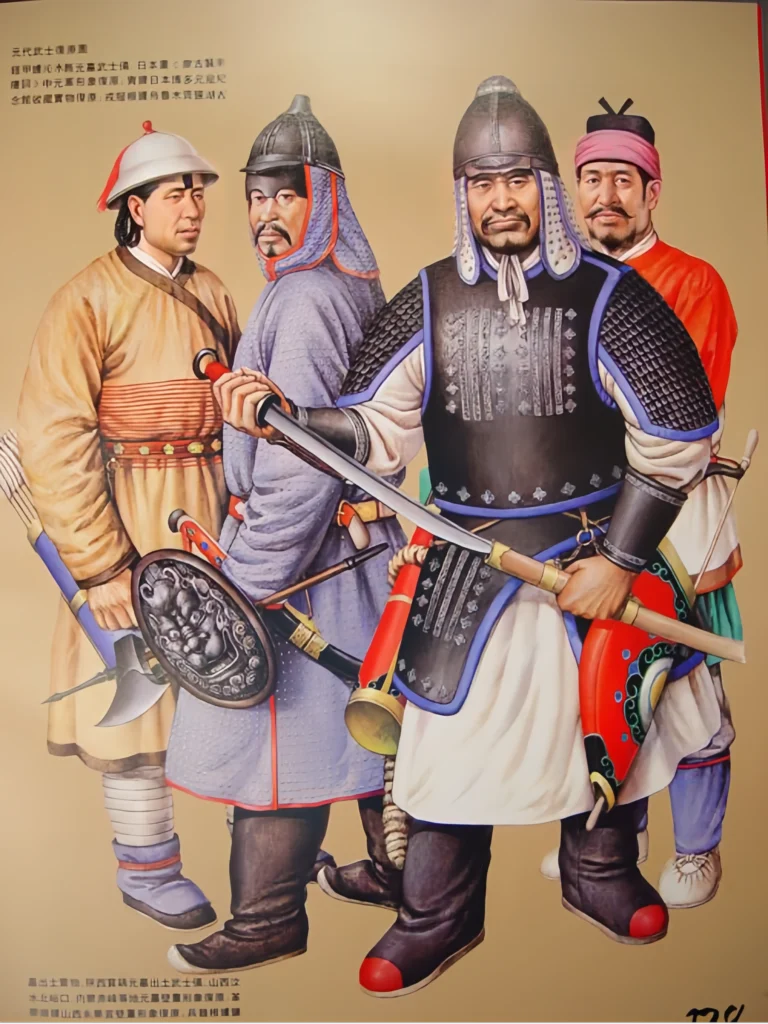
Also known as shuhe, duanda originally referred to coarse, short garments and later came to mean practical clothing consisting of a short top and trousers. It was commonly worn by ordinary people for daily activities, household work, labor, martial arts training, or military use, but was not suitable for formal occasions. Duanda represents a clean, practical, and functional style within traditional Chinese clothing.

Etiquette (Hanfu etiquette)
Standing Posture (for men and women)
Stand upright with feet slightly apart. Hands may be folded within the sleeves or relaxed at the sides. Look straight ahead with a calm and composed demeanor, reflecting the restrained aesthetic of Hanfu etiquette.
Kneeling Postures (for men and women)
Kneeling upright (preparatory posture):
Kneel with both knees on the ground, spaced shoulder-width apart. Keep the upper body straight, toes upright, hands relaxed at the sides or folded in sleeves, and gaze forward.
Seated posture:
Sit back on the heels with the tops of the feet flat on the ground. Keep the upper body straight, hands resting naturally on the knees, and look forward.
Long Bow (Changyi)
Stand upright, then bend forward while clasping hands (left hand outside for men). Raise the hands above the brow, then lower them while bowing until the upper body forms a 90-degree angle—this is known as a “long bow to the ground,” a formal gesture within Hanfu etiquette.
Regular Bow (Shiyi / Hand-Clasp Bow)
Used for greetings or farewells between peers. Stand upright with hands clasped (left hand outside for men, opposite for women), palms facing downward. Push hands forward slightly while bowing about 30 degrees, then slowly return to standing posture.
Fist-and-Palm Salute
Originating from ancient military rituals, this salute is commonly used in martial arts today. The left palm represents virtue, wisdom, physical discipline, and aesthetics, while the right fist symbolizes strength and martial skill. Covering the fist with the palm expresses restraint, humility, respect, and unity.
Women’s Common Greeting
Among familiar peers, women may perform a simple greeting by placing the right hand over the left at chest or waist level, slightly bending the knees and lowering the head.
Wanfu Salute (Women)
When greeting elders or showing respect, women perform the graceful wanfu salute. The right hand rests over the left near the waist, the right foot steps back slightly, knees bend gently, and the head lowers slightly while offering polite words—an elegant expression of Hanfu etiquette.
Want to explore more hanfu culture?
Check our Hanfu Guide for authentic tips!


Responses