“A Nation of Rites and Attire” — An Overview of the Brilliant and Enduring History of Ancient Chinese Clothing

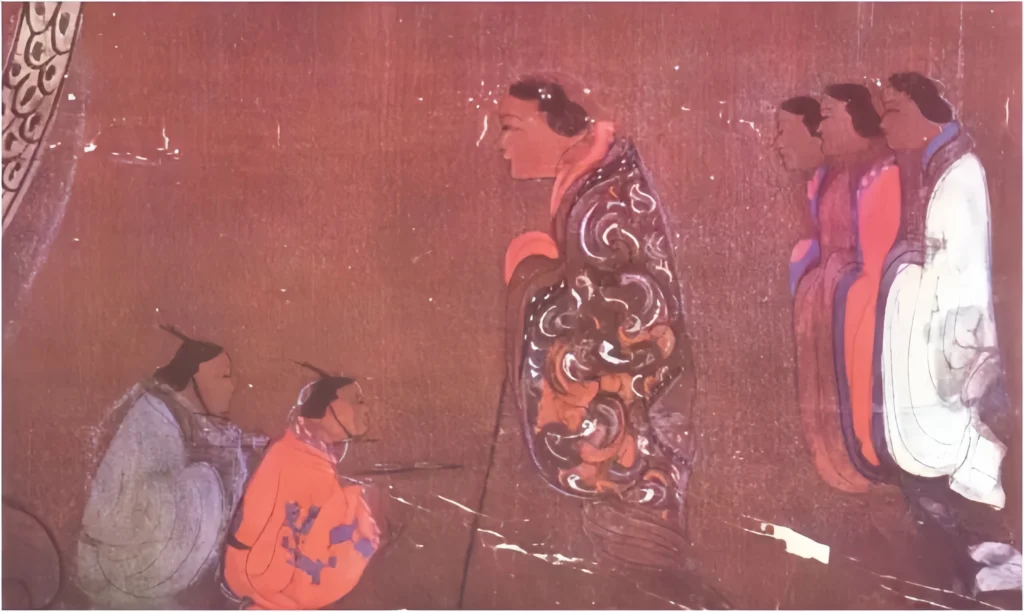
China has long been known as “a nation of rites and etiquette, and a civilization defined by its attire.” Chinese ancient clothing has always been an essential part of national culture, as well as a visible marker of historical change and social fashion. In a broader sense, the evolution of human clothing can be seen as a sensory and emotional record of cultural development. Ancient Chinese clothing history shows that clothing was closely connected to modes of production, levels of economic development, systems of ritual and etiquette, and moral values of each era. Its development and transformation reflect, from one perspective, the five-thousand-year civilization of China, encompassing rich political, economic, ethnic, and cultural meanings.
Looking back over five thousand years of traditional Chinese clothing, it becomes clear that ancient Chinese dress culture, as a vital component of traditional civilization, was remarkably rich and diverse. Over the centuries, Chinese ancient clothing retained its distinctive national characteristics while continuously absorbing useful elements from outside cultures. By the Qing dynasty, the variety of garments, the brilliance of colors, the quality of materials, and the refinement of craftsmanship had all reached a peak. These achievements fully demonstrate the intelligence, skill, and creativity of generations of artisans. This overview also provides a clear understanding of Hanfu history, which forms an integral part of Chinese dynasty clothing.
I. Pre-Qin Clothing
In prehistoric times, under primitive economic conditions, humans wrapped animal skins around the lower body—perhaps for warmth, modesty, or decoration. Regardless of the original purpose, primitive clothing had begun to take shape, marking the opening chapter of ancient Chinese clothing history.
China’s clothing and headwear system first began to take form during the Xia and Shang dynasties and gradually became more complete during the Zhou dynasty, when it was incorporated into a system of ritual governance. Clothing at that time was strictly differentiated according to identity and social status. The dress codes for emperors, empresses, nobles, and officials became increasingly formalized and hierarchical. These early forms laid the foundation for traditional Chinese clothing and later developments in Hanfu history.
The Spring and Autumn and Warring States periods marked the first great era of transformation in Chinese history. This change was clearly reflected in clothing, as fabrics, accessories, and garment structures all underwent major shifts. Upper-class garments became wider and more flowing, while clothing among the lower classes grew narrower and more practical.
Two particularly distinctive styles emerged: shenyi and Hufu. The shenyi was a one-piece garment made by cutting the upper and lower sections separately and sewing them together at the waist, featuring a crossed collar closing to the right. King Wuling of Zhao famously promoted “Hufu and mounted archery,” breaking away from traditional dress. Hufu garments—short jackets, long trousers, and leather boots—were ideal for riding and movement and quickly became widespread, influencing Chinese dynasty clothing and Hanfu history for centuries.
II. Qin and Han Clothing
The political unification of the Qin and Han dynasties laid the foundation for a flourishing Qin–Han culture and gave rise to a brilliant era of Chinese ancient clothing. Qin and Han attire inherited traditions from the Warring States period while introducing new developments. For men, robes were the most prestigious garments, with curved-hem and straight-hem robes being especially common. Headwear such as crowns, scarves, and caps signified social identity. Women wore shenyi as formal dress and typically wore ruqun (jacket and skirt) in everyday life, forming a crucial part of ancient Chinese clothing history.
III. Wei, Jin, and Northern and Southern Dynasties Clothing
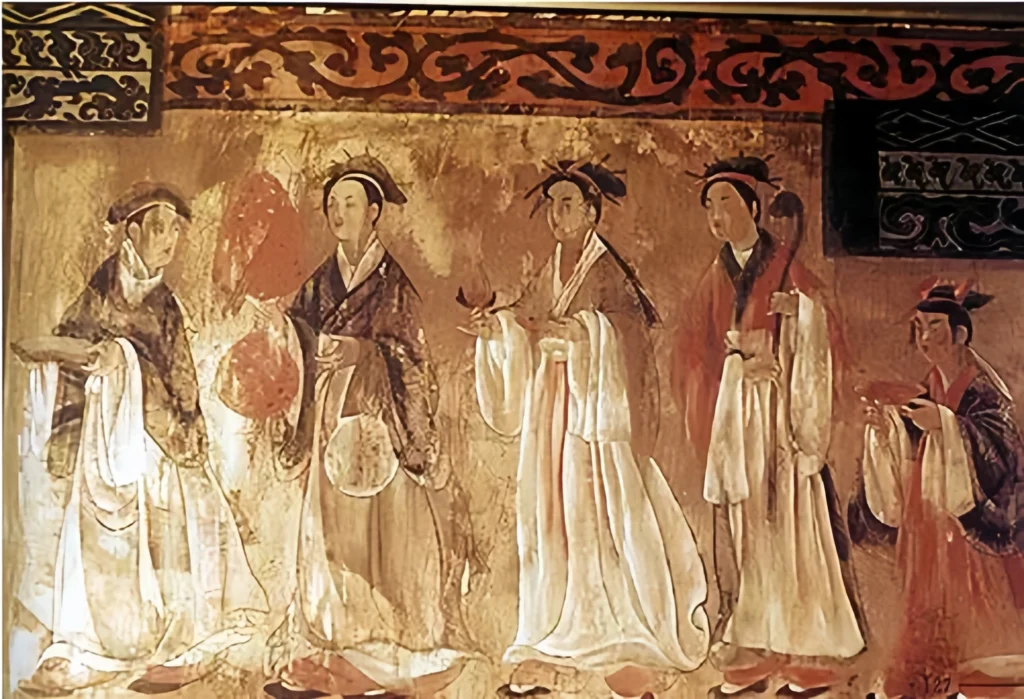
The Wei and Jin periods were marked by political instability and economic turmoil. Among the scholar-official class, a passive social atmosphere took hold, characterized by indulgence and withdrawal from public life, influenced by Daoist and Buddhist thought. This mindset was directly reflected in clothing styles. Loose robes and wide belts became fashionable. Men wore garments that exposed the chest and arms, with flowing drapes that emphasized ease and naturalness. Women wore long trailing skirts with large, flowing sleeves and layered decorative sashes, creating an elegant and ethereal appearance, which enriched traditional Chinese clothing styles.
During the Sixteen Kingdoms and Northern and Southern Dynasties, multiple ethnic groups lived side by side in the Central Plains, leading to extensive cultural exchange. Han Chinese began wearing fitted, round-collared, slit garments inspired by nomadic styles, while minority groups adopted Han-style clothing influenced by Confucian ritual norms. Emperor Xiaowen of Northern Wei promoted Sinicization reforms, allowing traditional Qin–Han dress systems to continue and influencing Hanfu history.
IV. Sui, Tang, and Five Dynasties Clothing
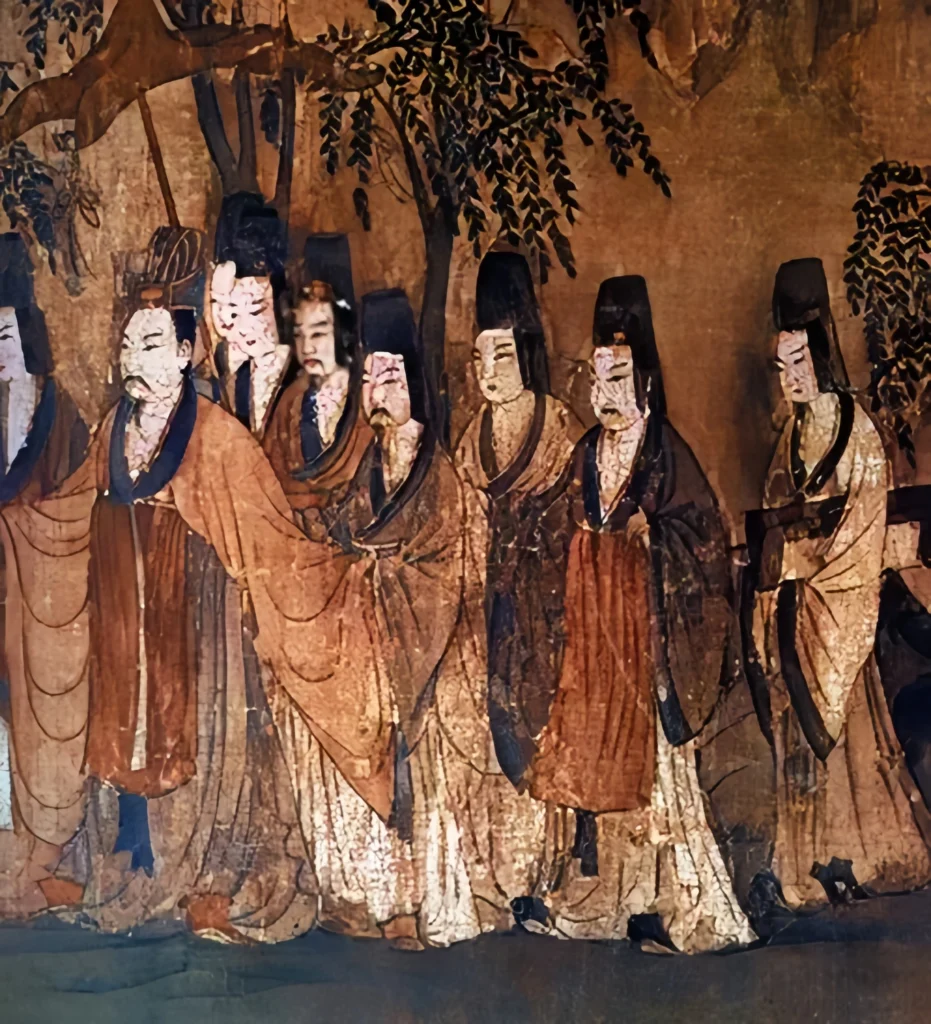
From the Sui into the Tang dynasty, Chinese dynasty clothing reached its golden age. Political stability, economic prosperity, advances in textile production, and frequent foreign exchange all contributed to an unprecedented flourishing of clothing styles. Garment forms, colors, and decorative patterns entered a new and vibrant phase, making this period one of the most remarkable chapters in ancient Chinese clothing history.
Tang men commonly wore wrapped headscarves and round-collared robes, with que-kua robes being especially popular. Women primarily wore ruqun, with skirts typically high-waisted or tied above the bust. These skirts were fitted at the hips, wide at the hem, and often featured pleated, curved designs that reached the ground. Silk ribbons were tied high at the waist, almost to the armpits, creating a slender and graceful silhouette. The unified Sui–Tang empire also imposed strict regulations on the styles and colors of imperial and official attire, leaving a lasting legacy in traditional Chinese clothing.
V. Song Dynasty Clothing
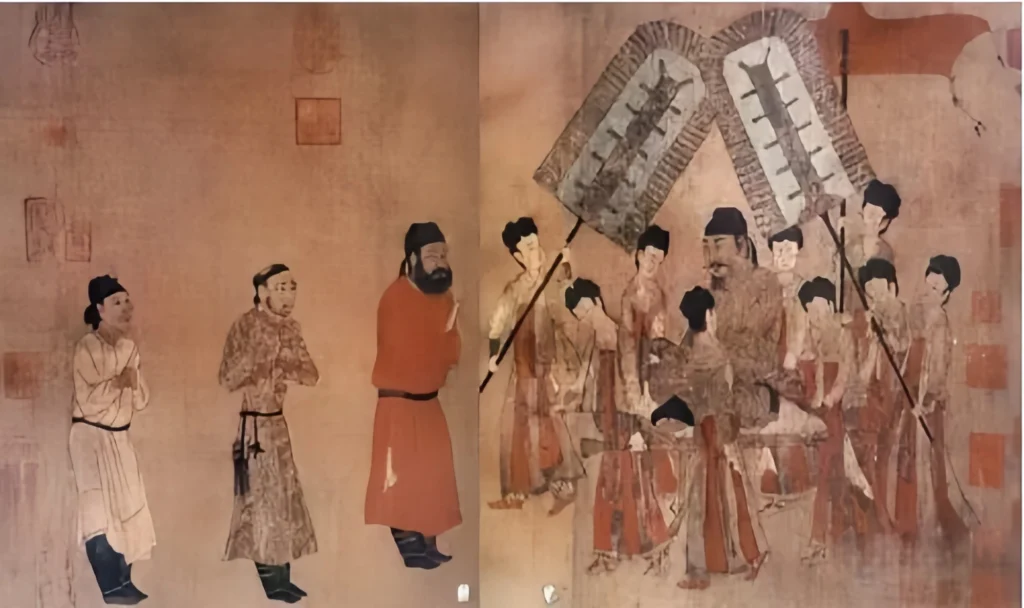
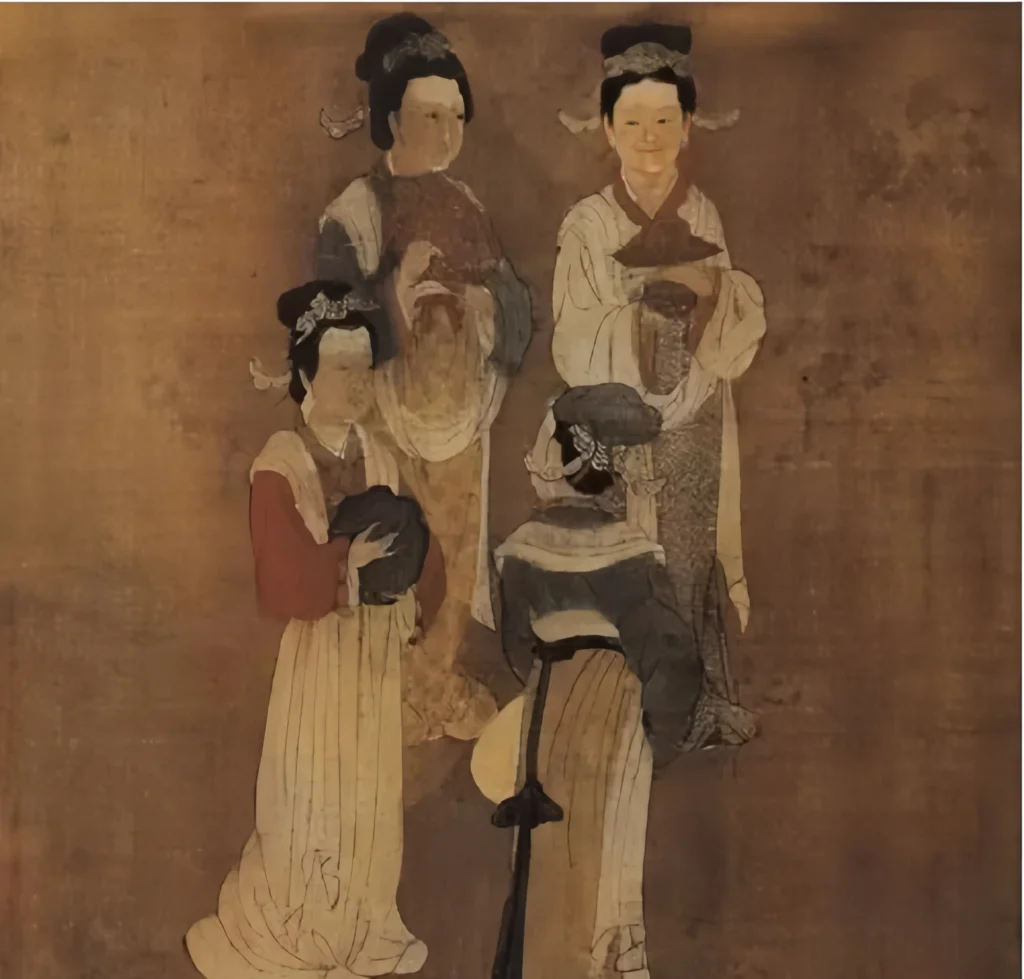
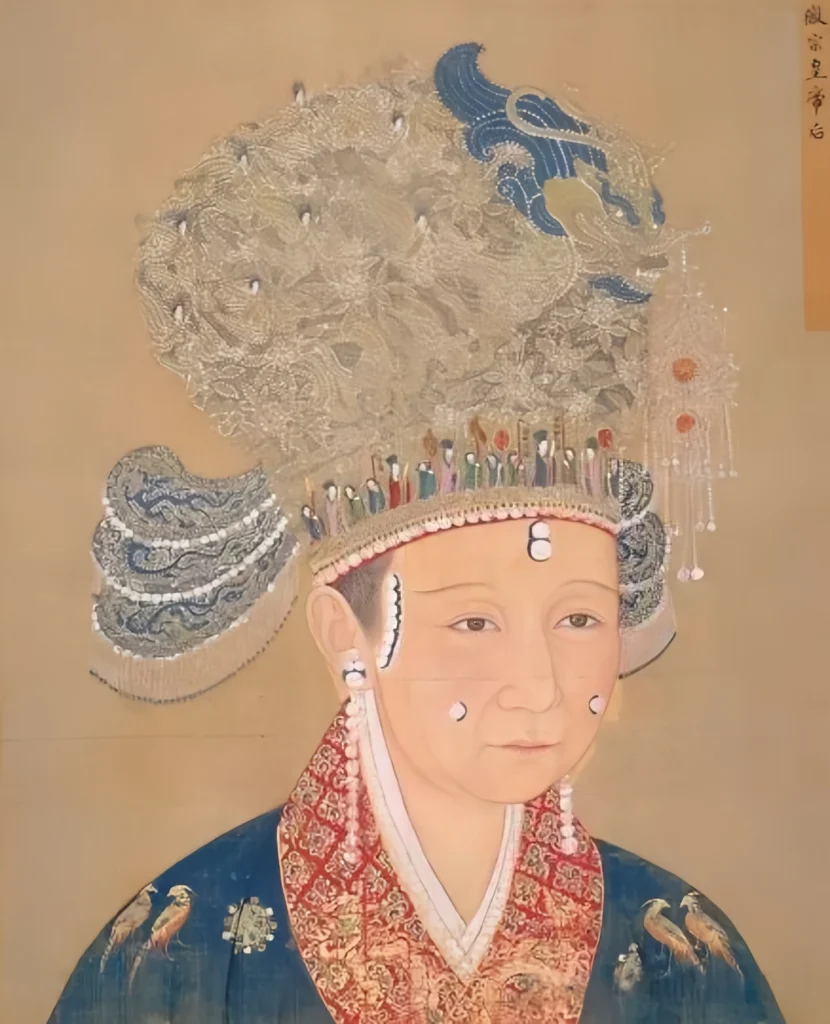
The Song dynasty saw unprecedented economic prosperity and represented a high point in Chinese intellectual culture. Under the influence of Neo-Confucianism, which emphasized moral order and restraint, clothing styles became more slender, refined, and understated. Compared to the grandeur and openness of Tang fashion, Song attire favored simplicity, rational beauty, and muted colors.
Men’s clothing largely followed Tang traditions, with ordinary people wearing long robes with crossed or round collars. During labor, garments were tucked into belts for convenience, and black and white were the most common colors. Women typically wore ruqun and beizi, with the beizi often layered over skirts as an outer garment. Decorative borders were frequently embroidered along collars and front openings. These developments further enriched Hanfu history and Chinese dynasty clothing evolution.
VI. Liao, Jin, and Yuan Clothing
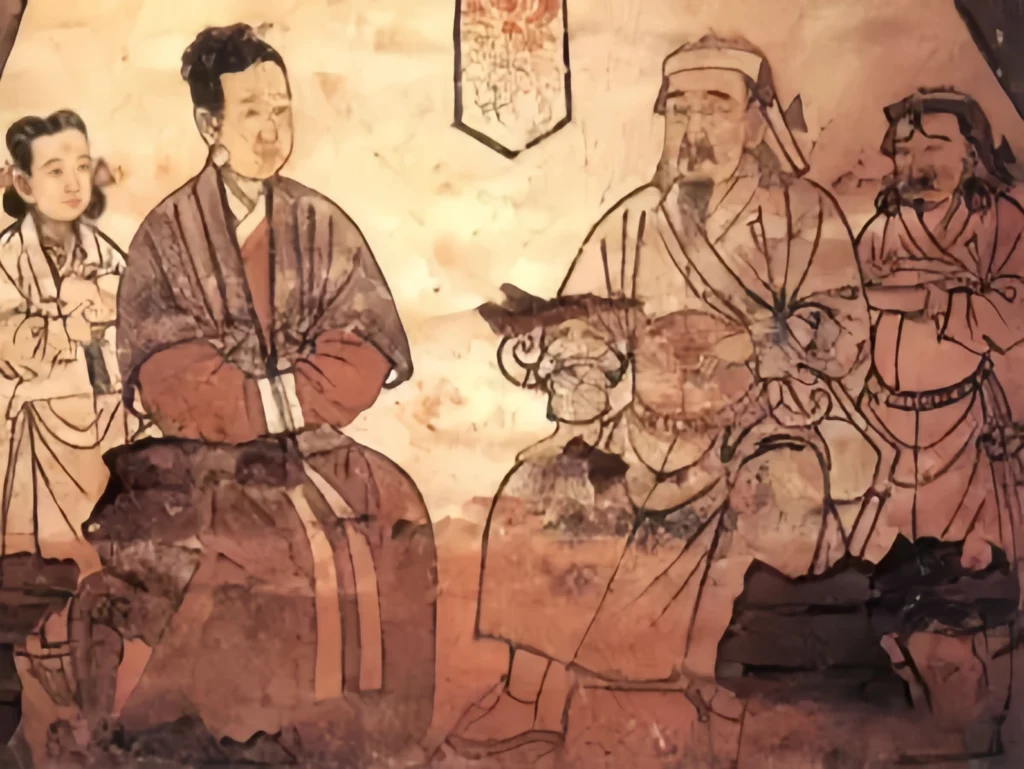
The Liao, Jin, and Yuan dynasties were founded by the Khitan, Jurchen, and Mongol peoples, respectively. This period was characterized by multi-ethnic coexistence and competition. Each group maintained distinct clothing traditions, enriching the broader landscape of traditional Chinese clothing.
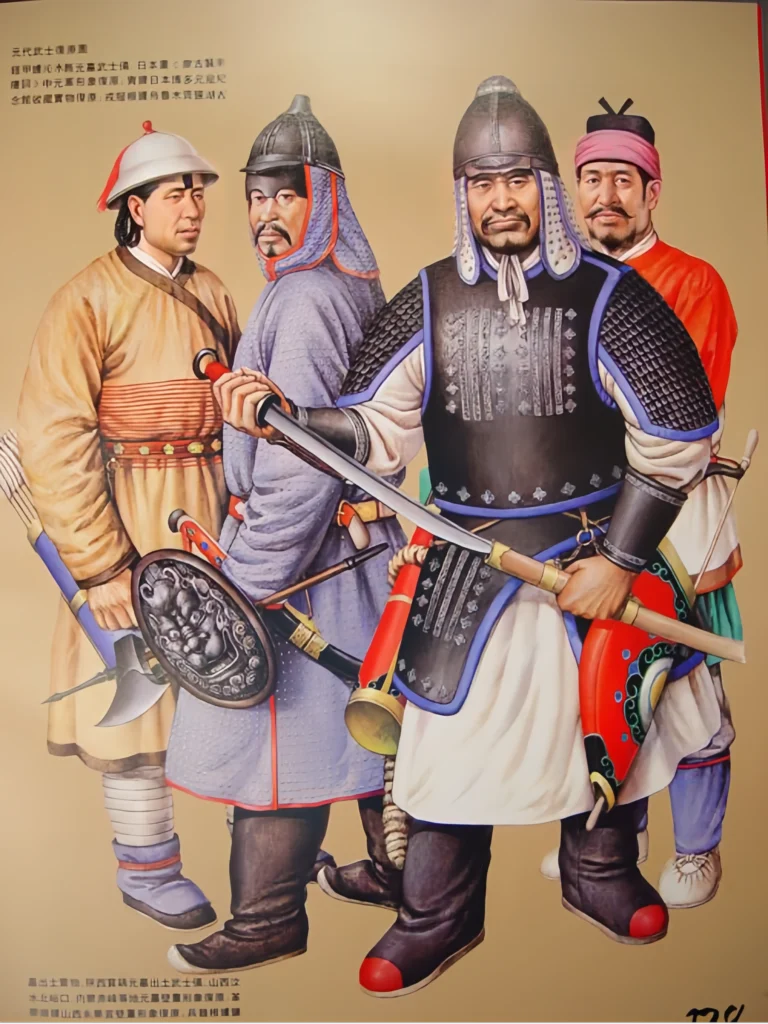
The Liao dynasty implemented a dual clothing system: Khitan styles for the northern administration and Han styles for the southern regions. In the Jin dynasty, men commonly wore robes, while women wore chan skirts and distinctive headwear. After the Mongols entered the Central Plains, they preserved their own dress traditions while adopting Han ceremonial garments. Yuan tuanshan robes were common among Mongol noblewomen, adding to ancient Chinese clothing history.
VII. Ming Dynasty Clothing
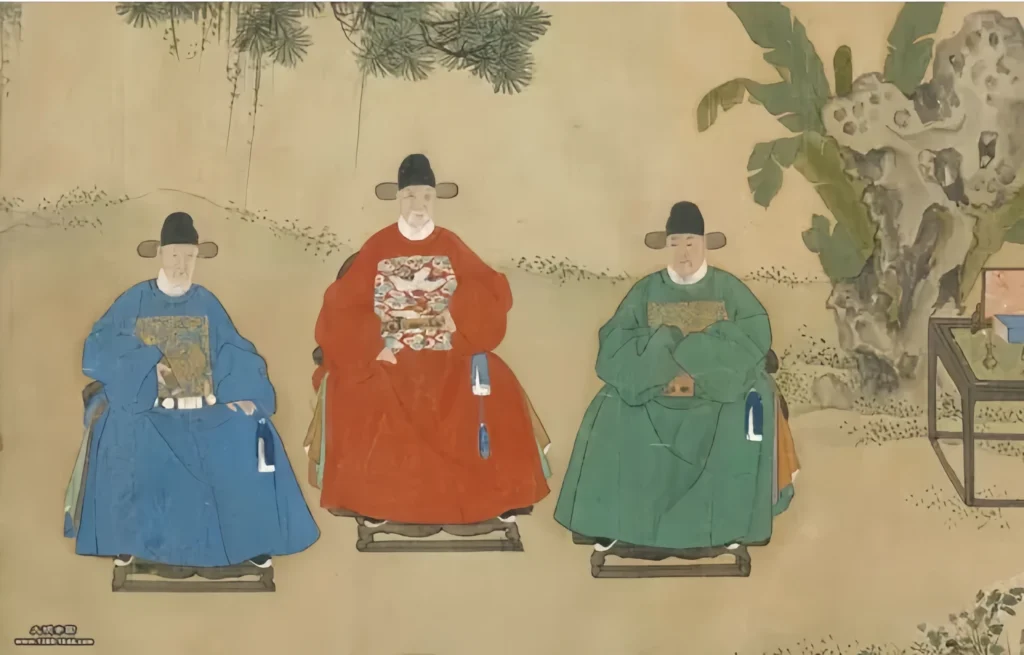
The Ming dynasty abolished Mongol dress codes and reinstated clothing systems based on Han Chinese traditions, emphasizing hierarchy and social order. Men commonly wore large-fronted robes and round-collared garments, while scholars favored Chengzi robes. Women wore garments such as jackets, padded coats, ceremonial capes, beizi, bijia, and skirts, many of which were inspired by Tang and Song styles.
All Ming officials wore black gauze hats and wide-sleeved robes with square rank badges on the chest and back—birds for civil officials and animals for military officials. Clothing regulations regarding rank, color, and decoration were extremely precise. Ming attire was unmatched in its symbolic richness, formality, and visual grandeur, setting a lasting standard for later generations. These regulations deeply influenced Chinese dynasty clothing and Hanfu history.
VIII. Qing Dynasty Clothing
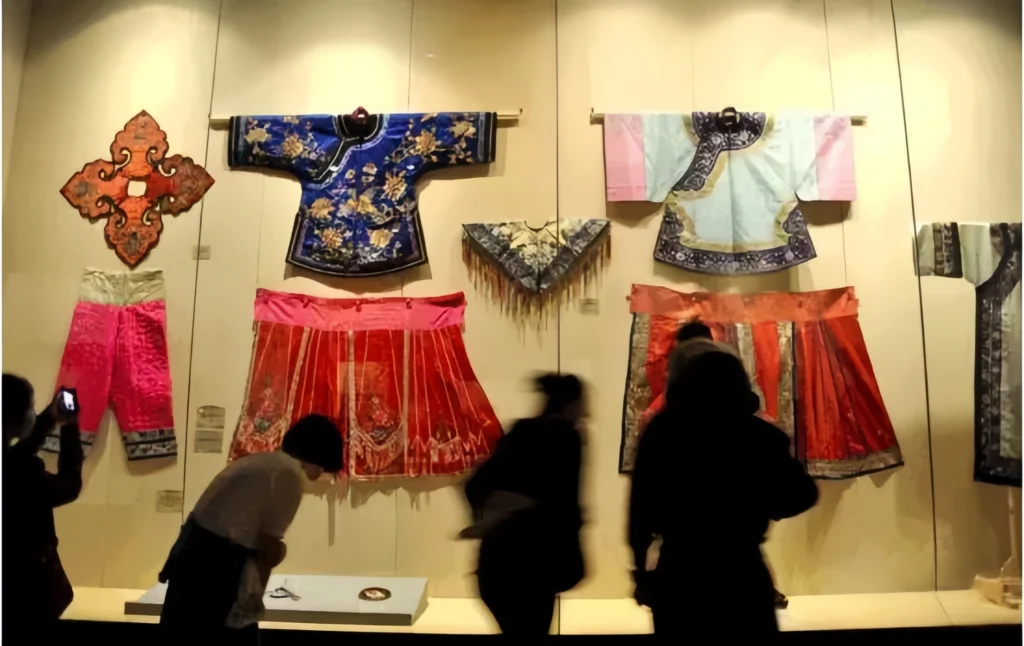
The Qing dynasty, established by the Manchu people, enforced the policy of “shaving hair and changing dress” after entering China proper. Adult men were required to shave their foreheads and wear queues, adopting Manchu-style clothing such as long robes paired with jackets and melon-shaped caps.
To ease resistance, the Qing government adopted the policy of “men follow, women do not,” allowing Han women to continue wearing Ming-style clothing. Manchu women primarily wore the qipao, characterized by long, straight silhouettes and narrow sleeves—markedly different from the flowing robes and wide sleeves of traditional Han dress. Rank distinctions were emphasized through hats, badges, peacock feathers, and dragon robes, with a level of detail surpassing previous dynasties.
Although Qing clothing abandoned many traditional forms in appearance, its underlying values remained connected to the broader continuity of traditional Chinese clothing. In modern times, Western influence disrupted traditional clothing systems, leading to cultural rupture. Since the reform era, renewed interest in Hanfu history has emerged. Understanding, preserving, and valuing China’s clothing heritage is essential to the revival of ancient Chinese clothing history.
Want to explore more Ancient Chinese Clothing culture?
Check our Chinese Clothing Guide for authentic tips!


Responses