Hanfu Beauty, Almost Divine

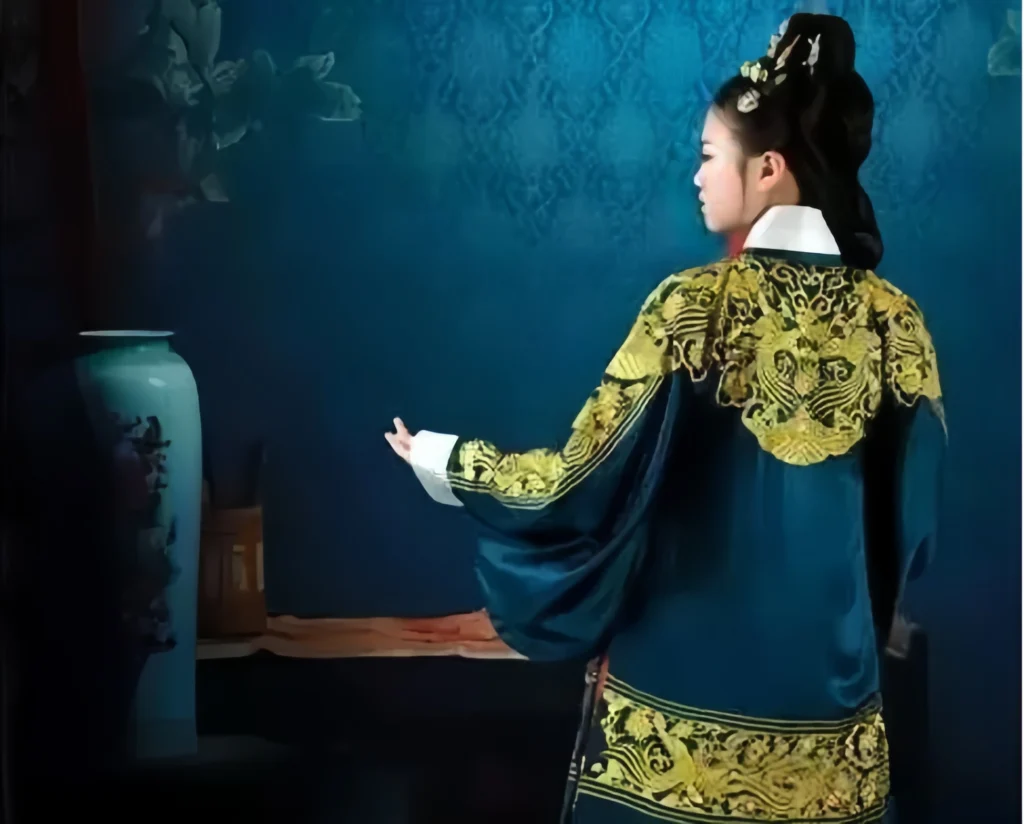
Hanfu Beauty, Almost Divine
A Garment Said to Belong to Heaven, Yet Tied by Fate to the Human World
Overseas, when people admire the elegance of Korean hanbok or the refined beauty of Japanese kimono, many Chinese are unaware that hanbok originated from a type of ceremonial clothing worn by the Han Chinese during the Ming Dynasty Hanfu tradition, while kimono evolved from several styles of Tang Dynasty Hanfu.
Among all forms of dress, Hanfu beauty is the one most deeply integrated with traditional Chinese culture—whether in literature and poetry, calligraphy and painting, music and dance, martial arts, tea culture, or philosophical thought. Through centuries of inheritance and development, Hanfu fully embodies the moral ideals valued by ancient Chinese society: benevolence, righteousness, propriety, wisdom, and integrity. It stands as a symbol of purity, goodness, and beauty in traditional Chinese clothing art, and a key expression of ancient Hanfu symbolism.

In the Dunhuang murals, countless flying apsaras (feitian) appear with graceful postures, flowing garments, and drifting ribbons. Seeing them feels like stepping into a celestial realm, leaving the heart clear and tranquil. These images vividly express the beauty of ancient costume art. Most of the feitian garments also reflect the prosperity and cultural richness of the Tang dynasty, showcasing the refined elegance and flowing aesthetics typical of Tang Dynasty Hanfu.
When people in ancient times valued virtue, followed the Way, and revered the divine, certain truths of the universe were believed to be intentionally revealed to humanity. What was seen as beautiful and sacred became the standard people sought to emulate. Clothing, therefore, was never just about appearance—it was an inseparable part of culture, carrying profound meaning beneath the surface. This depth of meaning lies at the heart of ancient Hanfu symbolism.
Working within a world shaped by belief, artisans brought earthly splendor onto painted walls, while also presenting visions of heavenly magnificence to the human realm. Heaven and earth mirrored each other; humanity and the divine were seen as one. This was an era of harmony between man and heaven, vividly expressing the semi-divine cultural spirit behind Hanfu beauty. It is as if these garments truly “belonged only to the heavens, yet through fate descended into the human world.”

One of the most defining features of Hanfu is the jiaoling youren (crossed collar closing to the right), wide and flowing sleeves, and the use of fabric ties instead of buttons. Wearing Hanfu naturally encourages a demeanor that is reserved yet graceful, dignified yet free-spirited. These characteristics clearly distinguish Hanfu from the clothing of other cultures, including Japanese kimono and Korean hanbok, both of which were deeply influenced by Ming Dynasty Hanfu and earlier Han traditions.
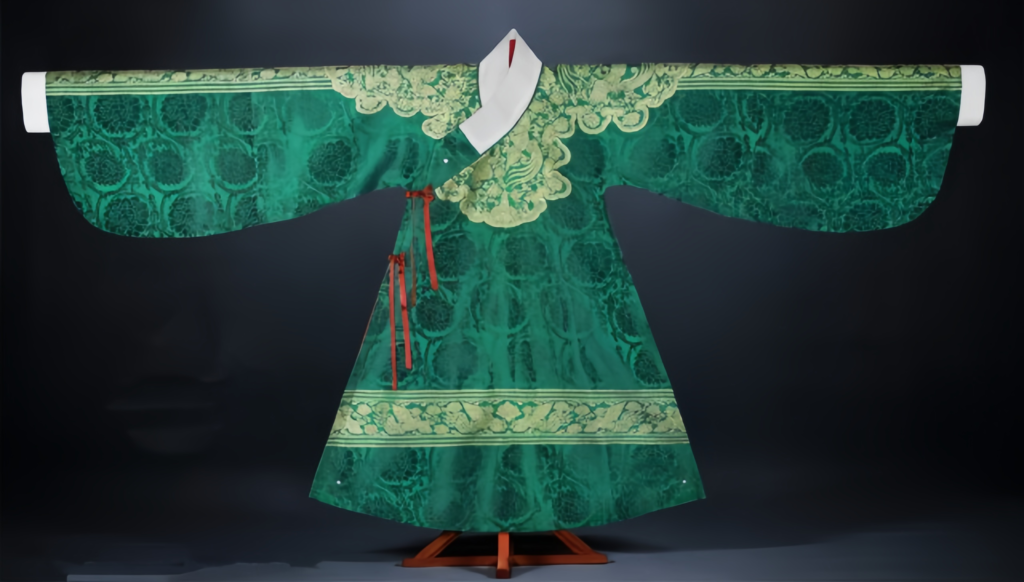
China has long been known as “the land of attire and etiquette.” Hanfu represents the elegance and breadth of the Chinese spirit, a preference for natural and classical aesthetics, and a cultural worldview that honors heaven, respects the sacred, and seeks harmony between humanity and nature. Traditional Han Chinese clothing is characterized by “upper garment and lower skirt, crossed collar closing to the right, and wide robes with large sleeves.” A common form, the shenyi, connects the upper garment and lower skirt into one piece, often edged with contrasting fabric. It conceals the body rather than revealing it, creating an air of dignity and refined grace—an enduring expression of Hanfu beauty.

The beauty of Hanfu lies in its symbolism. The wide sleeves form gentle arcs, echoing the idea of circularity; the crossed collar creates right angles, reflecting the principle that “without rules, there can be no order.” The sash worn at the waist symbolizes balance and uprightness in one’s conduct, forming an important part of ancient Hanfu symbolism.
The structure of Hanfu also reflects the rhythm of time. The upper garment is made from four panels, symbolizing the four seasons, while the lower skirt uses twelve panels, representing the twelve months of the year. When a person wears the shenyi, they are reminded to live in harmony with seasonal cycles, to act with balance and moderation, and to move through the world in alignment with nature and society—values deeply embedded in Hanfu beauty.
The yun jian (cloud collar) is a decorative accessory that developed from the Sui and Tang dynasties onward. Known today as Hanfu yunjian, it encircles the neck and rests on the shoulders. When laid flat, its overall shape is round on the outside and square within, symbolizing the ancient concept of “round heaven, square earth.”
Worn on the shoulders, Hanfu yunjian is often embroidered with flowers and fruits of the four seasons, complemented by long green tassels hanging from its edges. Together, they create a visual harmony that makes the wearer seem integrated with nature itself. This design reflects the traditional Chinese value of “unity between heaven and humanity,” emphasizing harmony, inclusion, and balance among all things, and serving as a vivid example of ancient Hanfu symbolism.

In ancient times, even those who focused purely on worldly life understood the traditional belief in harmony between heaven and humanity. From this worldview emerged moral principles such as benevolence, righteousness, propriety, wisdom, and integrity, along with the universal belief that good and evil are ultimately rewarded or punished.
As stated in the Dao De Jing by Laozi: “Man follows the earth, the earth follows heaven, heaven follows the Dao, and the Dao follows what is natural.” During the Western Han dynasty, Dong Zhongshu clearly articulated the idea that “heaven and humanity are united as one,” a philosophy that deeply shaped Hanfu beauty and its cultural meaning.

Ancient skirts were often paired with a piece of jade called a yu huan shou. It was tied at the waist and allowed to hang down. This ornament served both decorative and practical purposes, helping to weigh down the skirt so it would not be blown up by the wind while walking, thus preserving elegance and modesty.
Jade itself possesses a refined, pure beauty that no other material can replace. As recorded in The Book of Rites · Yuzao: “In ancient times, a gentleman always wore jade; without reason, jade never left his body.” Jade was believed to embody virtues such as benevolence, wisdom, righteousness, joy, loyalty, and integrity, symbolizing the moral character of a true gentleman and completing the philosophical system behind ancient Hanfu symbolism.
By wearing jade, people constantly reminded themselves to cultivate a character as clear and gentle as jade itself—pure yet warm, refined yet resilient—holding fast to noble virtues from beginning to end.

Responses