Ancient Chinese Underwear & Hanfu Styles


Compared with ancient people, our underwear today feels… kind of weak. Let’s seriously talk about one topic today — ancient Chinese underwear.
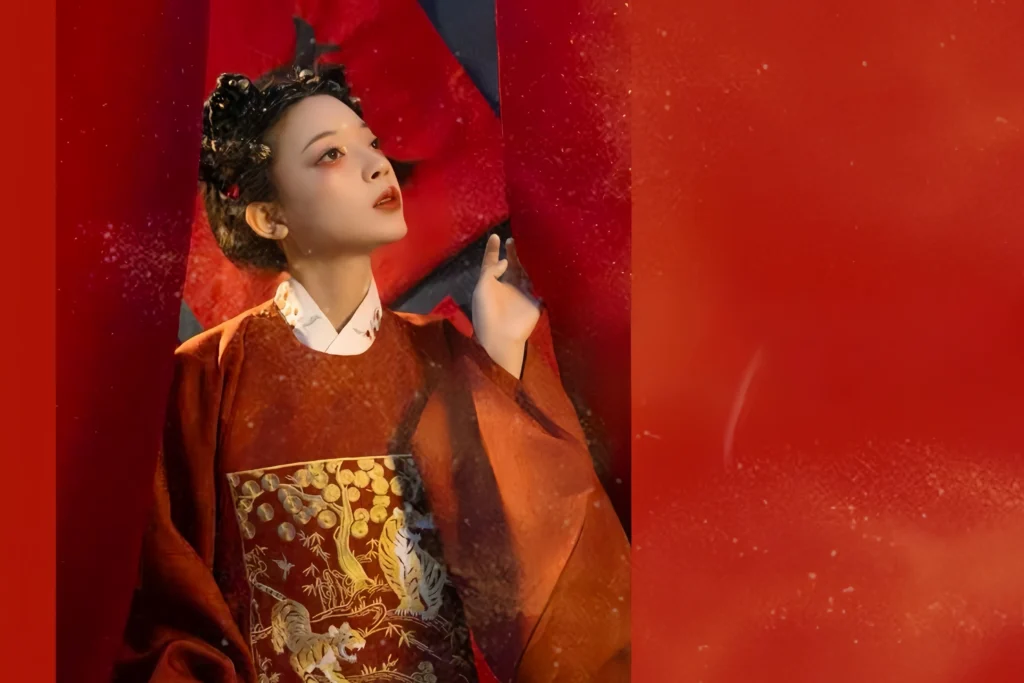
When you hear this phrase, does a bright red Hanfu dudou instantly pop into your mind?
Han Dynasty: Baofu and Xinyi (Chest Wrap and Heart Clothing)
The foundation of xinyi comes from paofu. When the upper straps of baofu were replaced with shoulder hooks and crotch fastenings, it evolved into xinyi. What both garments share is that the back is left completely open, with no back panel.
Plain-woven silk was commonly used as ancient Chinese underwear fabric during the Han dynasty. These garments were often decorated with colorful silk embroidery, known as cai xiu. The motifs were frequently themed around love and affection. At the time, making underwear from plain, undecorated fabric was relatively uncommon.
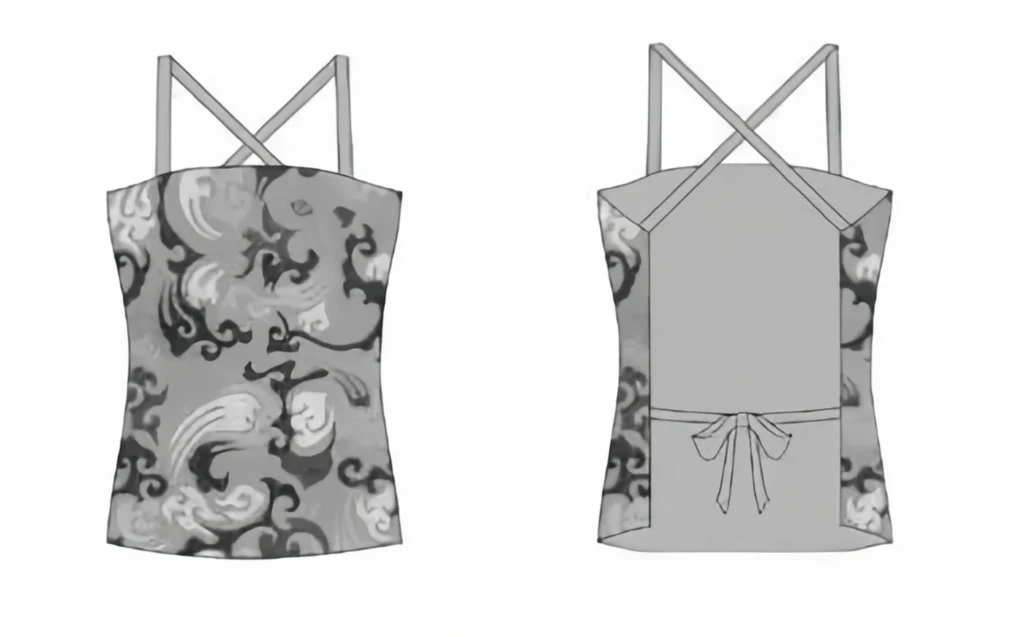
Wei–Jin Period (Sixteen Kingdoms): Liangdang (Chest-and-Back Vest)
Liangdang differs from baofu and xinyi in that it includes a back panel — it can cover both the chest and the back. The fabric was usually richly colored brocade with a thick, substantial texture. It was double-layered and padded with cotton inside.
Liangdang originally came from northern nomadic cultures and later spread into the Central Plains, making it a garment with clear non-Han cultural origins in ancient Hanfu underwear.
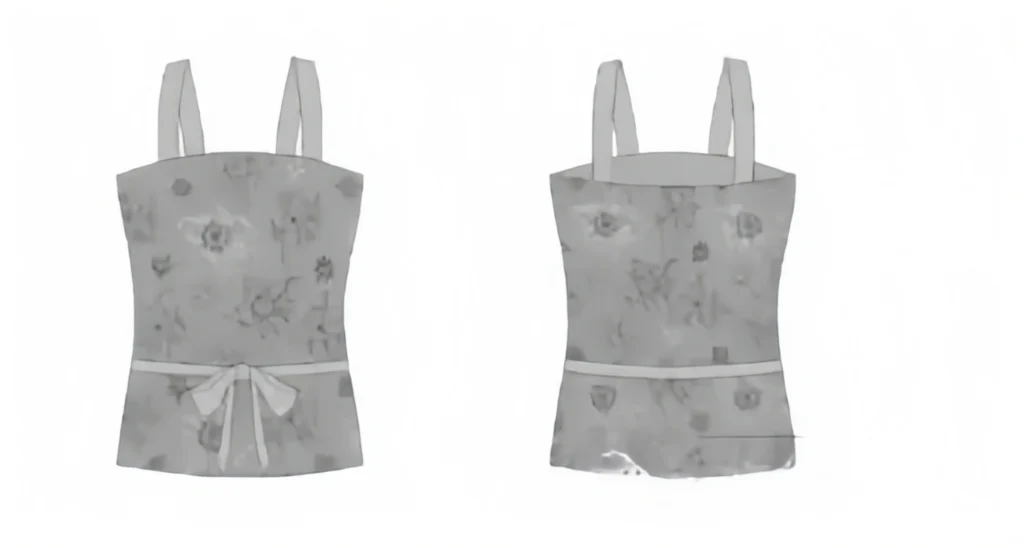
Tang Dynasty: Hezi (Strapless Chest Binder)
Before the Tang dynasty, underwear typically had shoulder straps. During the Tang period, a strapless undergarment appeared, known as hezi.
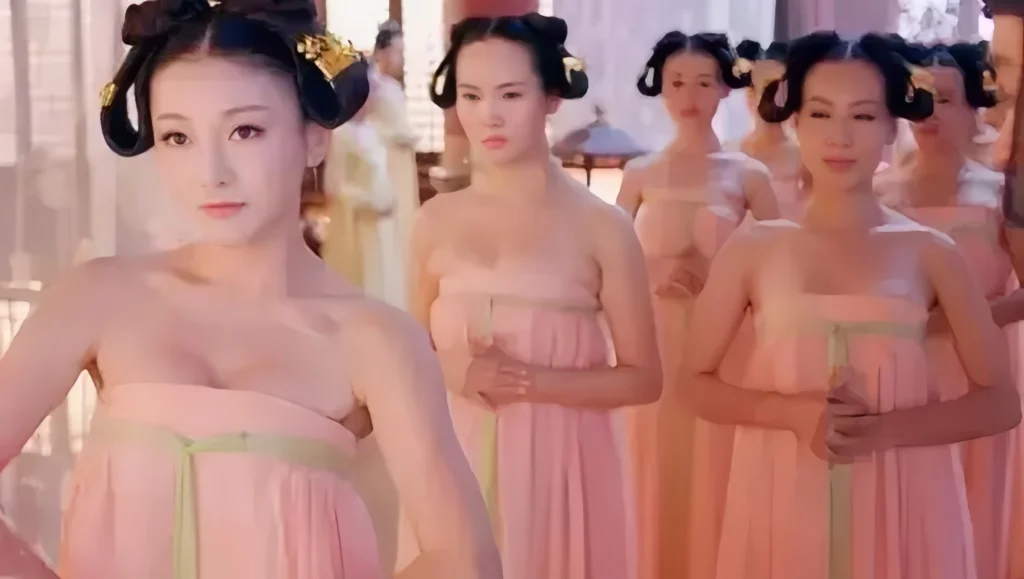
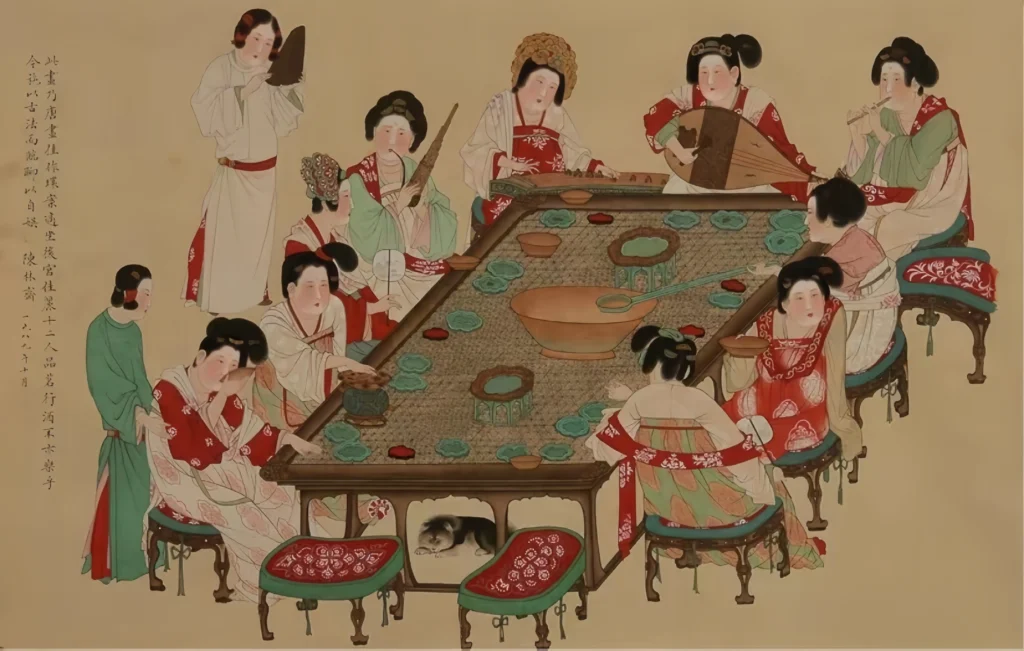
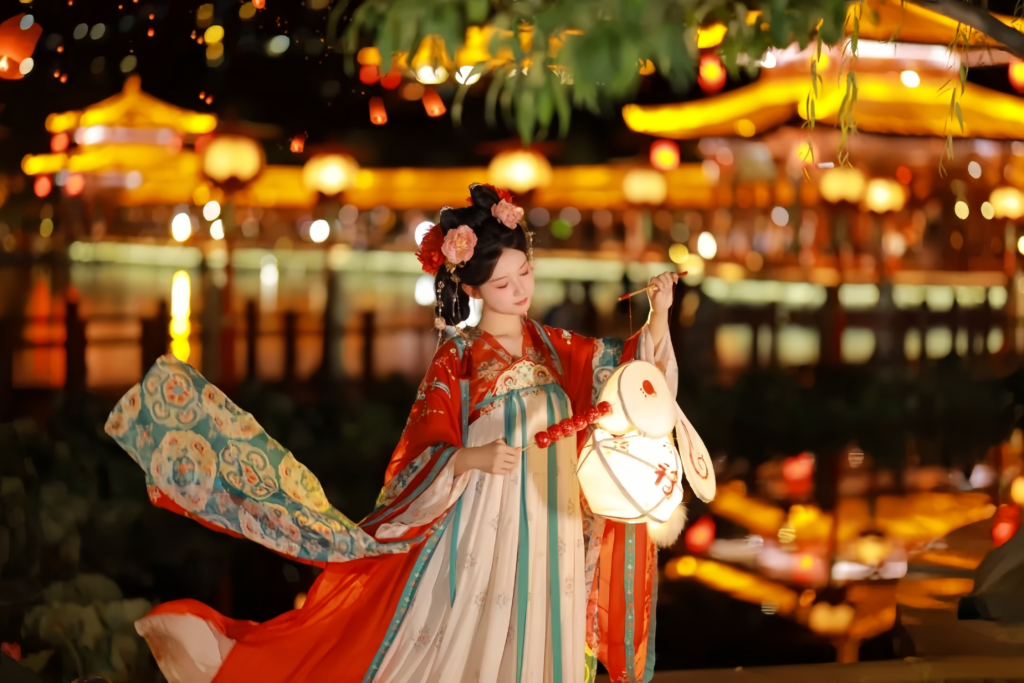
This change was closely tied to outerwear styles. Tang women favored high-waisted skirts that were tied above the chest, leaving the upper chest and shoulders partially exposed. A wide sash was tied below the bust, while sheer silk gauze was draped over the body. The underwear beneath became subtly visible, much like the modern idea of “underwear as outerwear.”
To suit this look, ancient Chinese underwear needed to be strapless. Hezi was commonly made from zhicheng, a firm woven fabric with slight elasticity and a solid hand feel. When worn, two ties were fastened below the chest, allowing the structured fabric to support and lift the bust — a sensual classic in Hanfu underwear.
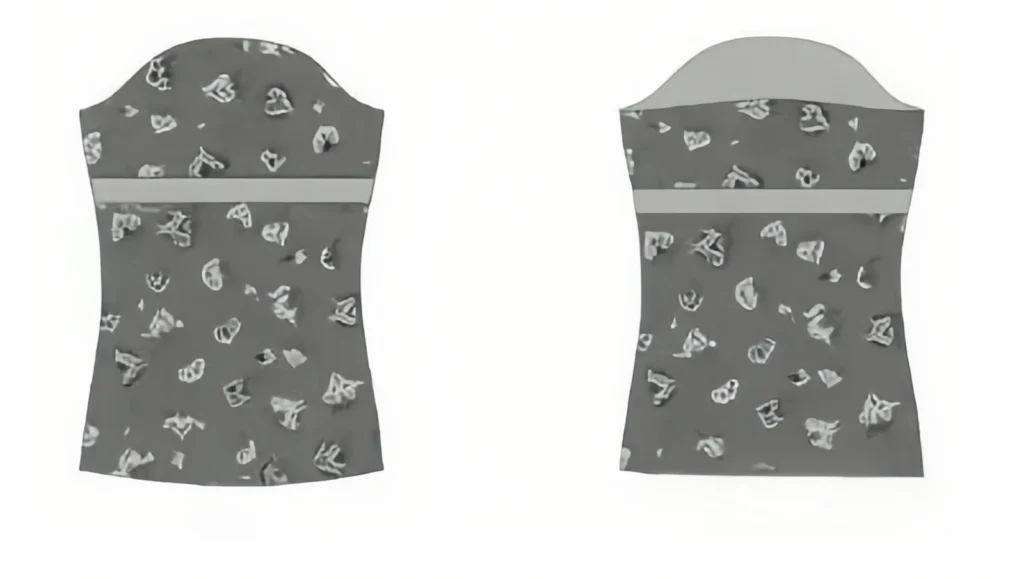
Song Dynasty: Moxiong (Chest Binder)
The moxiong covered both the chest and the abdomen and was therefore also called modu. It was fastened with buttons or ties.
Common households used cotton fabrics, often referred to as rustic cloth, while aristocratic families favored silk embroidered with floral patterns. There were many variations, including single-layer and padded styles in ancient Hanfu underwear.
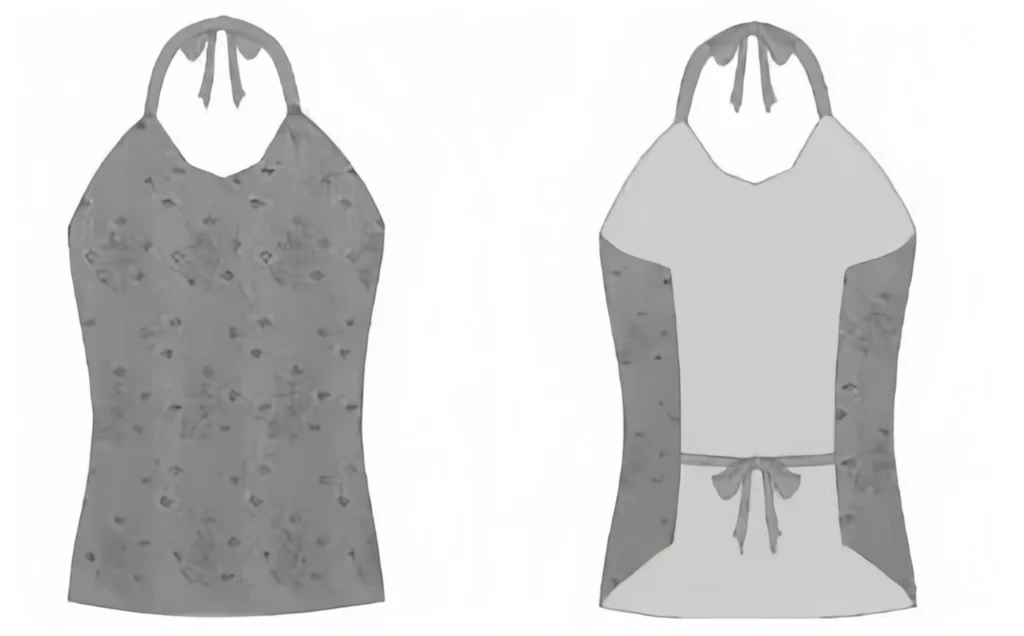
Yuan Dynasty: Hehuan Jin (Joyous Union Jacket)
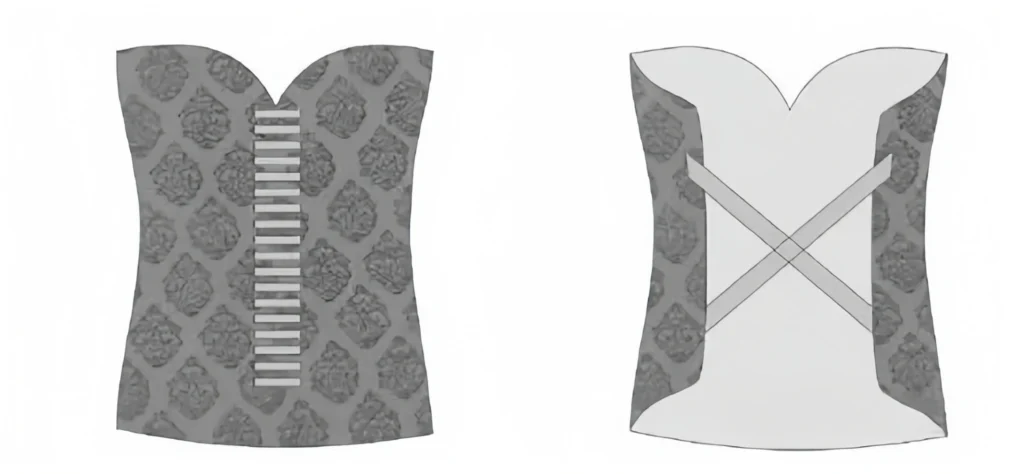
The defining feature of hehuan jin is that it fastens from back to front. It was worn by wrapping from the back and securing across the chest with a row of buttons or ties.
Most hehuan jin garments were made from brocade, featuring continuous geometric patterns.
Ming Dynasty: Zhuyao (Main Waist)
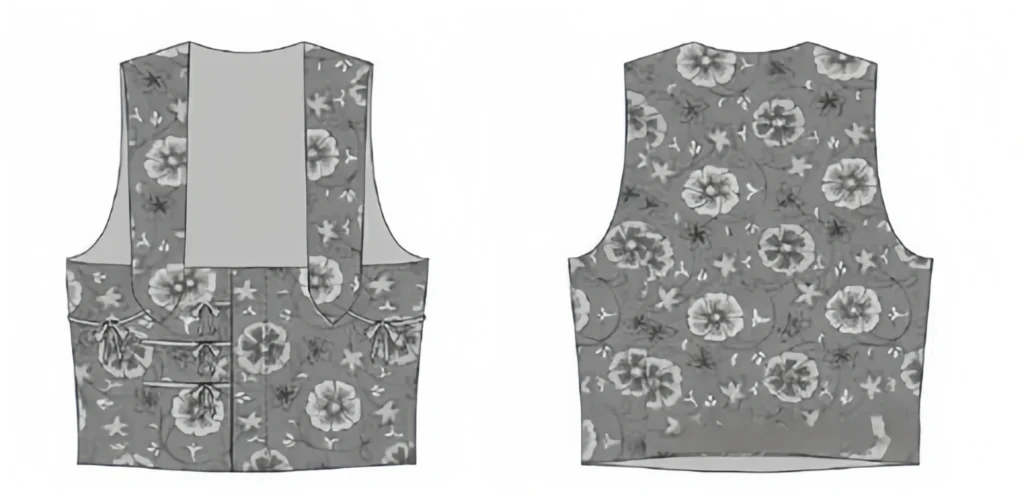
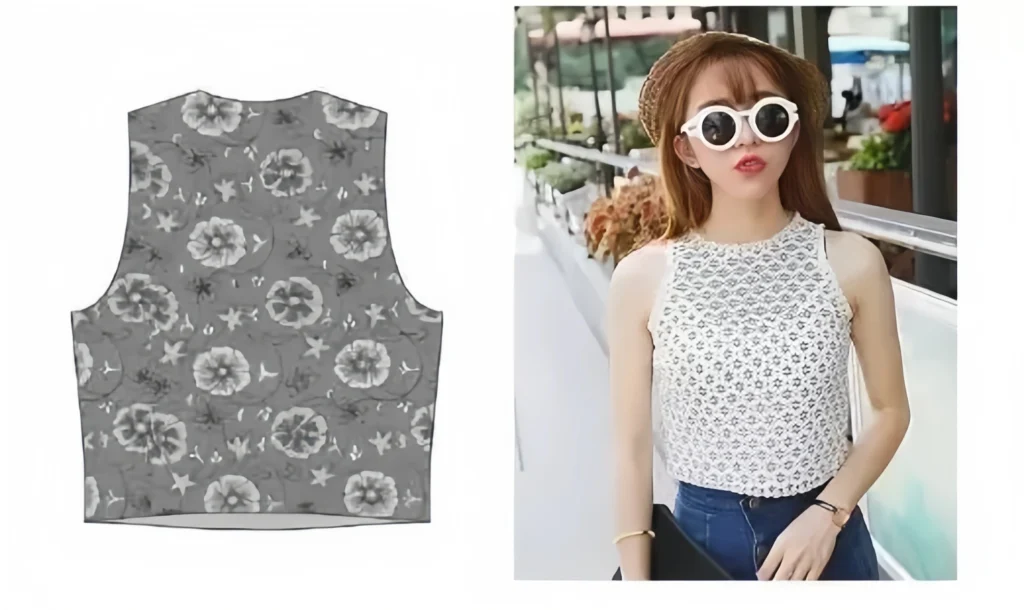
The zhuyao resembles a vest in shape. It opens at the front, with three sets of ties on each side. There are shoulder straps with additional ties, and side ties at the waist. When all the ties are secured, the garment creates a clearly defined waistline.
This shows that women of the Ming dynasty already had a strong understanding of how to shape and highlight the body in traditional Chinese undergarments.
Ancient women’s underwear styles were far more diverse than we usually imagine. Fabrics, cuts, and trends changed from dynasty to dynasty, reflecting shifts in social values and cultural openness. Some classic designs have even evolved directly into modern clothing.
So next, let’s learn from them — how ancient women reached the peak of sensual style in just three steps.
A Bold Move — Wearing Underwear as Outerwear
Underwear worn underneath can’t be seen, no matter how beautiful it is. So ancient women came up with a surprisingly fashionable idea: wear it on the outside.
Not all underwear was suitable for this — only one type: hezi. Simply put, it’s similar to modern strapless underwear.
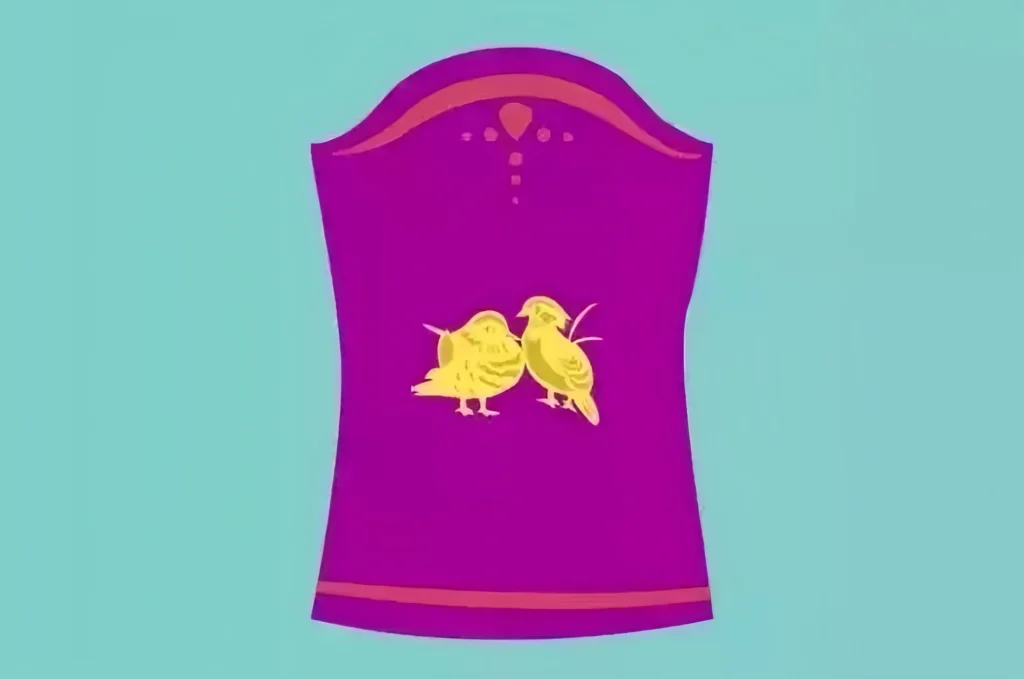
This trend began in the Tang dynasty. At first, there was no grand intention — for some women, the straps were simply uncomfortable due to fuller figures, so they removed them.
Unexpectedly, hezi matched perfectly with the Tang-style high-waisted, low-cut outfits. Tied beneath the bust with cords, it lifted and shaped the chest beautifully, creating a strikingly sensual look — one of the most famous examples of Hanfu underwear as outerwear.
The Subtle Art — Delicate Patterns
In a time without social media, showing skill and personality came down to personal attire. Underwear became the perfect canvas.
If a woman wished for children, she embroidered pomegranates.
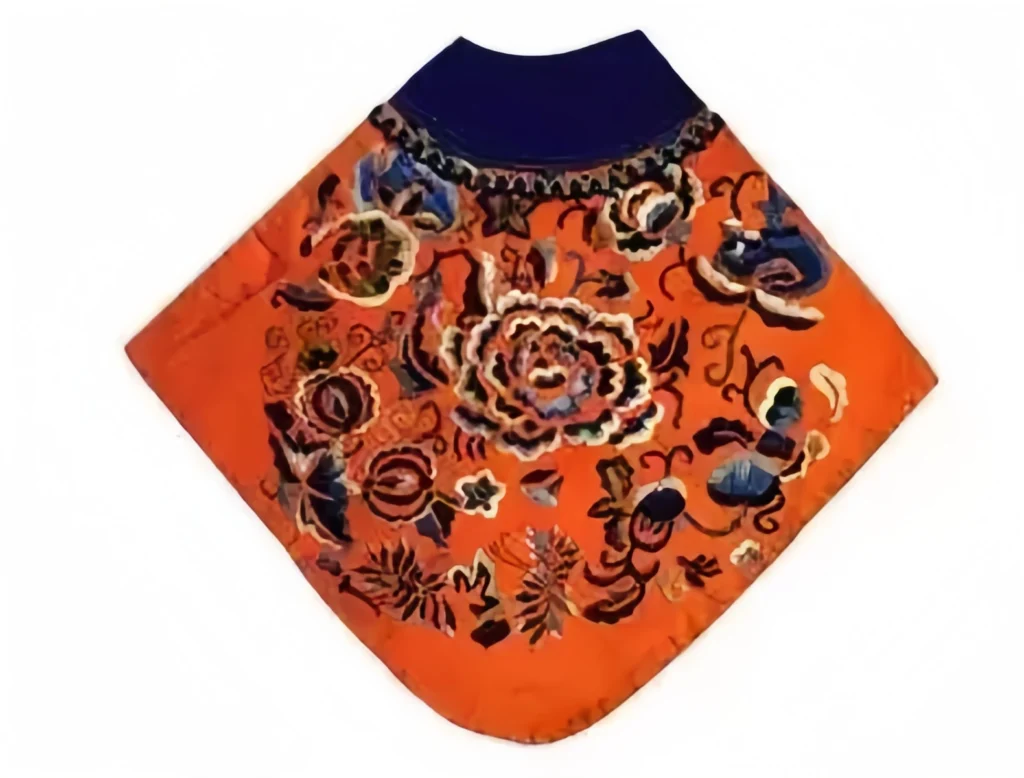
For wealth, peonies.
For love, flowers and grasses.
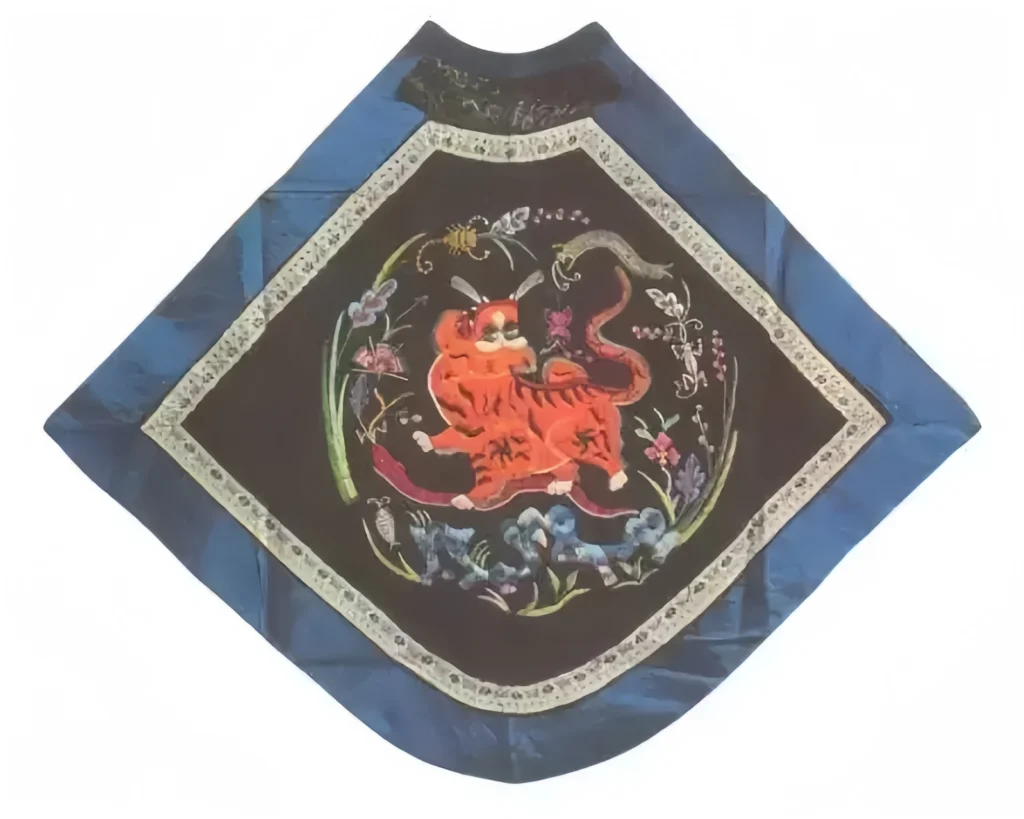
For protection, fierce animals.
Some Hanfu dudou featured peonies symbolizing prosperity.
Others showed protective beasts to ward off evil.
When inspiration ran dry, words were embroidered instead — phrases like “peony and butterflies” to express hopes for beauty and happiness, or even “endurance brings peace,” reminding oneself to be a virtuous wife.
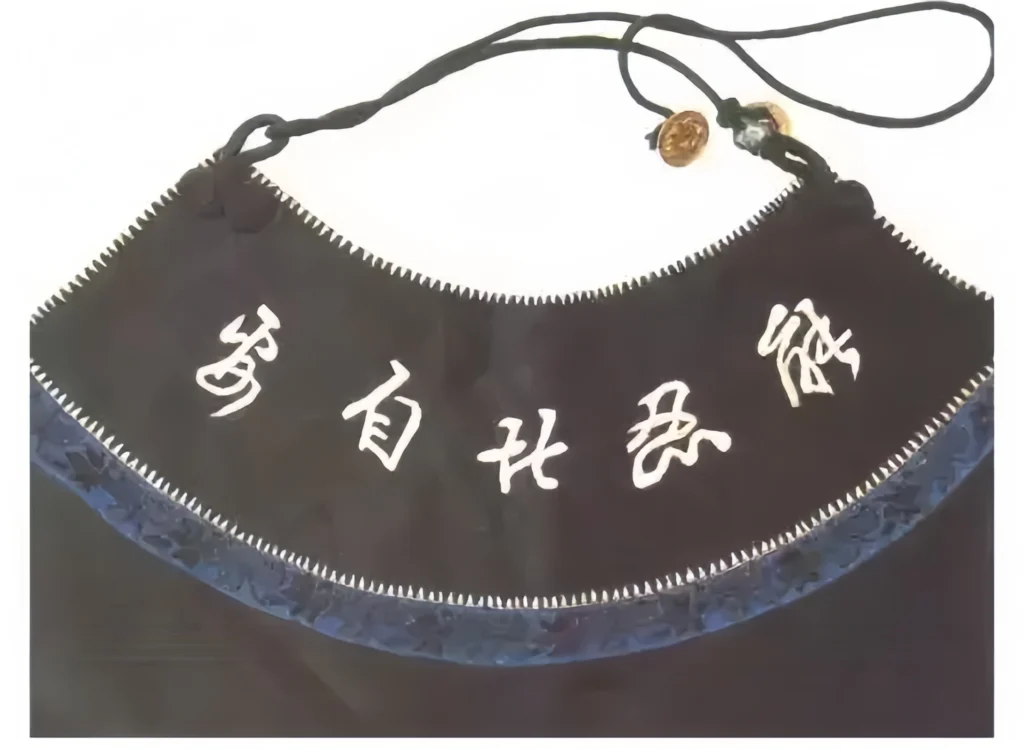
Some women went further, sewing small sachets onto their underwear. Wherever they walked, fragrance followed — far more convenient than modern perfume.
Unlike today’s disposable fashion, ancient Chinese underwear was handmade with care. Such intimate garments were stitched by the women themselves.
Every small embroidered detail carried personal wishes and emotions.
As the saying goes: what you wear underneath reflects who you are.
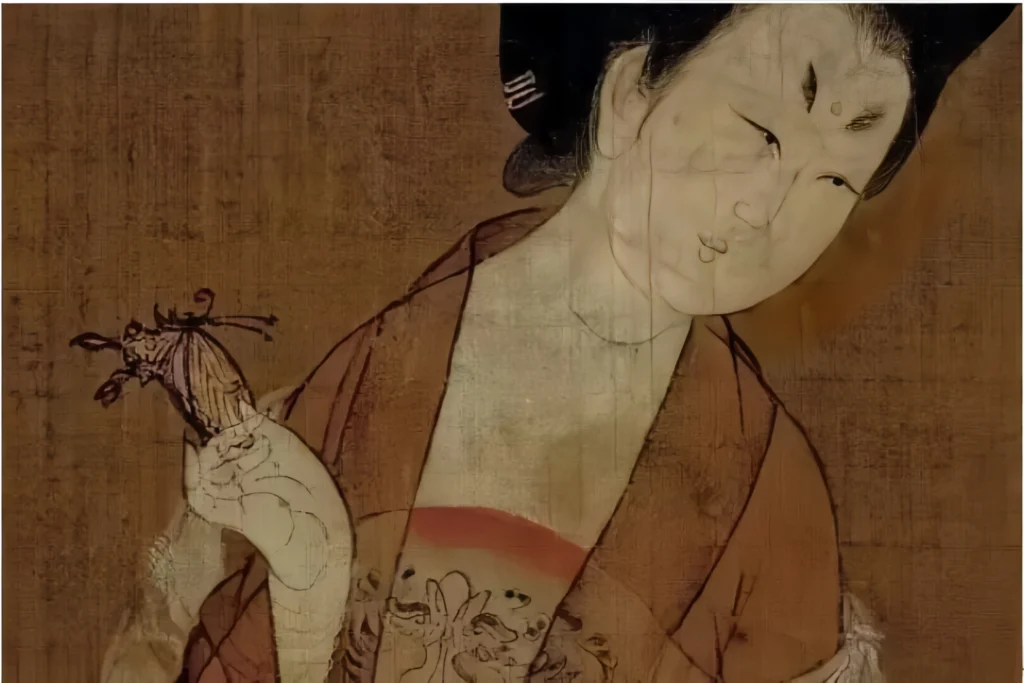
The Most Alluring Effect — Sheer Outer Layers
Wearing such refined underwear openly revealed much of the upper body, which could feel a bit too bold. So women added a symbolic outer layer — a sheer silk garment.
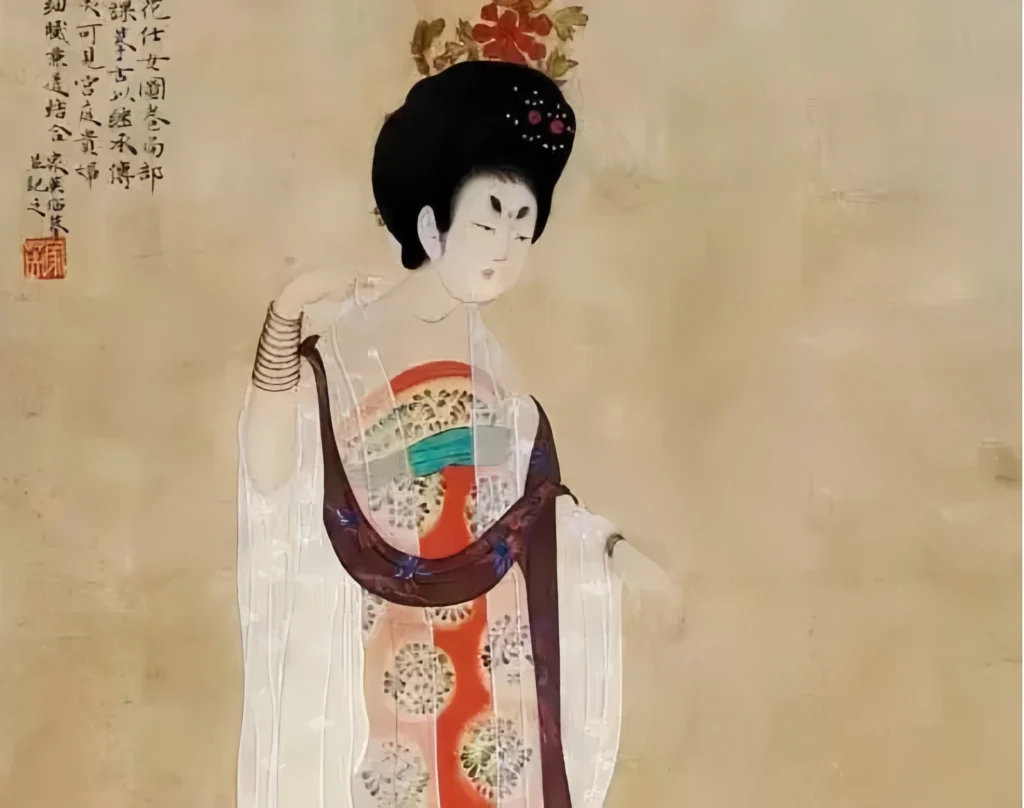
Underwear materials varied — cotton, linen, cloth — but silk was the favorite. It was breathable, smooth, lightweight, and reflective. Most importantly, it was incredibly thin — almost like wearing nothing at all.
The finest example is the plain silk gauze robe unearthed in 1972 from the Mawangdui tomb in Changsha, Hunan.
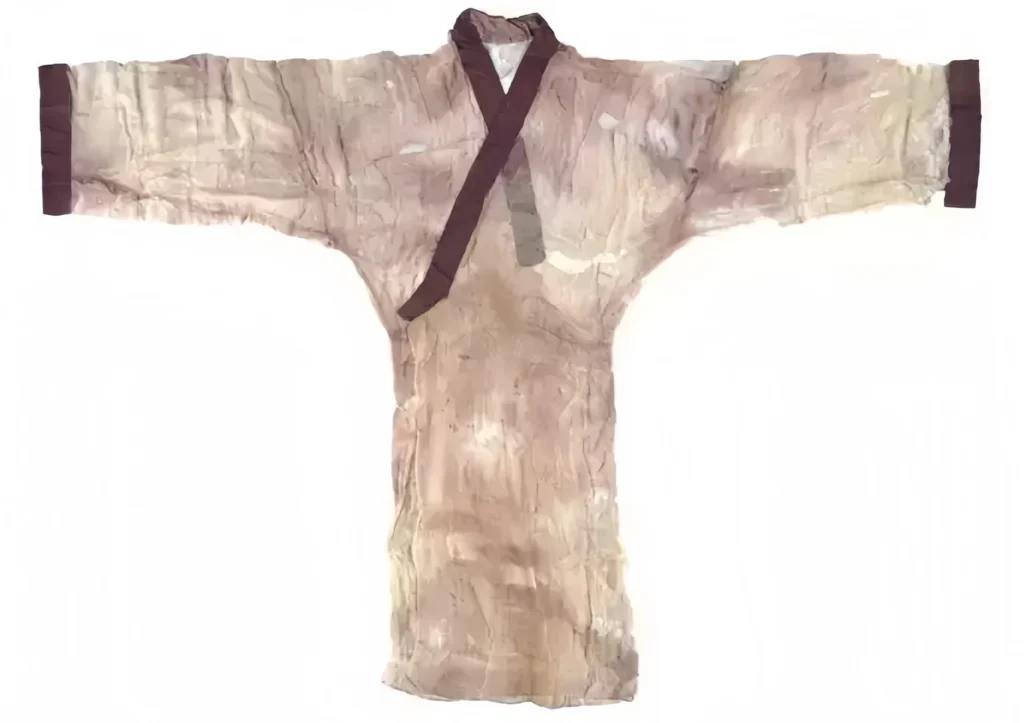
It weighs only 49 grams — about as light as three grapes — and is so thin that even folded ten layers thick, newspaper text can still be read through it.
Imagine a woman wearing exquisite traditional Chinese undergarments beneath, half-veiled cleavage, her body draped in shimmering gauze. As she walks past, the breeze lifts the fabric — subtle, suggestive, irresistible.
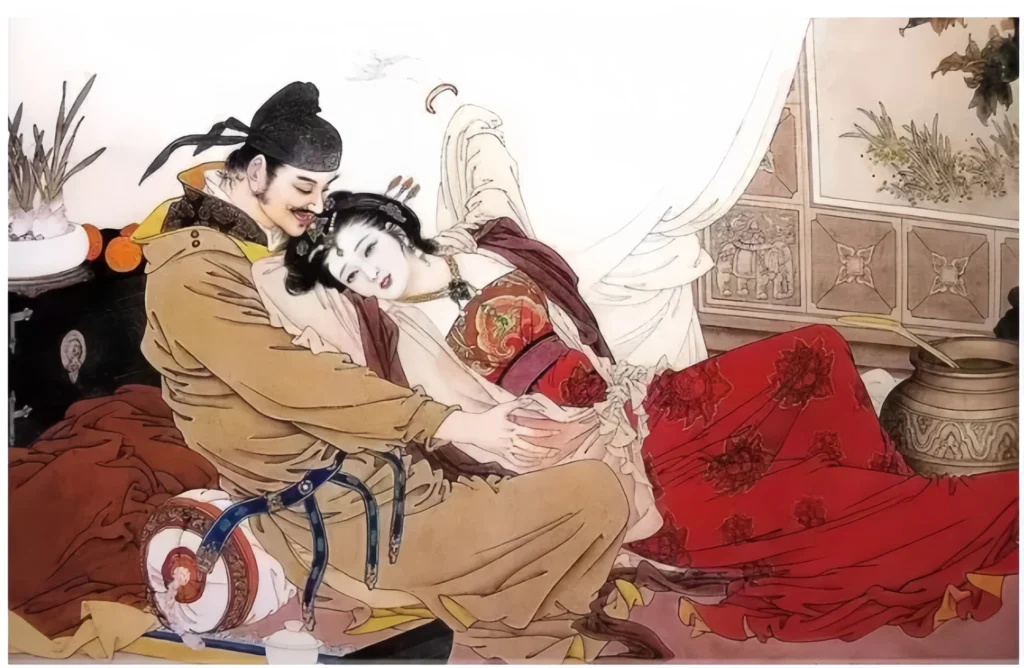
Poet Bai Juyi described such beauty in verse, comparing it to moonlight shining on a cascading waterfall — fluid, luminous, and impossible to look away from. The craftsmanship, he wrote, was so refined it seemed beyond words, dotted with floral details as pure as snow.
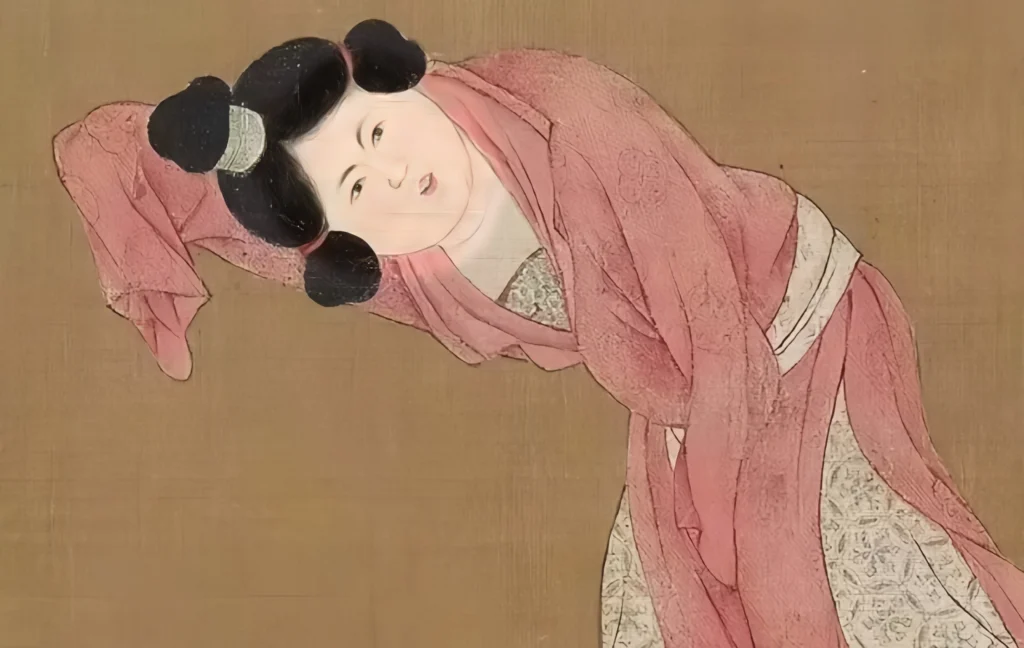
This vision inspired painters as well, preserved in masterpieces like Zhou Fang’s Court Ladies Wearing Flowers in Their Hair.
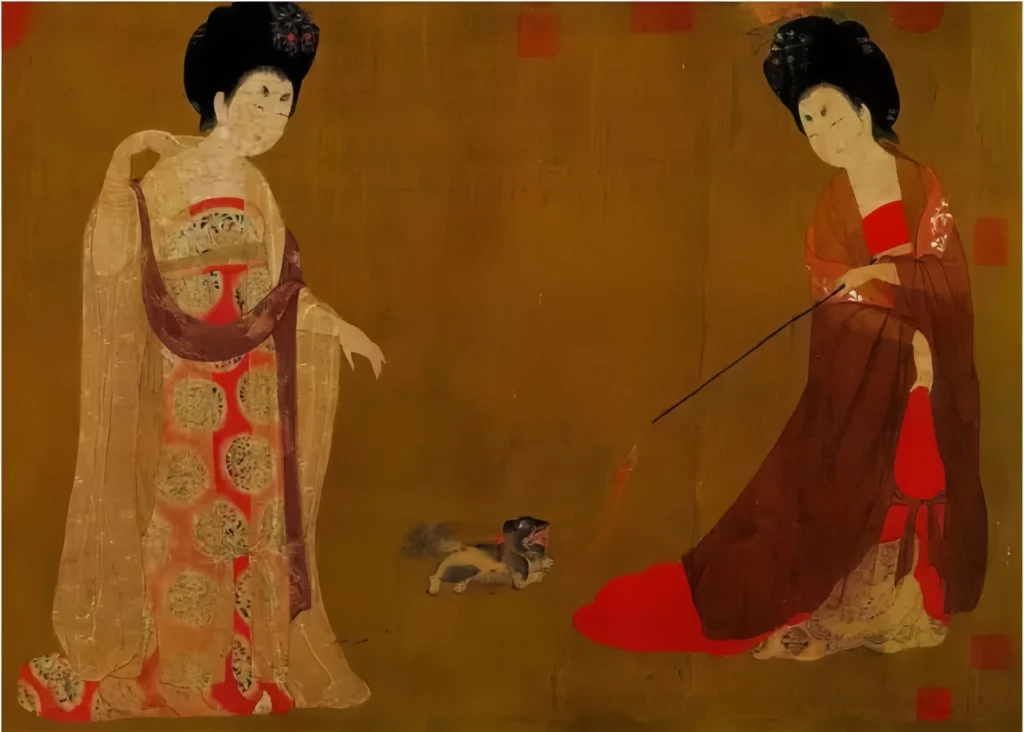
Underwear as outerwear + intricate embroidery + sheer outer layers became the formula for ancient Chinese sensuality.
This kind of beauty is different from the overt nudity seen in Western art. It is a uniquely Chinese expression — subtle yet direct, restrained yet evocative. A refined sensuality.
Is sexiness really about showing more skin?
Perhaps true allure lies not in exposure, but in suggestion — in what is half-hidden, half-revealed.
The highest form of sensuality isn’t about how much is shown, but how much imagination it awakens.
Want to explore more ancient Chinese underwear?
Check our Hanfu Underwear & Styling Guide for authentic tips!
Responses