Ming Dynasty Court Dress — The Emperor’s Pibian Attire and Tongtian Crown Attire

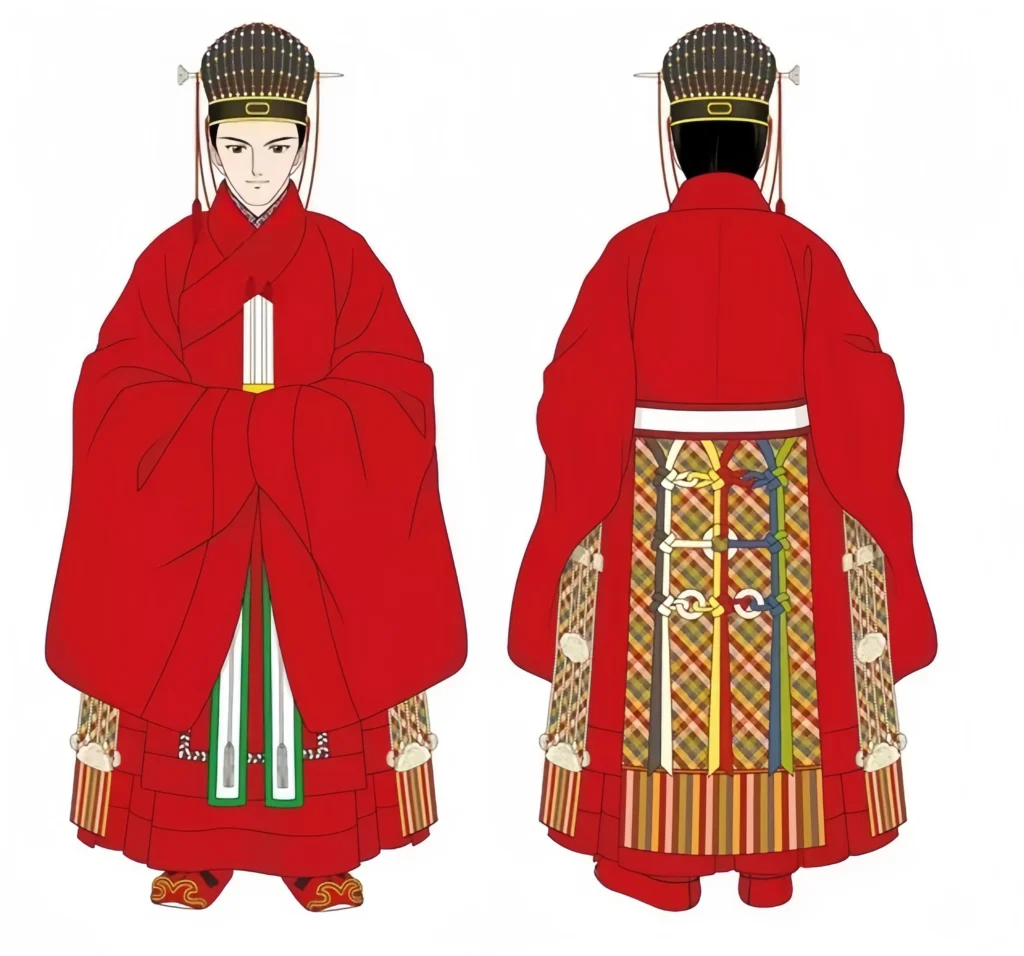
Pibian Attire
Pibian attire was the formal court dress worn by the Ming Dynasty emperor, the crown prince, and imperial princes including heir sons and commandery princes. The emperor wore Ming emperor pibian attire on occasions such as the first and fifteenth day court audiences, issuing imperial edicts, incense offerings, receiving memorials, audiences with foreign envoys, officials’ court visits, and the final announcement of successful examination candidates. During the Jiajing reign, Ming emperor pibian attire was also prescribed for sacrifices to the Grand Duke of the Year and to mountains and rivers.
According to the Ming Veritable Records, in the twenty-fourth year of the Hongwu reign, Emperor Taizu observed that all officials attended court in official dress while the emperor alone wore informal clothing, which he felt did not properly convey imperial dignity. He therefore ordered the Ministry of Rites to model new ceremonial attire after ancient systems, creating the Pibian, Ming crimson robe, and black jade tablet for use when presiding over court.
The Pibian attire system recorded in the Collected Statutes of the Ming Dynasty for the Hongwu period states:
“Pibian: covered with black gauze; twelve stitched sections at the front and back, each section adorned with twelve multicolored jade beads; guided by jade hairpins; red silk cords and tassels. The robe is crimson gauze; the knee cover follows the robe’s color; white jade pendants; leather fittings; jade hooks; red-and-white great belt; white socks and black shoes.”
In the third year of the Yongle reign, more detailed regulations for the emperor’s Ming emperor pibian attire were established, and these standards remained in use until the end of the Ming Dynasty. This formal Ming Dynasty Hanfu style preserved ancient ritual dignity in a distinctly Ming manner.
Pibian Crown (biàn)
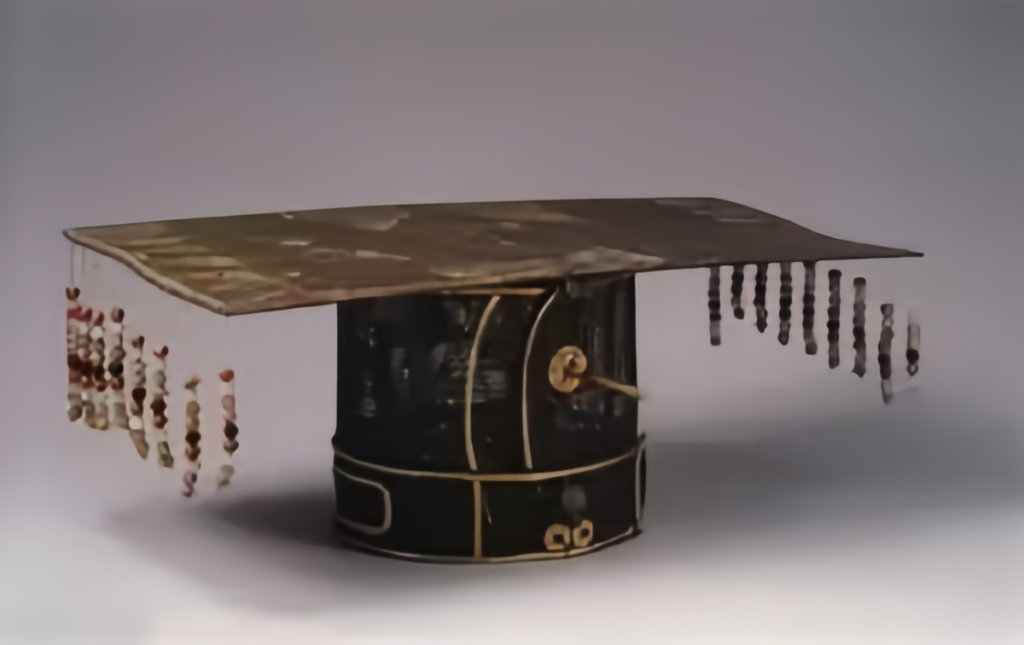
In the Ming Dynasty, the Pibian crown was covered with black gauze rather than made of leather. A physical example excavated from the Dingling Tomb of the Wanli Emperor measures 19.4 cm in height and 19 cm in diameter. The inner structure is a hexagonal lattice woven from fine bamboo strips and coated with black lacquer, lined with a layer of plain red silk. Three layers of black gauze cover the exterior.
The inner rim is lined with a 3.3 cm wide strip of red silk gauze, while the outer rim is fitted with a gilt band 0.8 cm wide. Rectangular gilt plates are attached at the front and back, with the front plate measuring 4.8 × 2.5 cm and the rear 4 × 2.2 cm.
The crown body is divided into twelve stitched sections. Inside each section is a gilt bamboo strand decorated with nine four-colored jade beads and three pearls. According to regulations, each section should contain twelve multicolored jade beads arranged in red, white, blue, yellow, and black.
A jade hairpin (the excavated example consists of two sections) is secured with red cords and tassels. At the hairpin points are sunflower-shaped gilt fittings, and the tassels are fixed with gilt knobs. The red cords are tied in the same way as those of the ceremonial crown: one end attached to the left hairpin, passed beneath the chin, and tied to the right hairpin, with the remaining ends hanging down. This Ming pibian crown represents a key element of Ming dynasty court dress and reflects the continuity of traditional Ming Dynasty Hanfu ceremonial elements.

Crimson Gauze Robe
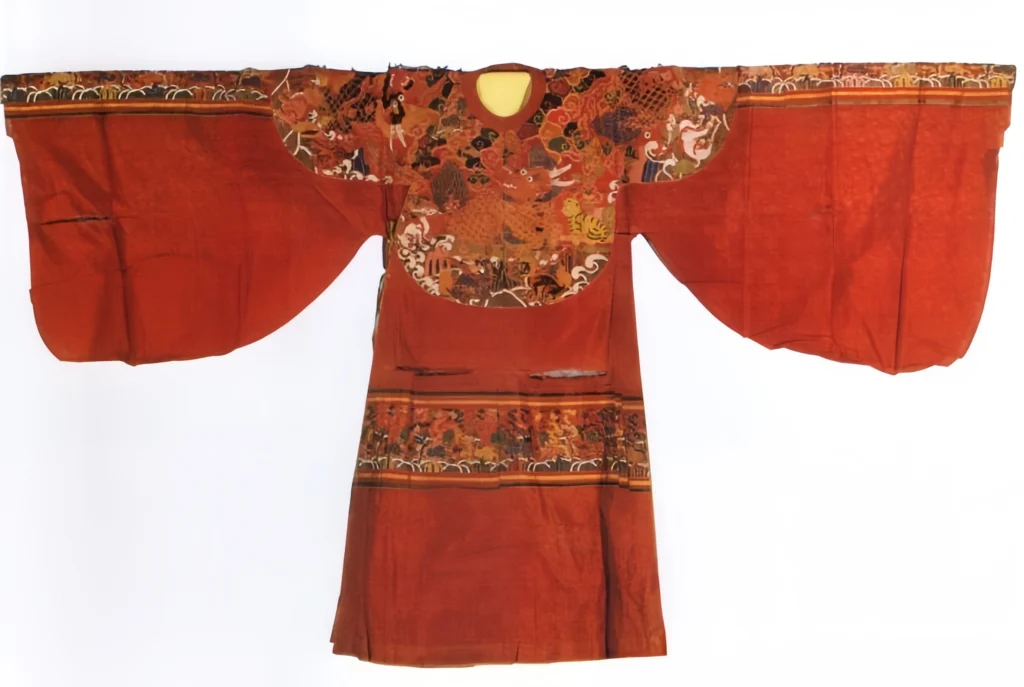
The upper garment of the Pibian attire is bright red and therefore known as the Ming crimson robe. It has a crossed collar and wide sleeves. The collar, sleeves, and front edges are all finished with borders in the same color. No decorative motifs are applied to the body of the robe; symbolic designs such as the Twelve Ornaments are not used. This design aligns with classic Hanfu attire principles of simplicity and ritual symbolism.
Red Lower Garment (Chang)
The lower garment of the Pibian attire is identical to that used with ceremonial crown attire under the Yongle system. It is red, composed of separate front and back panels—three panels in the front and four at the back—joined at the waistband. The panels are pleated, and the sides and hem are finished with borders in the same color. No patterned designs are woven into the fabric.
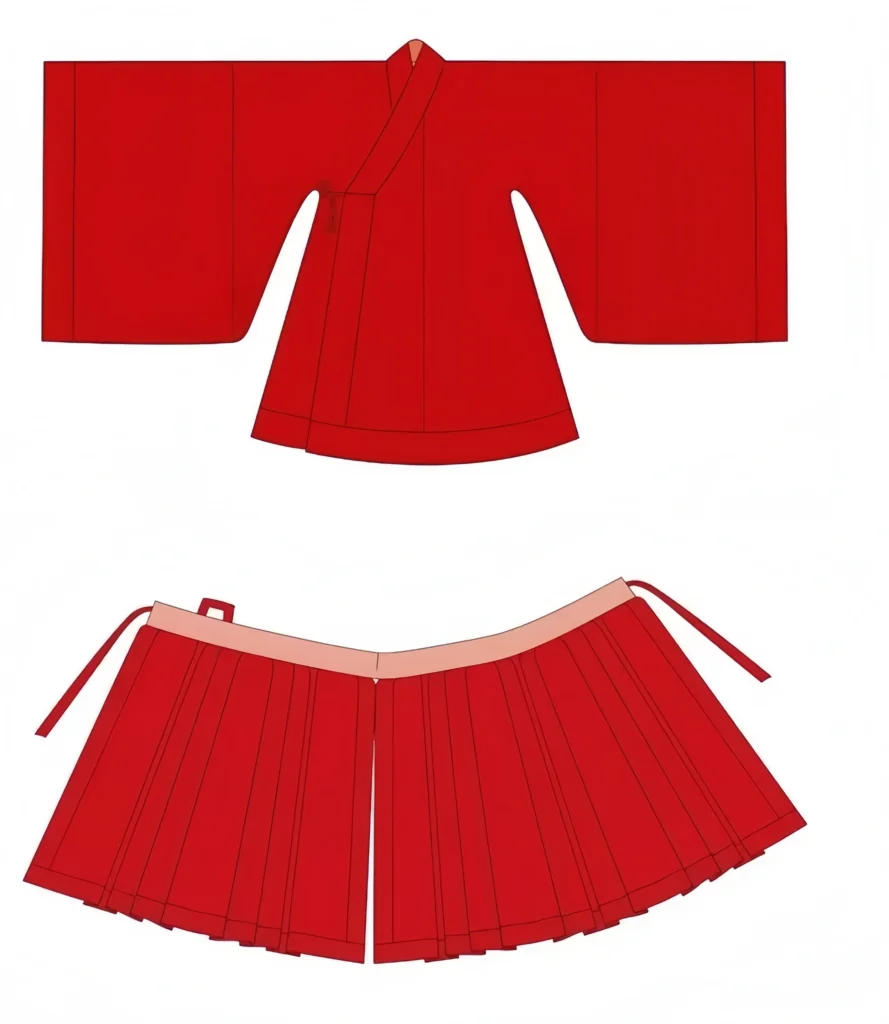
Inner Robe and Knee Cover
The inner robe follows the deep robe structure and is made of plain silk gauze. It has a crossed collar and wide sleeves, with the upper and lower sections cut separately and twelve panels stitched below the waist. Red borders are applied to the collar, sleeves, and front edges, and thirteen fu motifs are woven into the collar.
The knee cover is red with matching borders, identical in form to that used with ceremonial crown attire. It has no decorative patterns and is fitted with a pair of jade hooks for suspension.

Jade Gui (Ridge Gui)
The jade gui is the same length as that used with ceremonial crown attire, measuring one chi and two cun by Zhou standards. It tapers to a point at the top and is squared at the base. A raised ridge runs down the center of the front, with grooves on both sides containing rounded ridges, corresponding to the “double planted pattern” described in the Collected Statutes.
The lower portion is wrapped in yellow silk, and a dedicated pouch decorated with gold dragon patterns is used to store the gui. The pouch has a semicircular flap at the bottom.

Great Belt, Jade Pendants, Small and Large Sashes, Socks, and Shoes
These accessories are the same as those used with ceremonial crown attire, except that Pibian attire does not use a leather belt. The great belt has a white outer layer and red lining, consisting of a waist section and hanging ends. Decorative false knots and loops are applied, with red edging on the waist and knot sections and green edging on the hanging ends. An additional plain silk ribbon is tied to the belt knot.
Two sets of jade pendants hang from the belt, composed of gold hooks and various jade elements carved with cloud-and-dragon patterns and highlighted with gold. Below them hang pairs of small sashes matching the large sash in color and pattern. The large sash is woven in six colors—yellow, white, red, black, pale blue, and green—with six smaller ribbons hanging below, arranged in three groups and attached to dragon-patterned jade rings. Both socks and shoes are red.
Tongtian Crown Attire
In the early Ming Dynasty, Ming tongtian crown attire was created with reference to Song Dynasty regulations. In the first year of the Hongwu reign, it was prescribed for the emperor when inspecting sacrificial animals before suburban and ancestral temple rites, as well as for the crown prince and imperial princes during capping, marriage, Daoist consecrations, and sacrifices to the altar of soil and grain.
However, historical sources such as the Ming Veritable Records show that after the tenth year of the Hongwu reign, there are virtually no records of emperors wearing Ming tongtian crown attire. It is also absent from the crown and attire regulations recorded in the Collected Statutes of the Ming Dynasty, suggesting that it fell out of use after the mid-Hongwu period, with most of its functions gradually replaced by Ming emperor pibian attire. This shift highlights how Hanfu attire evolved within the Ming court system over time, preserving traditional elements in a new ceremonial context, while Ming Dynasty Hanfu continued to influence later designs.

Love Ming Dynasty Hanfu recreations?
Check our Ming Hanfu styling guide for authentic tips!
Responses