Ming Consort Clothing — Auspicious Garments and Casual Wear of Imperial Consorts

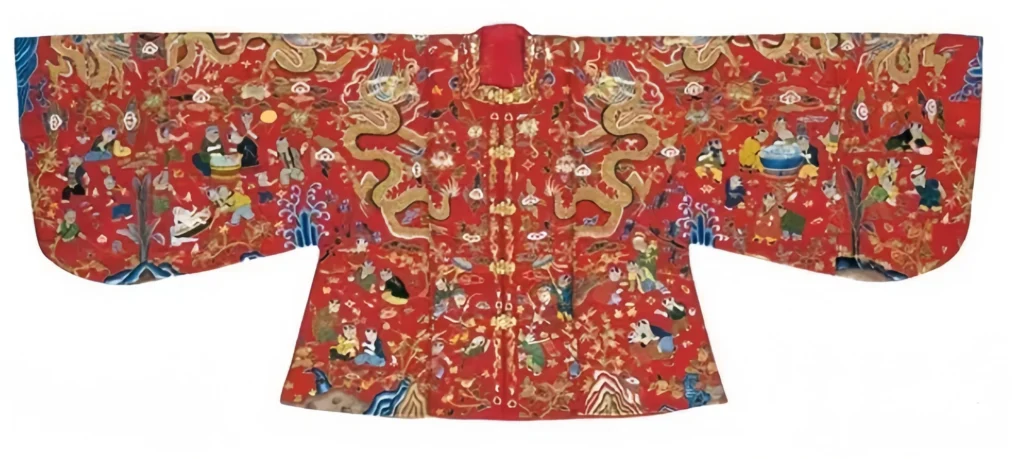
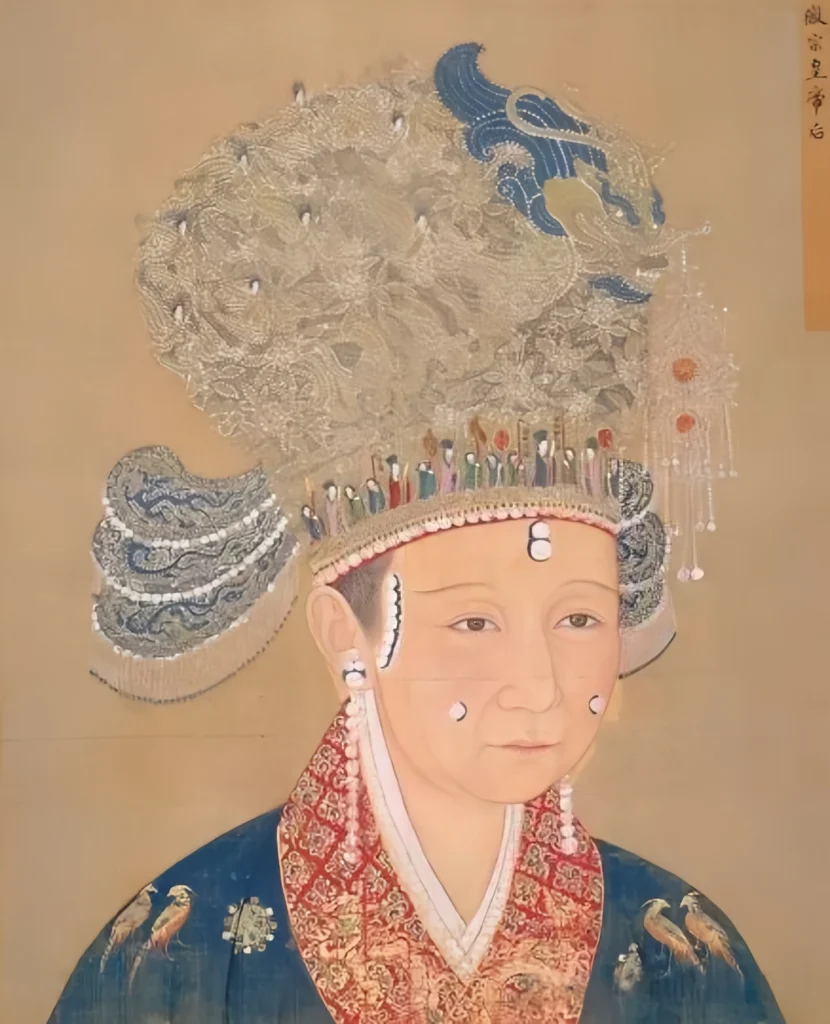
In the Ming Dynasty, the clothing worn by imperial consorts can generally be divided into auspicious garments (jifu) and casual wear (bianfu). Ming consort clothing was rich in variety. Auspicious garments were worn for festive and ceremonial occasions such as seasonal festivals, banquets, birthdays, and other celebratory events, while casual wear was used in everyday life. Unlike formal court attire, neither category followed a strictly codified system. Materials, colors, and decorative elements varied widely and changed over time in response to fashion trends.
Auspicious Garments
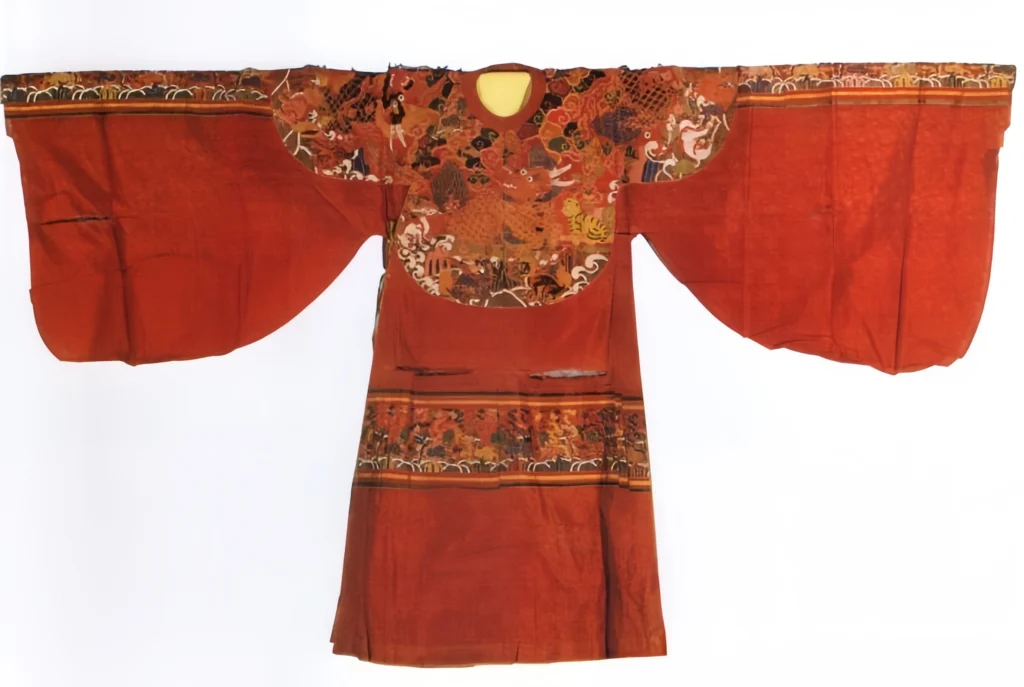
Surviving examples of Ming consort clothing show that their Ming Hanfu auspicious garments were often similar to casual wear in silhouette, but with far more elaborate decoration and refined craftsmanship.
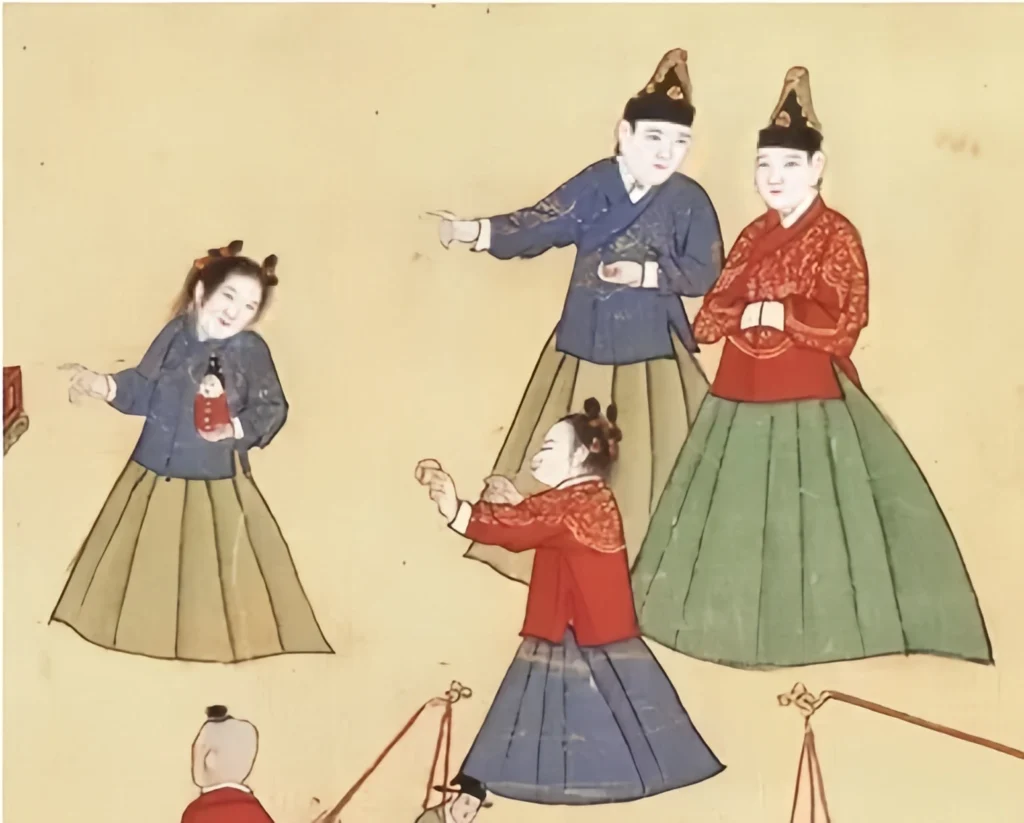
A well-known visual source is The Lantern Festival Celebration of the Xuande Court (also known as The Lantern Festival at the Ming Court), a handscroll painted by court artists during the Chenghua reign. Excavated from the tomb of Wang Xijue (1534–1614) in Huqiu, Suzhou, the painting depicts Emperor Chenghua celebrating the Lantern Festival with imperial women, eunuchs, and princes and princesses. Most figures in the painting wear luxurious Ming Hanfu auspicious garments decorated with woven gold or gold embroidery. The upper garments of consorts and palace women are often adorned with cloud collars (yun jian) and continuous sleeve borders (tongxiu lan).
The Ming eunuch Liu Ruoyu provided detailed descriptions of palace clothing for different seasonal festivals in his book Zhuo Zhong Zhi:
“On the first day of the first lunar month, the New Year’s Day Festival, from the Kitchen God sacrifice on the 24th day of the twelfth month onward, palace women and eunuchs wear gourd-themed badges and mang robes… From the year’s end to New Year’s Day, everyone wears decorative ‘nao’e’ head ornaments made of black-gold paper, painted and colored, sometimes in the shapes of insects or butterflies…
On the fifteenth day, the Lantern Festival, palace women and eunuchs wear lantern-themed badges and mang robes…
Before Qingming, fur garments such as sable, fox, and fur collars are stored away…
On the fourth day of the third month, gauze garments replace silk ones…
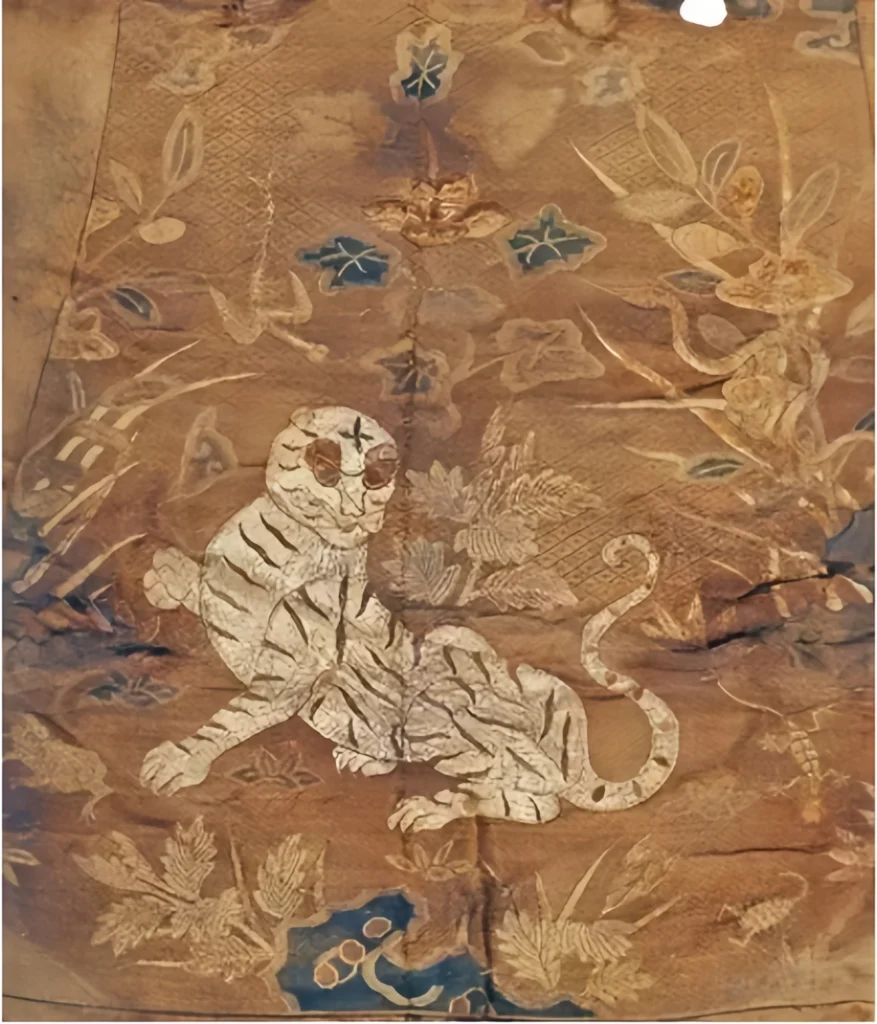
On the fifth day of the fifth month, palace women and eunuchs wear Five Poisons and Tiger badges…
On the seventh day of the seventh month, the Qixi Festival, palace women wear Magpie Bridge badges…
On the ninth day of the ninth month, chrysanthemum-themed badges are worn…
On the Winter Solstice, everyone wears Yangsheng (Rising Yang) badges…”
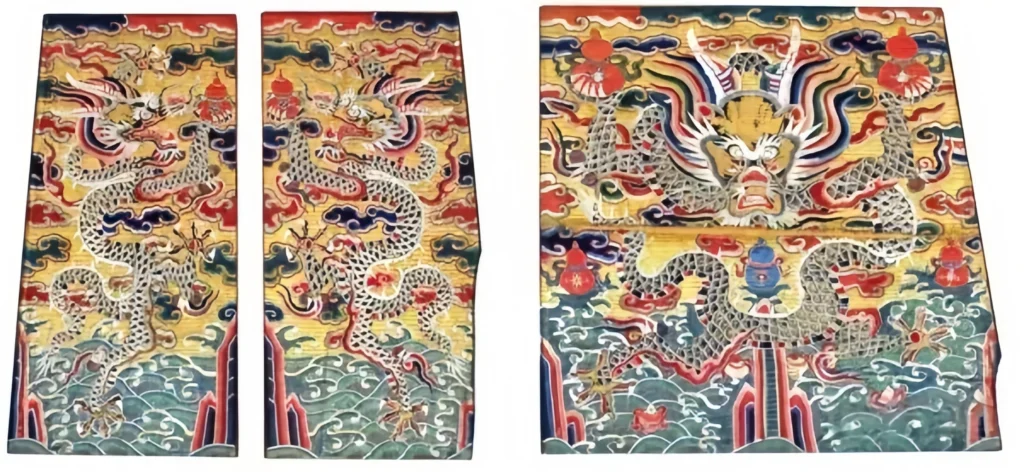
These records show that Ming Hanfu auspicious garments shared two key features. First, they were visually rich and ceremonial, often including mang robes and decorative badges. Second, the imagery on these Ming Hanfu auspicious garments closely matched the season or occasion on which they were worn.
Today, many Ming Dynasty textile badges preserved in museums correspond closely with the descriptions found in Zhuo Zhong Zhi.
Gourd-Themed Badges (Hulu Scene Badges)
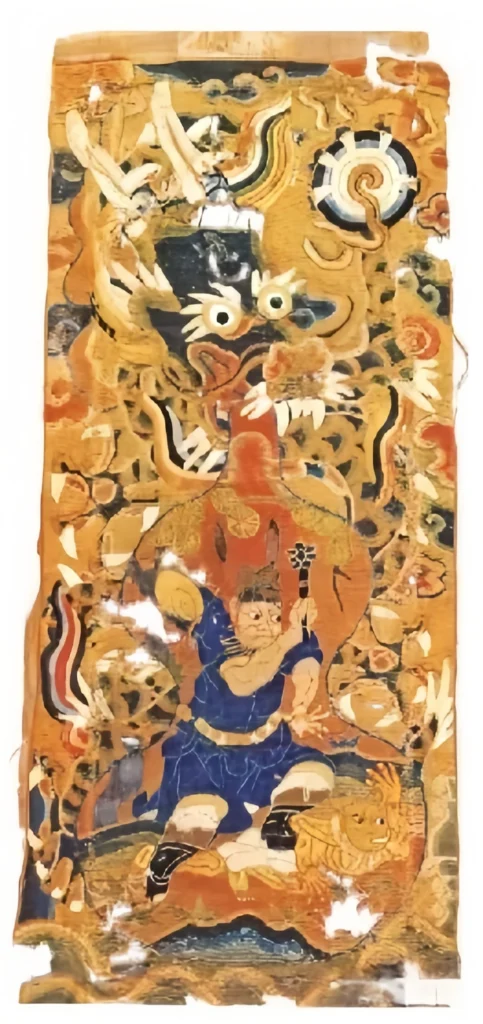
Also known as “Great Auspicious Gourd” badges, these were worn from the Kitchen God Festival through the New Year period. Palace versions often featured dragons or mang motifs, sometimes combined with seasonal imagery.
The Palace Museum holds a Ming Dynasty silk embroidery fragment featuring a dragon and a large gourd, inside which the scene of Zhong Kui Subduing Demons is depicted. Zhong Kui wears a scholar’s robe and holds a club known as zhongkui, a wordplay rooted in classical texts such as Compendium of Materia Medica. Similar Zhong Kui-themed badges were also excavated from the Dingling Tomb.
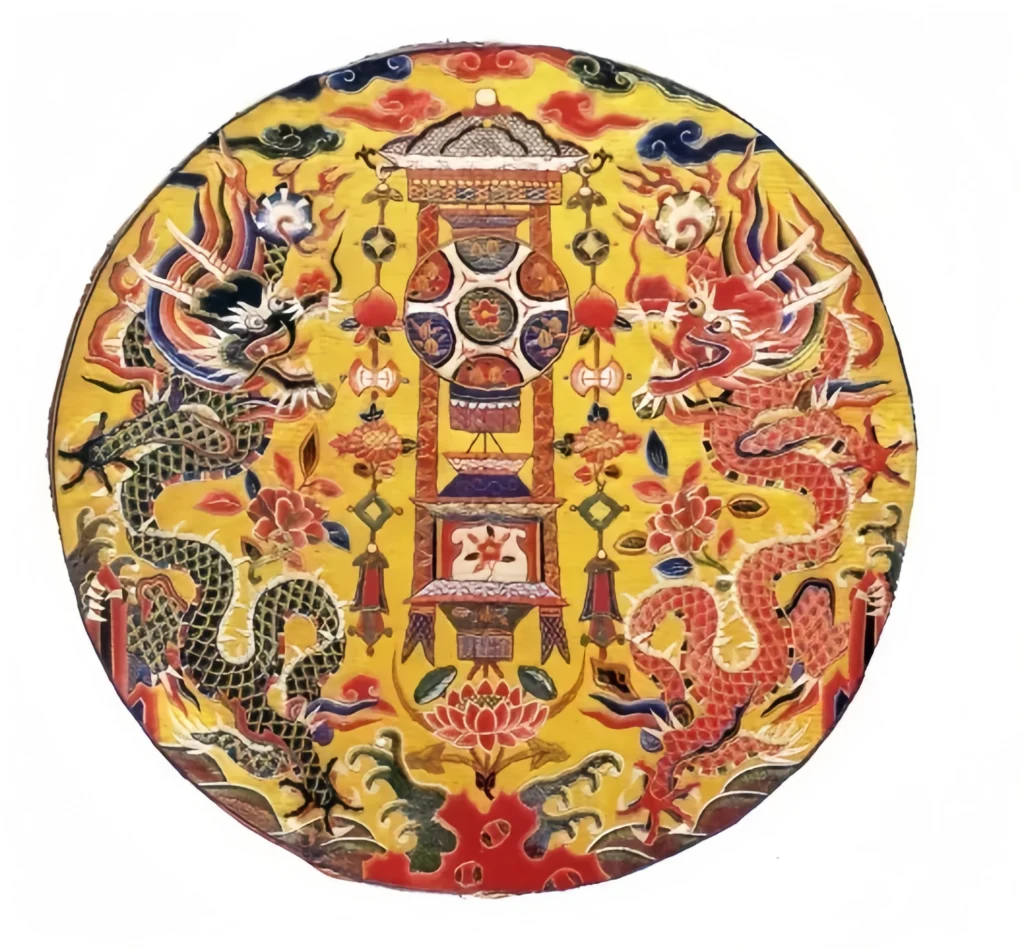
Lantern Festival Badges
Worn during the Lantern Festival on the fifteenth day of the first lunar month, these badges feature lantern motifs and gave rise to the term “Lantern Garments.”
Swing Scene Badges
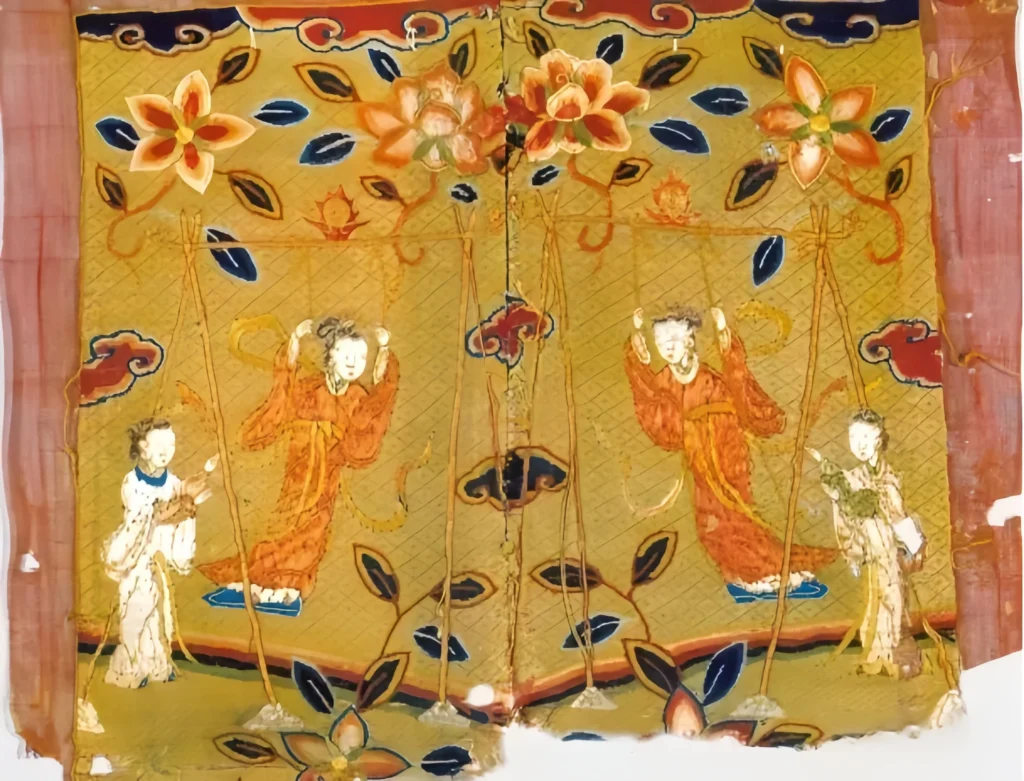
Used during the Qingming Festival, also known as the Swing Festival, reflecting the long-standing tradition of swinging during Qingming and Cold Food festivals.
Five Poisons and Tiger Badges
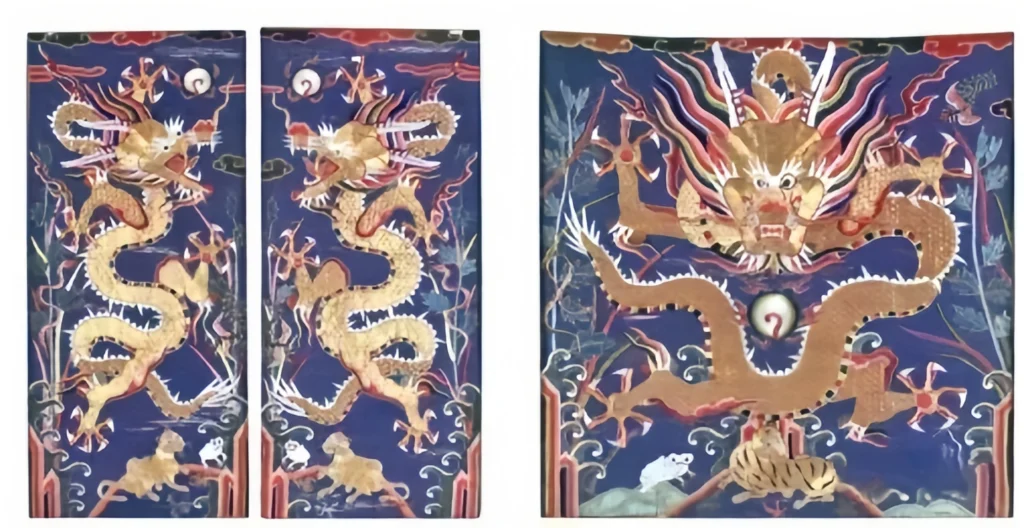
Worn during the Dragon Boat Festival, these badges depict the five poisonous creatures—scorpion, snake, gecko, centipede, and toad—along with tigers and mugwort. The imagery symbolizes protection and the expulsion of evil.
Magpie Bridge Badges
Worn during the Qixi Festival, these badges depict the legendary meeting of the Cowherd and the Weaver Girl on the Magpie Bridge.

Jade Rabbit Badges
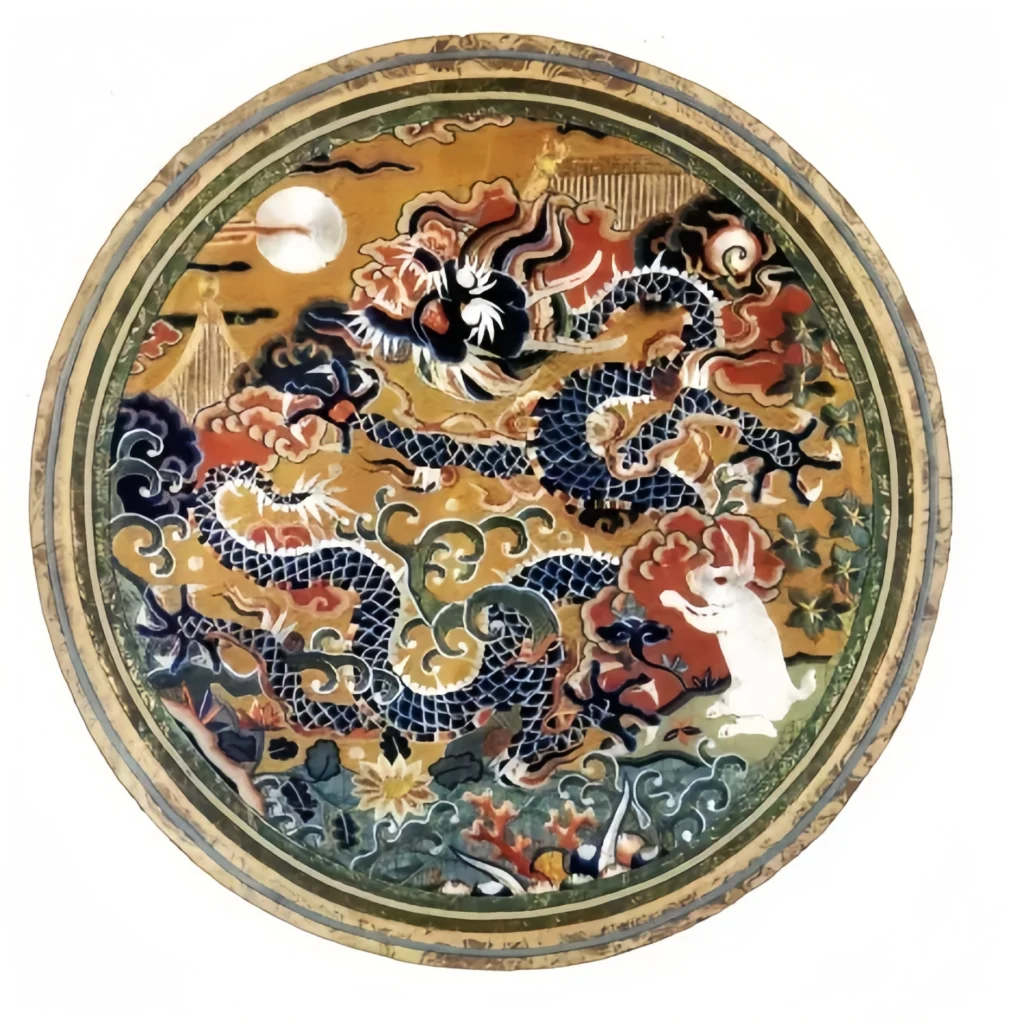
Used for the Mid-Autumn Festival, featuring the Moon Palace, jade rabbit, and cassia tree.
Chrysanthemum Badges for Double Ninth Festival
Worn during the Double Ninth Festival, reflecting seasonal chrysanthemum appreciation and longevity symbolism.
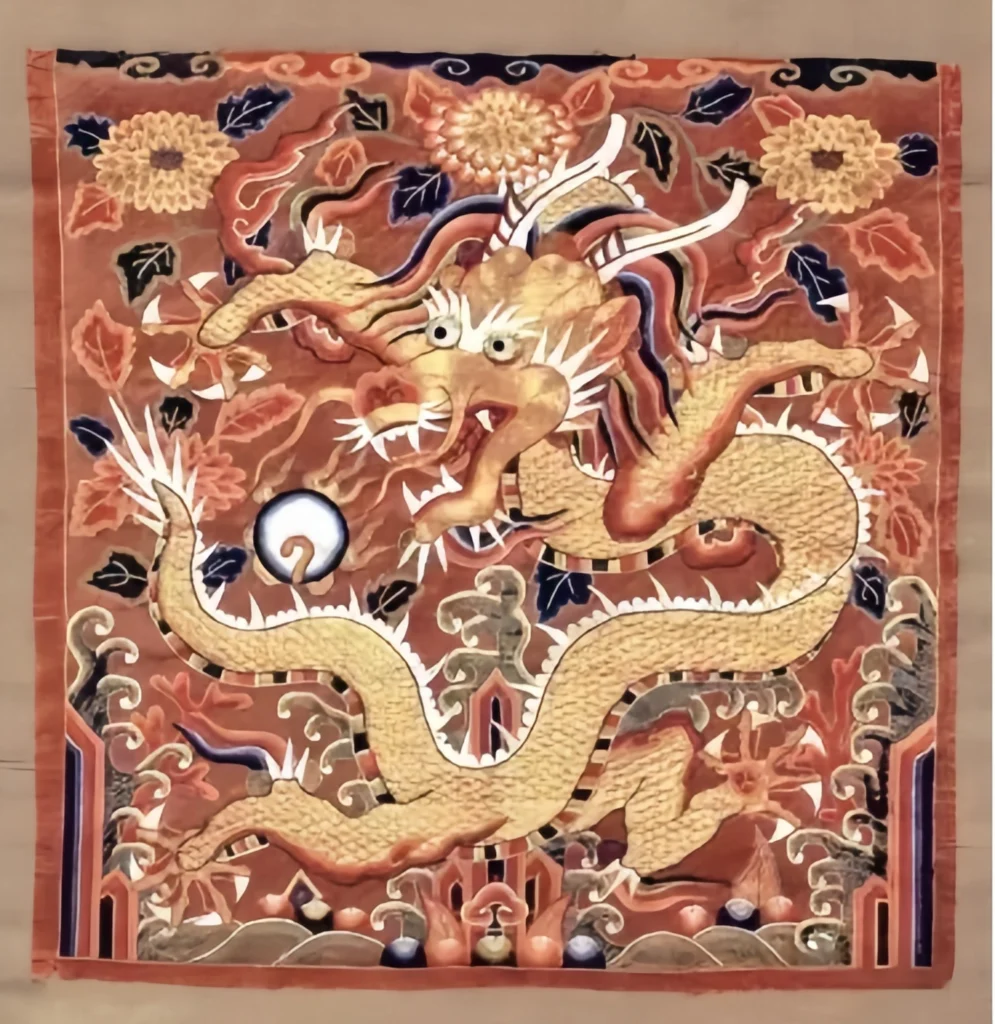
Rising Yang (Yangsheng) Badges
Used during the Winter Solstice, symbolizing the return of yang energy. Common motifs include goats or sheep emitting auspicious qi, as well as themes like Three Yangs Bringing Prosperity.
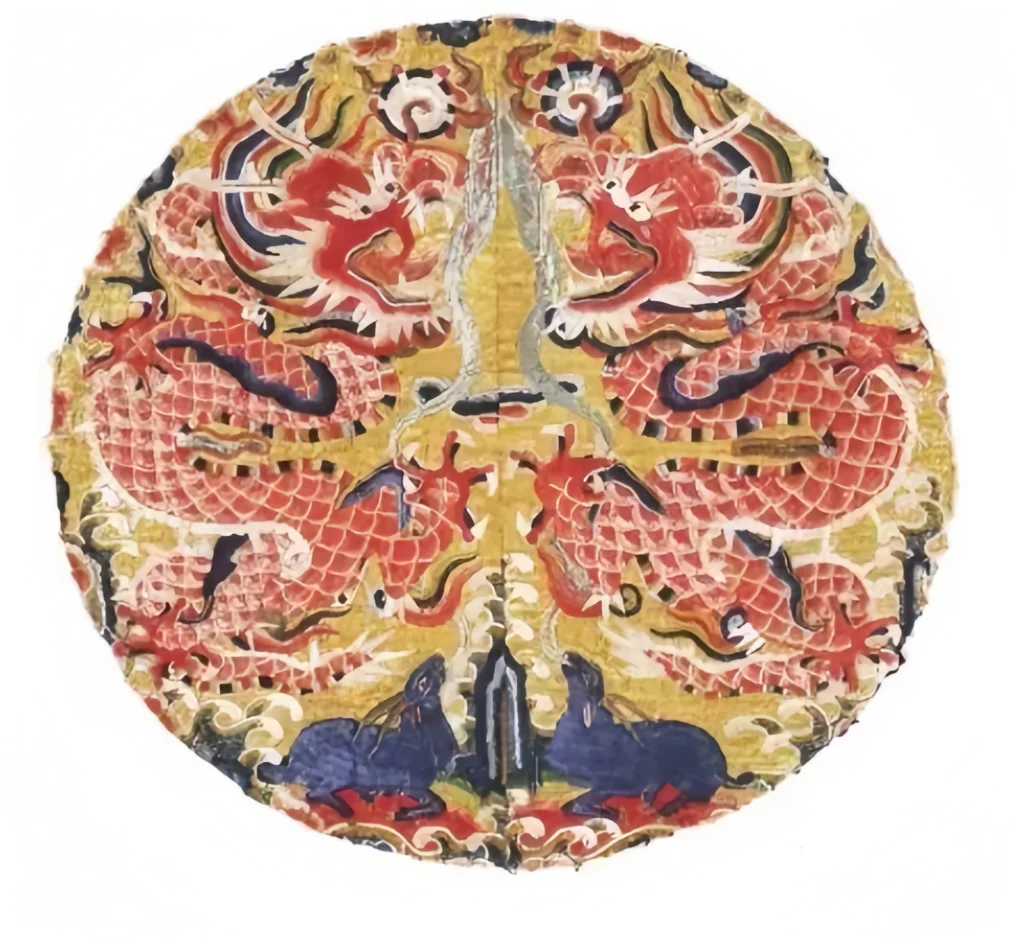
Burial Garments from the Dingling Tomb
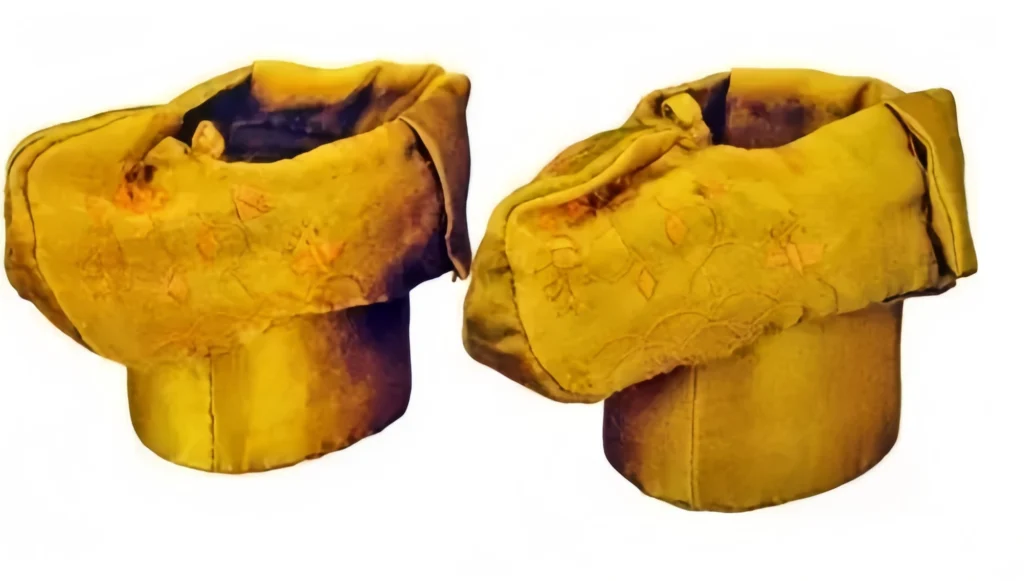
Empress Xiaoduanxian and Empress Xiaojing, both consorts of Emperor Wanli and buried with him in Dingling, were not dressed in formal ritual robes or everyday Ming consort clothing. Instead, they wore black gauze pointed hats with various head ornaments, short jackets, skirts, and trousers.
Empress Xiaoduanxian
- Upper body: Yellow eight-treasure ground with four-way ruyi cloud pattern silk embroidered dragon-phoenix square-patch square-collar jacket
- Inner layer: Plain eight-treasure ruyi cloud pattern silk kesi dragon square-patch jacket
- Lower body: Embroidered dragon long skirt
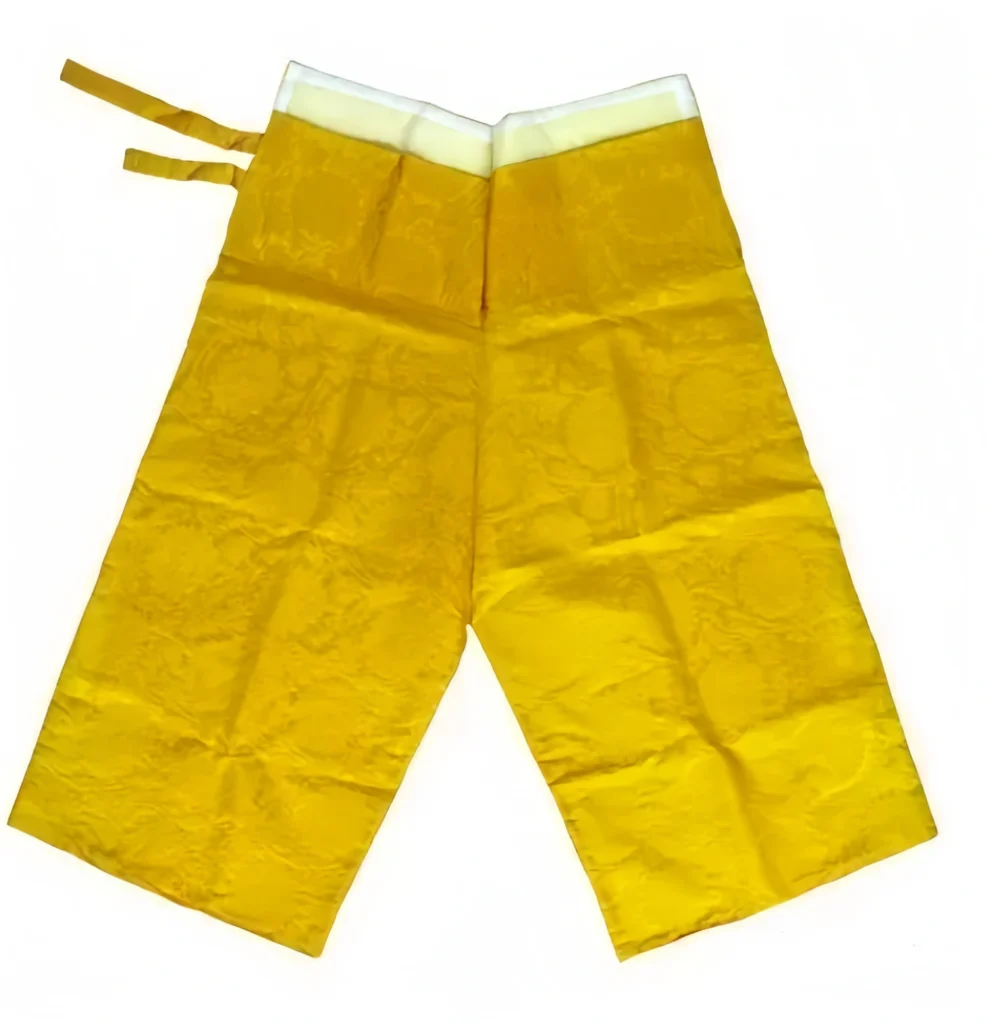
- Inner layer: Yellow lotus branch dark-pattern satin trousers
Empress Xiaojing
- Upper body: Yellow branch-flower satin round-collar jacket
- Inner layer: Two layers of yellow satin short jackets
- Waist: Red woven-gold landscape eternal prosperity ruyi satin skirt (covered with one silk and one satin skirt)
- Lower body: Branch-flower satin trousers
From shape and patterns, both queens’ outfits belong to Ming Hanfu auspicious garments (similar to Emperor Wanli’s twelve-roundel twelve-chapter gunfu, also auspicious in nature).
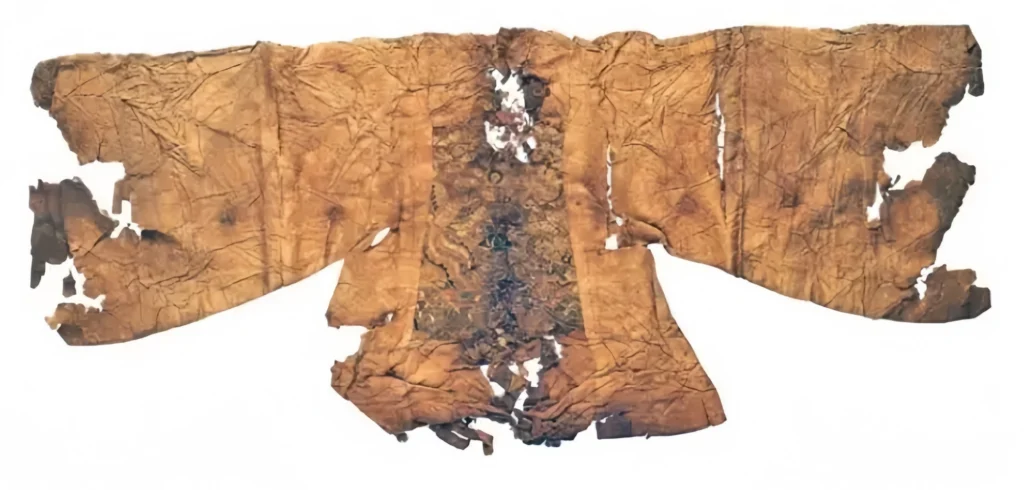
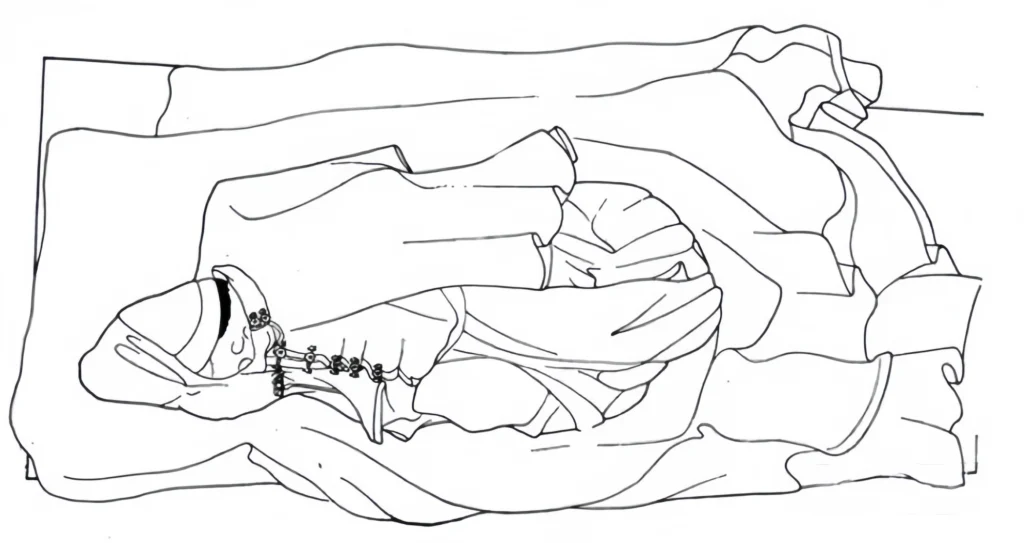
Many auspicious-type garments had cloud shoulders and sleeve borders, but most featured square or trapezoid patches sewn front and back (left/right front, one back). Patches were mostly embroidered, some kesi, with cloud-dragon patterns dominant, followed by dragon-phoenix, phoenix, flowers, hundred-children, seasonal scenes, and auspicious characters like longevity and great fortune.
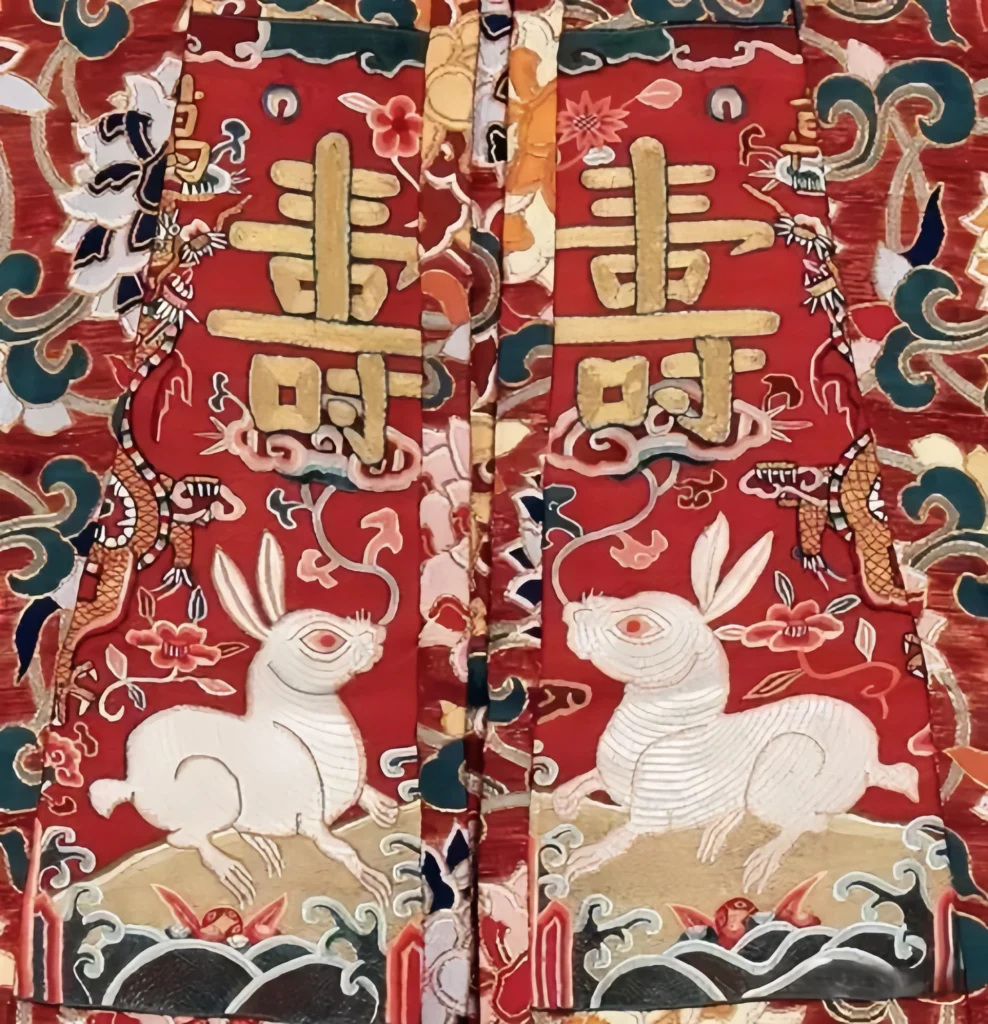
Patterns were often combined. Empress Xiaojing had a green woven-gold lotus branch makeup-flower gauze square-collar jacket. Front and back had trapezoid patches: the front pair mirrored with side-facing jade rabbit holding lingzhi, supporting disk-gold “shou” character, bottom longevity mountains and treasures, sides ascending dragons clutching pearls, dragon heads above gold “wan” characters, surrounded by seasonal flowers. The back patch featured a front-facing large jade rabbit backing lingzhi and disk-gold large “shou”, sides ascending dragons clutching lingzhi and gold “wan”, bottom longevity mountains and treasures, seasonal flowers.
The gold-embroidered “wan” and “shou” show this short jacket was worn during the emperor’s birthday celebrations. Wanli was born on the 17th day of the eighth lunar month (just after Mid-Autumn), so palace designers combined Mid-Autumn jade rabbit with birthday longevity motifs for extra festivity – a beautiful example of Ming Hanfu auspicious garments.
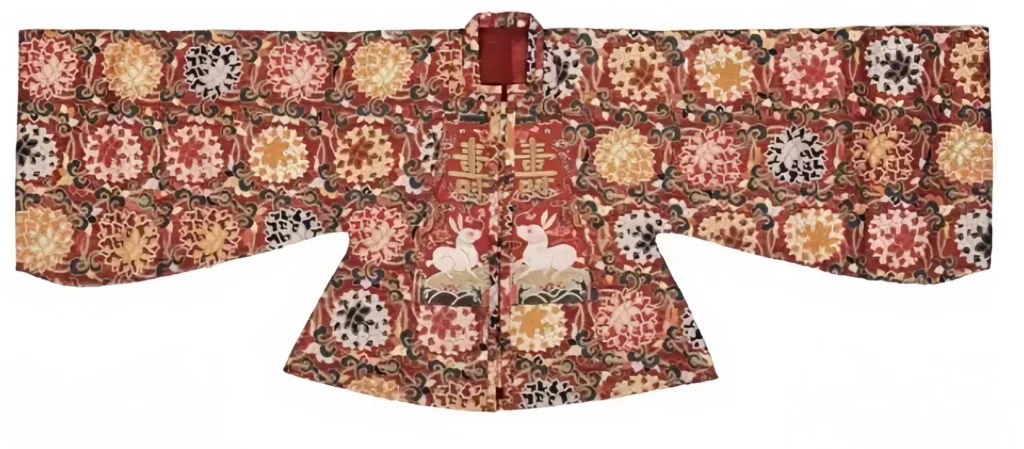
Dingling yielded 47 skirts, these skirts paired with auspicious or casual jackets in Ming consort clothing.
Casual Wear
The everyday Ming consort clothing was largely similar in form to that worn by elite women outside the palace. The standard style consisted of separate upper garments and skirts – the classic Ming consort clothing look for everyday life. Fashion trends influenced garment length, sleeve width, and collar styles.
Historical records note the popularity of Jiangnan-style fashion, especially from Suzhou and Yangzhou, which significantly influenced palace clothing. Light-colored summer garments became fashionable, with white gauze gaining popularity after being adopted by imperial women.
In paintings such as The Lantern Festival Celebration, women commonly wear cross-collar short jackets, sometimes layered with sleeveless vests (bijia). Buttons at the collar became a notable feature and played a role in the later development of standing collars – a classic in Ming Hanfu casual wear.
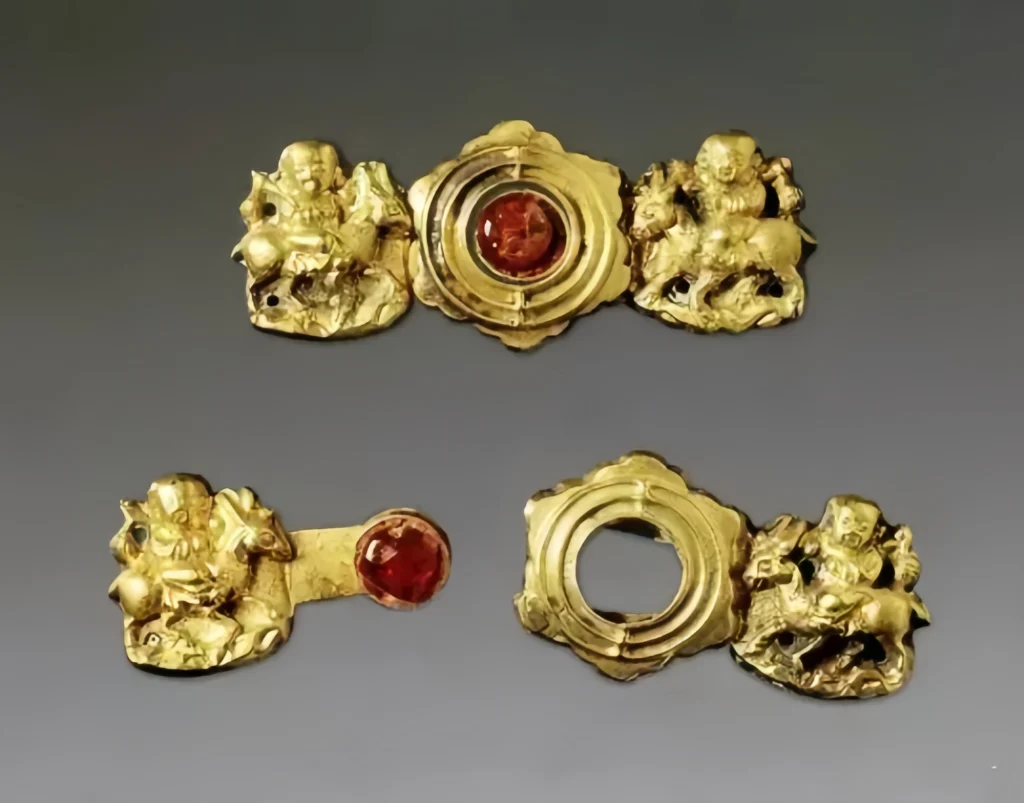

The Dingling garments provide invaluable physical evidence for understanding late Ming Dynasty palace women’s Ming Hanfu casual wear, including jackets, skirts, trousers, socks, and shoes.
Want to wear Ming consort clothing today?
Check our Ming Hanfu styling guide for authentic tips!


Responses