Ming Emperor Daily Robes — From Court to Festivals

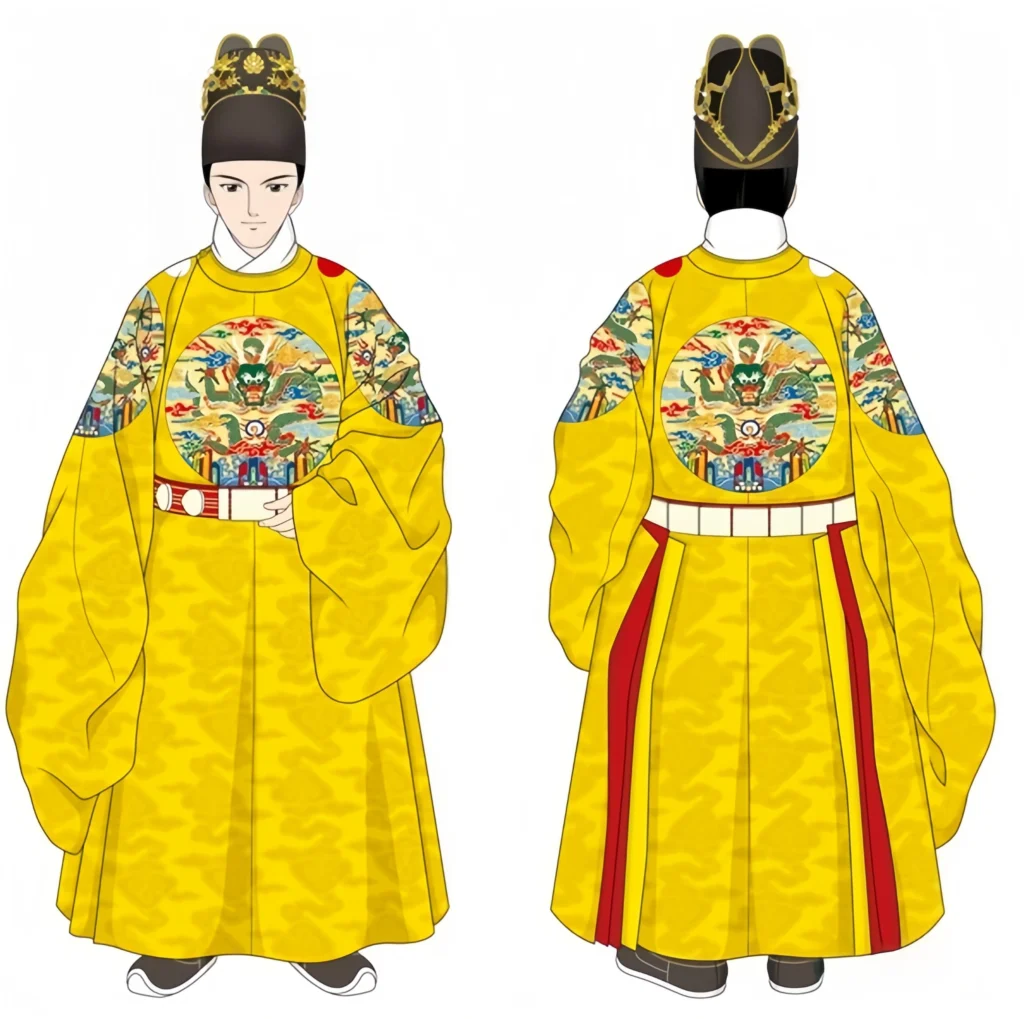
Type of Ming emperor daily robes
Ming emperor daily robes
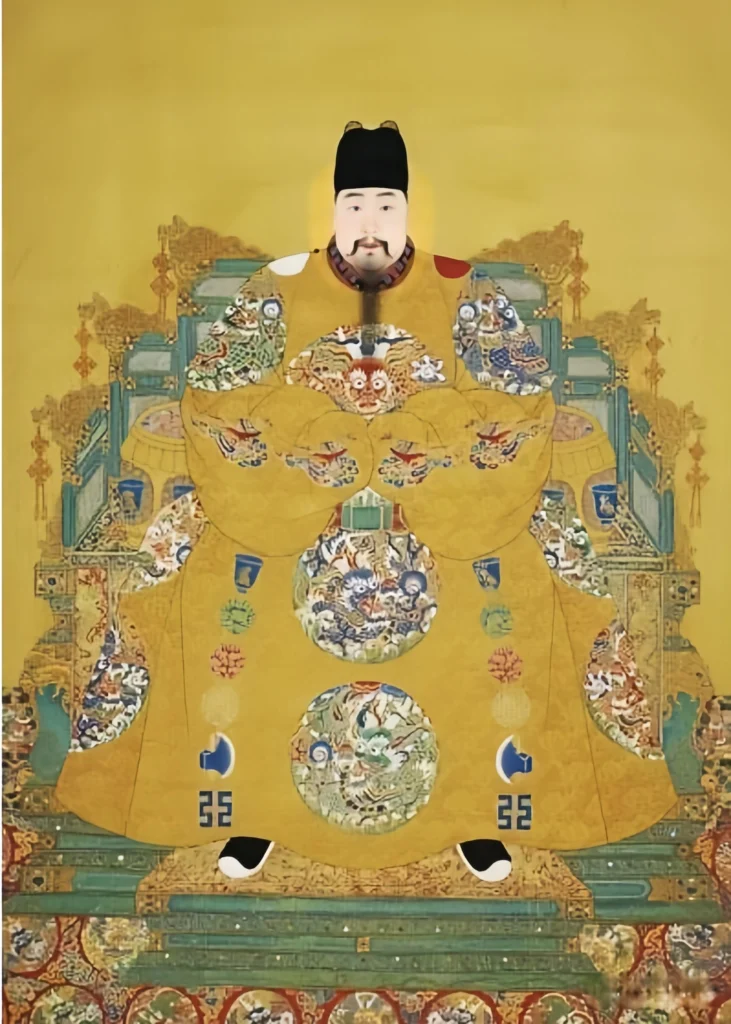
Ming emperor daily robes were the most frequently worn garments in the Ming dynasty. They appeared at routine court meetings, daily lectures, animal sacrifices, tomb visits, receiving captives, military reviews, and similar occasions. In the first year of the Hongwu reign, it was set that the emperor’s Ming emperor daily robes included a black gauze cap with upward-folding corners, paired with a round-collar robe with narrow sleeves and a belt decorated with gold, jade, amber, and carved horn.
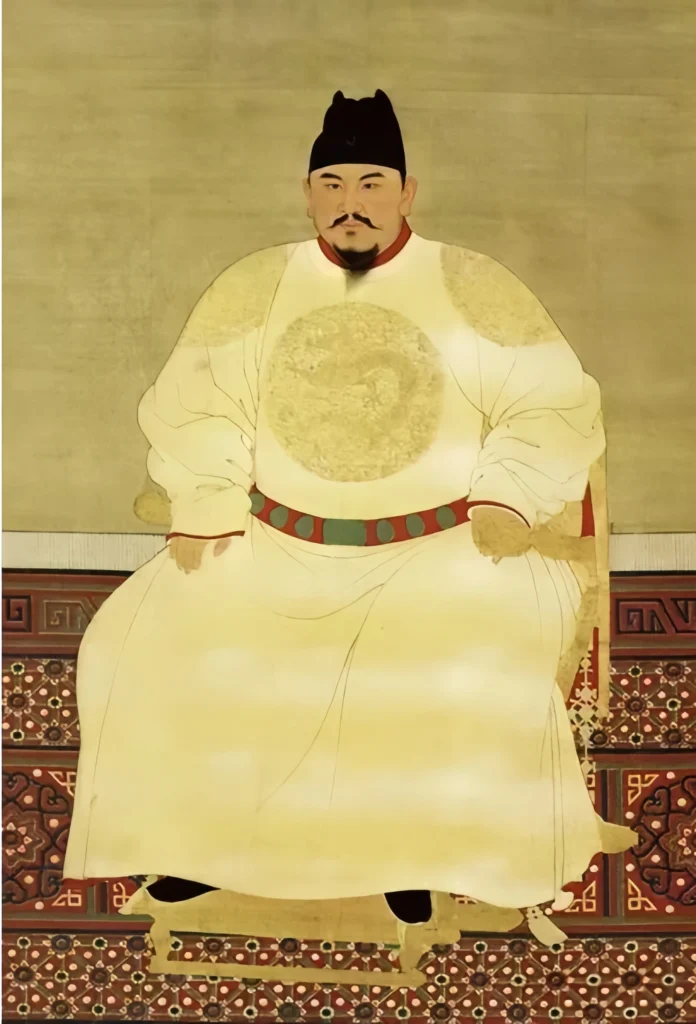
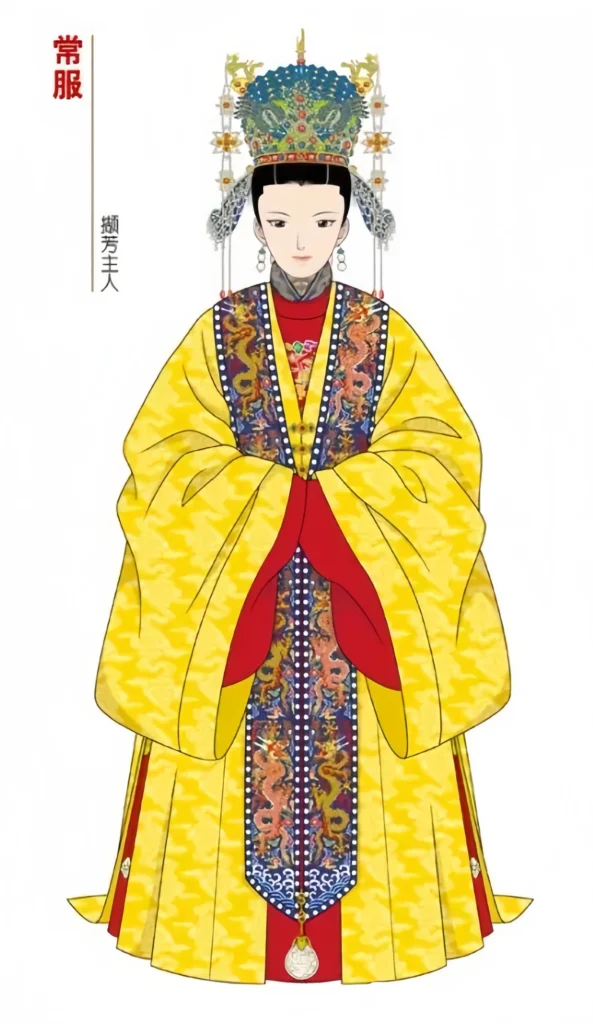
In the third year of Yongle, the Ming emperor outfit was further defined: Cap: a black gauze cap with upward-turned corners, now called Yishan crown. Robe: yellow Ming dragon robe, round collar, narrow sleeves, with a gold-woven dragon on the front, back, and both shoulders. Belt: Ming jade belt. Boots: leather boots.
The crown prince, imperial princes, heirs, and regional princes wore the same style of Ming emperor daily robes, but in red.
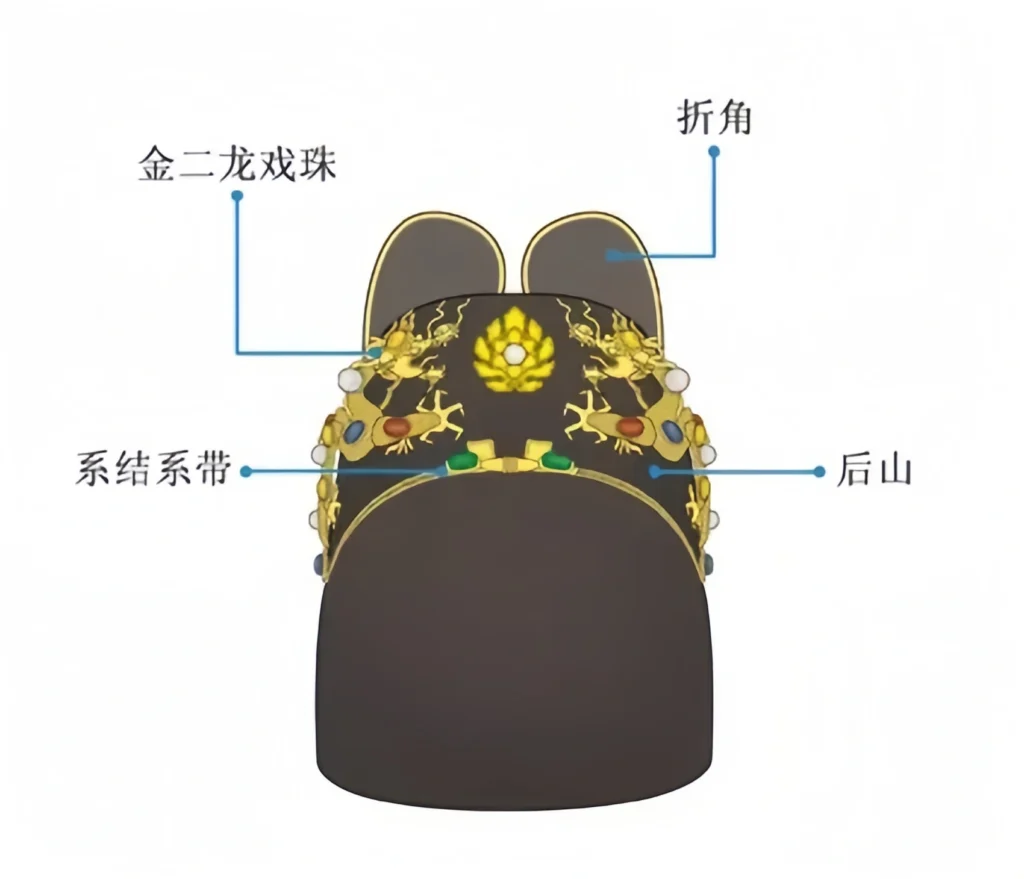
Yishan Crown
This crown is covered with black gauze, featuring a pair of folded corners rising upward at the back. The rear section also retains decorative elements resembling early tied headwear. After Emperor Xiaozong, the sharp corners gradually became rounded. During Emperor Muzong’s reign, gold dragons inlaid with pearls and gemstones were added.
Three Yishan crowns were unearthed from the Dingling tomb of Emperor Shenzong—one made of gold filigree and two of black gauze. The best-preserved gauze crown measures 23.5 cm in height and 19 cm in diameter. It has a bamboo frame lined with red silk, covered with yellow silk gauze and black double-layered gauze. The back features two gold filigree dragons with gemstones and pearls, and a gold fire-shaped pearl in the center. Its ties and knots are also gold filigree with turquoise stones. The folded corners have bamboo cores with gauze surfaces and gold-edged rims.
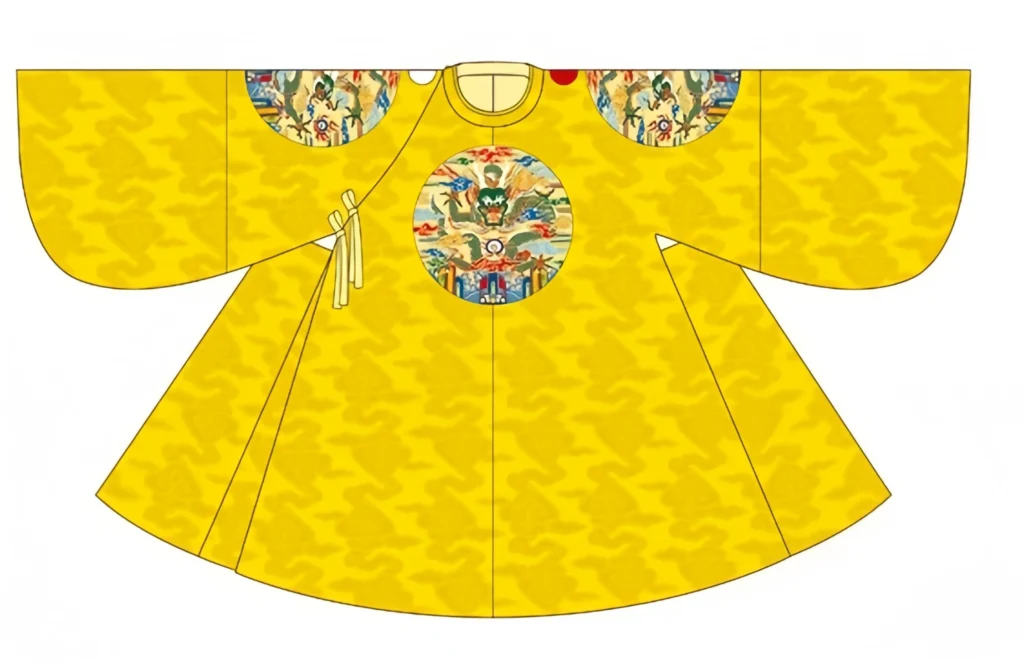
Round-Collar Robe
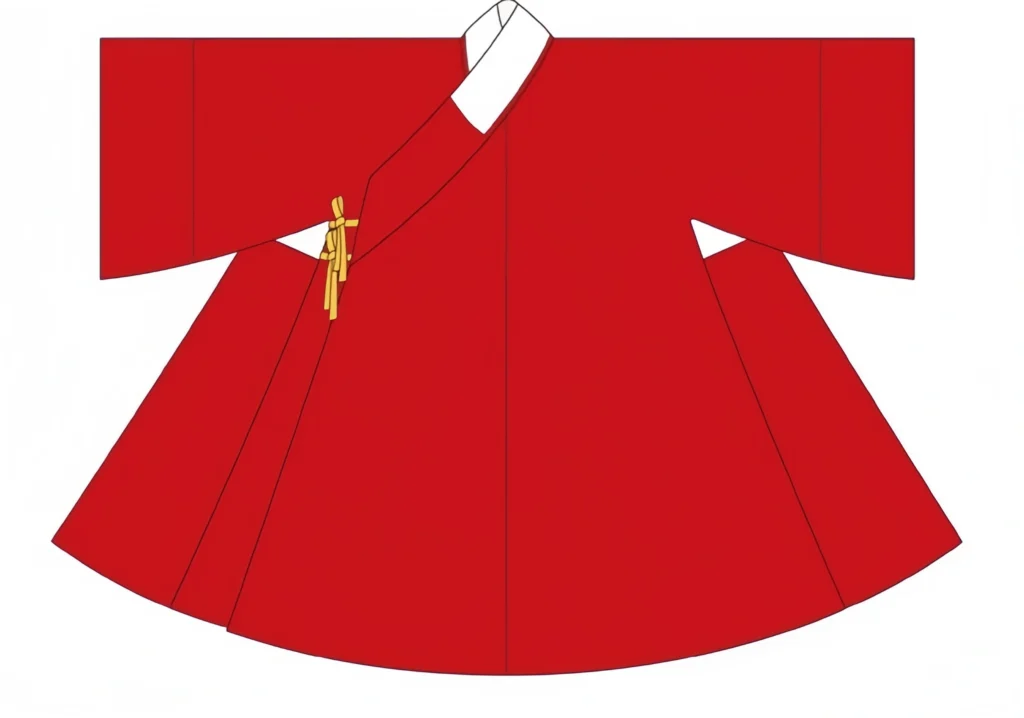
Initially, it was a narrow-sleeved round-collar Ming dragon robe. Over time, the robe body and sleeves widened, and because of the collar shape and dragon motifs, it became known as the round-collar dragon robe. The emperor’s Ming emperor daily robes were yellow (later also in other colors). A pair of buttons fastened the right side of the collar, and two sets of ties secured the front.
Round dragon motifs were placed on the chest, back, and both shoulders—gold-woven in early Ming and embroidered or colored-woven in later periods. During Emperor Yingzong’s reign, sun and moon emblems were added above the shoulder dragons: sun on the left, moon on the right. Sleeves tapered early on but later became wide with curved edges.
Side slits were added at both sides, and extra panels (called bai or double bai) were attached at the front, back, and side seams—four in total. Small loops at the waist were used to hang the Ming jade belt. Twelve round-dragon Ming emperor daily robes from Emperor Shenzong were unearthed in Dingling.
Dahu (Tabard Vest)
Derived from the banbi (short jacket), which had already been worn under round-collar robes since the Tang dynasty, the Ming dynasty adopted a set combination: round-collar Ming dragon robe, dahu, and tieli. The dahu had a cross-collar, short sleeves or sleeveless design, a wide white collar guard, side slits, and double bai panels. It was worn inside the round-collar robe. Thirty-one pieces of cross-collar garments (half-sleeve and sleeveless) unearthed at Dingling match the structure of dahu.
Leather Belt
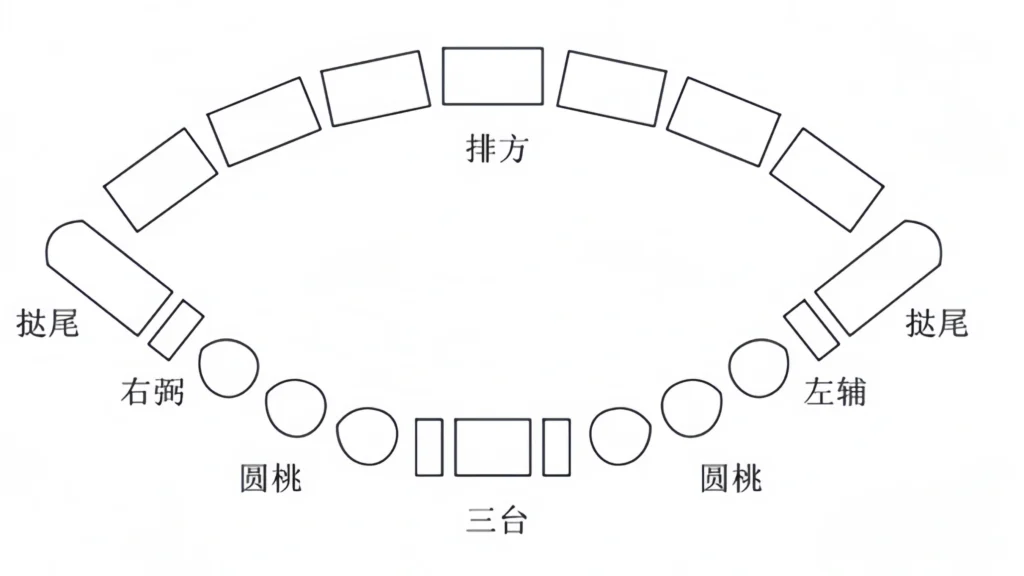
The emperor’s daily belt used jade plaques, so it was often called the Ming jade belt. The twenty belt plaques came in different shapes and sizes, each with a specific name: Santai (3 pieces), Round Peach (6), Fubi (2), Tawei (2), and Paifang (7).
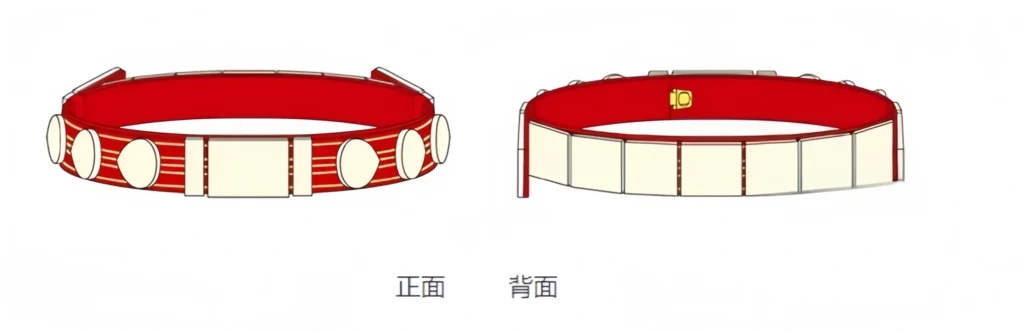
The belt strap was leather wrapped in red or yellow fabric, decorated with five thin gold lines. It was made in three sections:
- Left section: Santai center plaque, small left square, left peach plaques, left fubi, and left tawei
- Right section: symmetrical set
- Back section: Paifang plaques
Side straps with punched holes connected to metal buckles on the back section, allowing size adjustment. Since the belt was larger than the waist, it hung from loops on the Ming emperor daily robes rather than acting as an actual waist belt—typical of Ming court fashion.
Boots
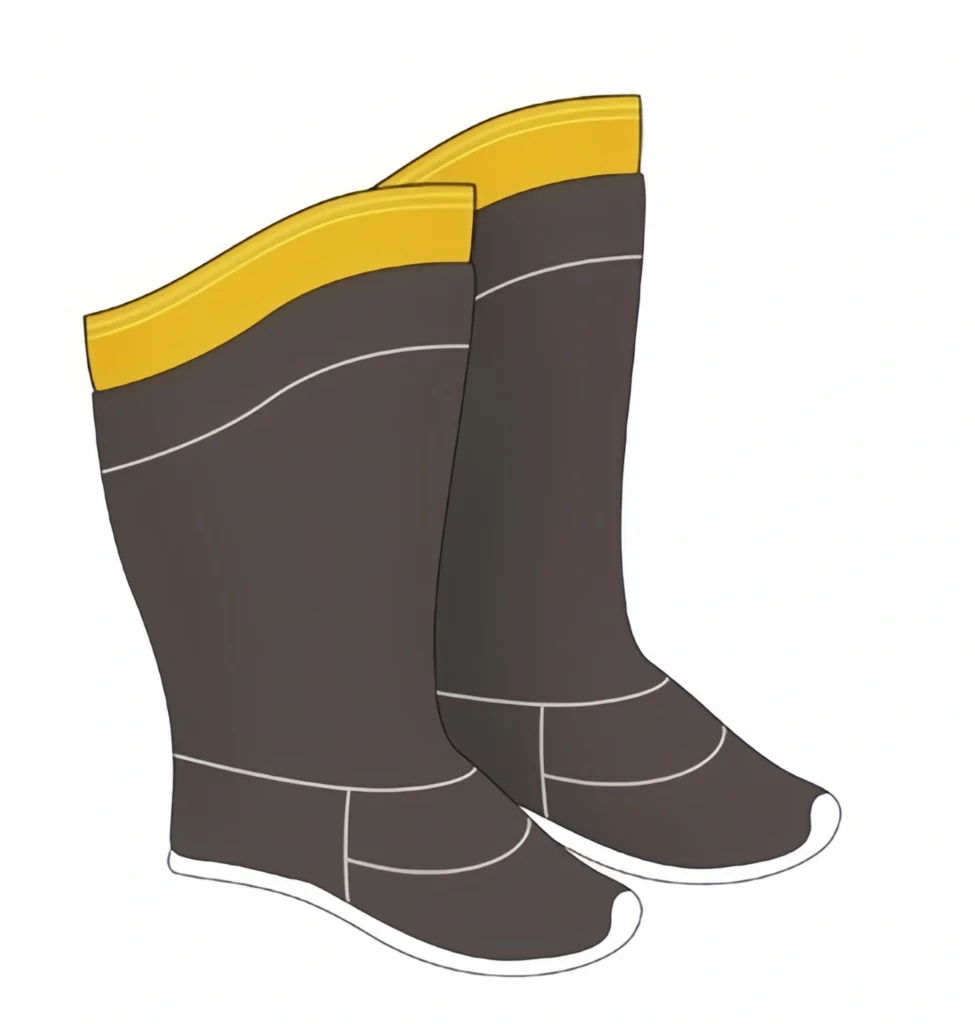
Daily attire used black boots made of leather. The boot shaft consisted of two pieces, and the upper had three parts. Inside was a fabric knee guard, and the sole was white, earning the name white-soled black boots. Later Ming examples include red satin boots and felt boots found in Dingling.
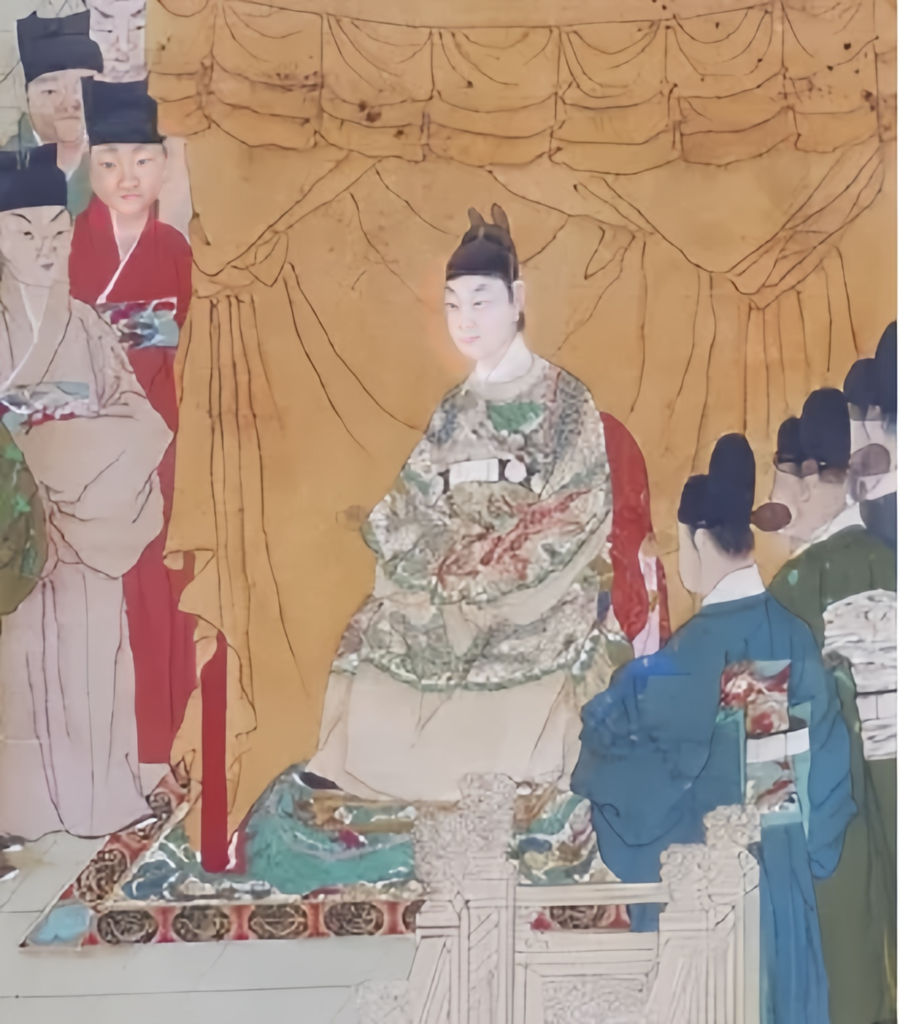
Aside from the standard four-dragon round-collar Ming dragon robe, emperors could also wear round-collar dragon robes with cloud shoulders, sleeve borders, and knee borders as Ming emperor daily robes—such as those depicted in Xu Xianqing’s Court Illustrations showing Emperor Shenzong at audience.
Ming Auspicious Robes
Ming auspicious robes were worn during festivals, birthdays, banquets, and other celebratory events. Ming emperors didn’t have a strict system for these Ming auspicious robes, so the styles followed regular robes or casual wear, such as round-collar robes, zhishen, yesa, tieli, and Daoist robes. Colors were often festive reds and yellows, and motifs were more ornate and symbolic than those on Ming emperor daily robes.
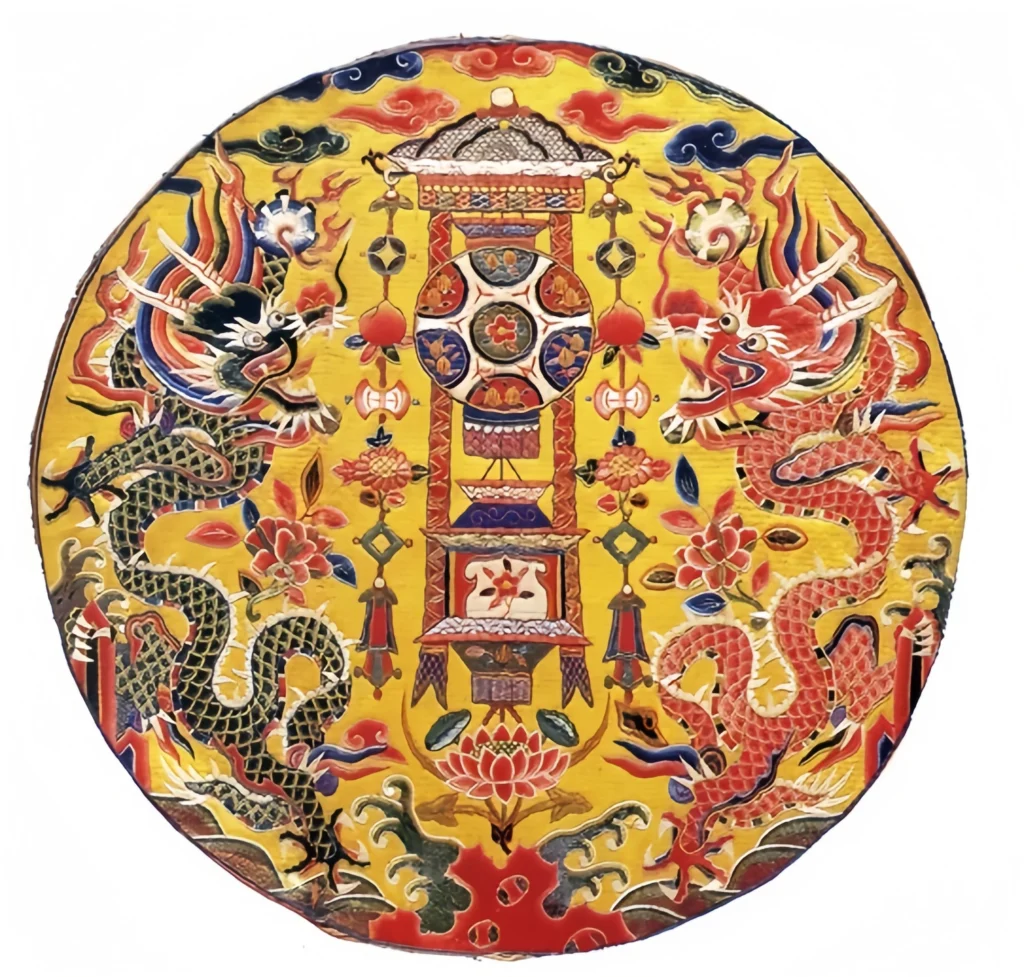
According to a memorial from Nanjing censor Meng Yimai to Emperor Shenzong:
- Birthday robes for imperial birthdays featured longevity motifs.
- Lantern robes for the Lantern Festival used lantern patterns or roundel patches.
- Five-Poison robes for the Dragon Boat Festival carried the five-poison motif.
- Dragon robes for New Year ceremonies featured dragon designs.
These all fall under Ming auspicious robes. The “twelve-roundel, twelve-badge sacrificial robe” seen in imperial portraits (also unearthed in Dingling) is likely a type of Ming auspicious robe, though its exact ceremonial use remains unclear.
Ming Blue Mourning Robes
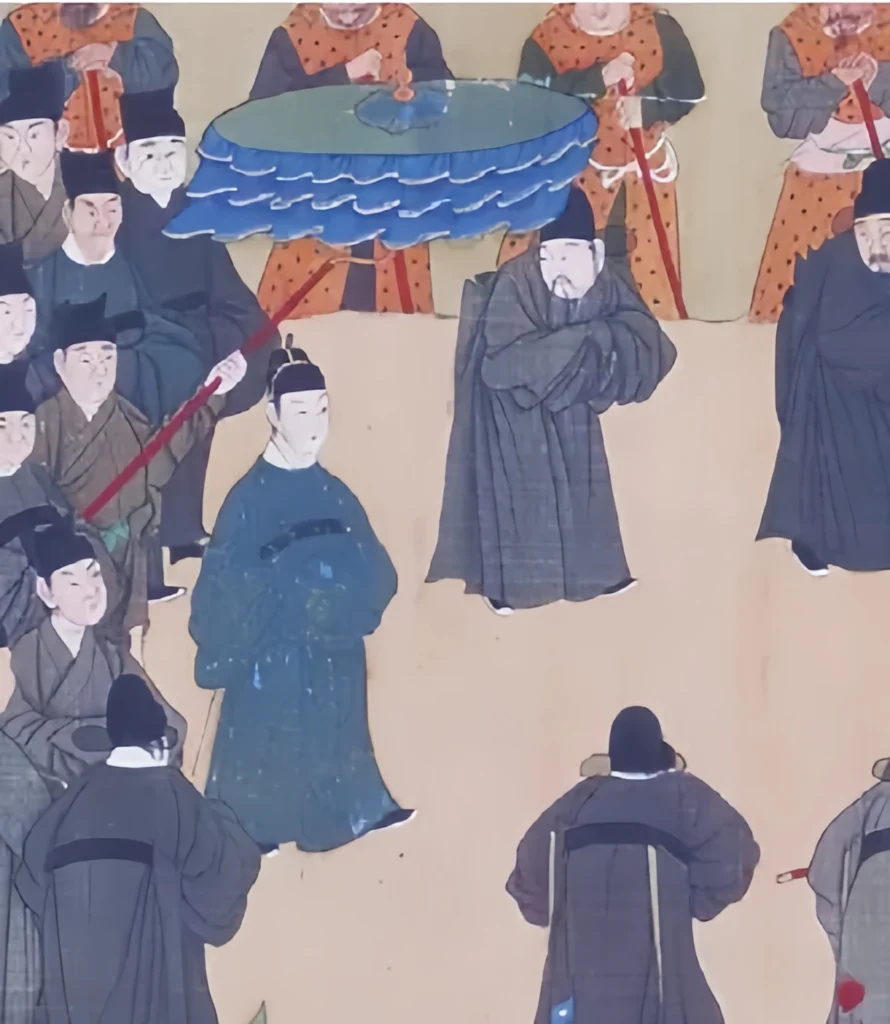
Also called blue round-collar robes, Ming blue mourning robes were worn during mourning periods, ancestral rites, and tomb visits. The Ming blue mourning robe was plain with no dragon roundels or patches. Its belt used horn plaques, and the strap was deep blue.
Records note that in the 24th year of Jiajing, after a fire at the imperial ancestral temple, Emperor Shizong wore a Ming blue mourning robe at Fengtian Gate, with officials also in blue robes for condolence rituals. In the 13th year of Wanli, during severe drought, Emperor Shenzong walked from the palace to the Circular Mound to pray for rain wearing a Ming blue mourning robe, a scene later painted in Xu Xianqing’s Court Illustrations.
Love Ming court fashion?
Check our Ming Hanfu styling guide for authentic tips!

Responses