Ancient Chinese Clothes Rack: Where Hanfu Found Its Place in History


The Story of Ancient Clothes Racks
When the cold wind hits and you grab your wool coat or puffy jacket, have you ever wondered how ancient folks stored their big, outerwear pieces? Turns out, the Chinese invented the ancient Chinese clothes rack way back, though they weren’t like today’s hangers for single items. These were ornate, carved furniture pieces, deeply tied to traditional clothing display and traditional “ritual systems.”
Born from Ritual
China’s design history runs deep, with many crafts—like clothes racks—originating here, even before tables, chairs, or beds.
Since ancient times, China cherished ritual, especially in the Zhou Dynasty’s love for ritual and music. Nobles took their clothing seriously. Early racks weren’t for hanging but for draping clothes, unlike modern hangers. Wang Shixiang’s Ming and Qing Furniture Research notes that ancient Chinese clothes racks were for laying out clothes, not hanging them. Traditional storage like cabinets relied on folding, which caused wrinkles and wasn’t super handy. Draping on racks kept clothes smooth and easy to grab, always looking neat and tidy. For example, Hanfu storage often relied on this type of rack to maintain silk robes’ elegance and avoid creases.
From then on, racks evolved with “ritual” in mind, mainly for men’s official robes. According to Da Qing Hui Dian Tu, clothing rules were strict and elaborate, so Ming and Qing officials sat upright, looking dignified, with robes showing their rank—no one dared overlook it. Even customs like building clothes tombs for heroes tied into this.
Different Dynasties, Different Names
Clothes racks popped up early in China, with Zhou’s ritual focus making nobles care about their attire, sparking the need for hanging racks. Styles and names varied across dynasties.
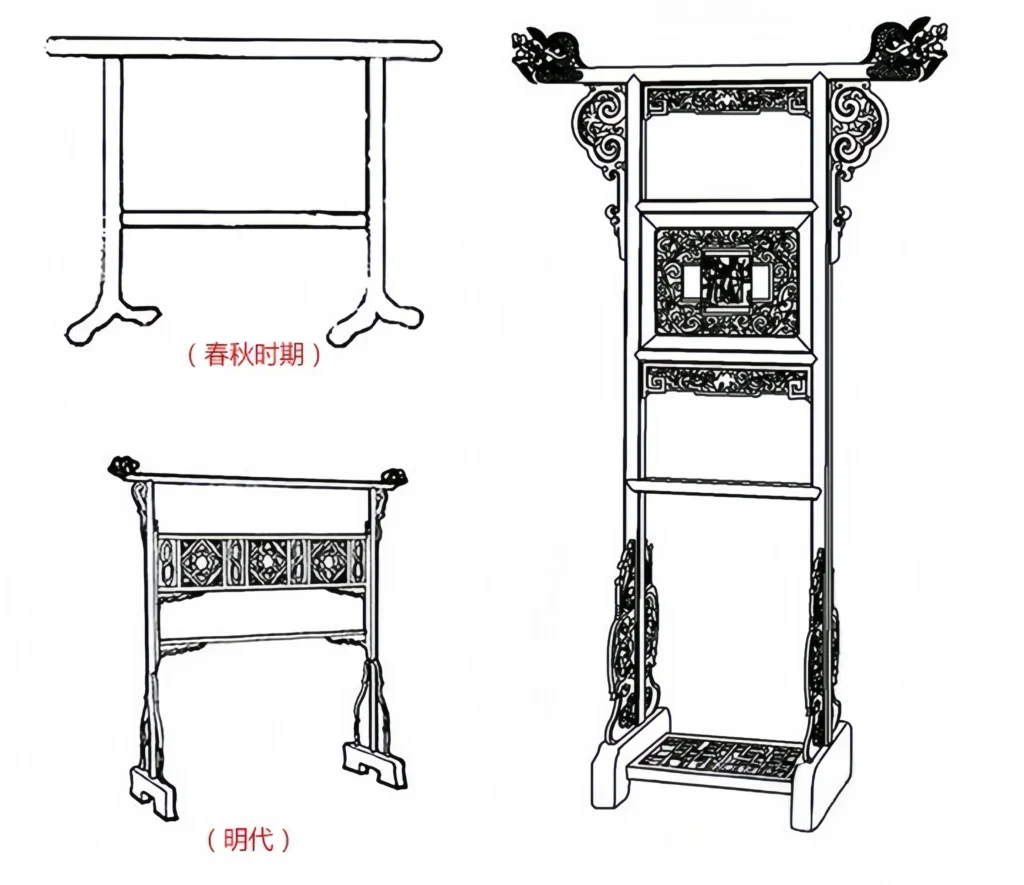
They started in Eastern Zhou to Spring and Autumn with straight-post and crossbar types. Straight posts, called “Xian,” hung clothes, as did wall pegs, also “Xian.” Crossbars, called “Heng” or “Yi,” did the same. Er Ya Shi Qi says: “A pole is Yi.” These names lasted into Tang.
In Ming and Qing, racks were dubbed Longmen Jia or Chaofu Jia, used for official robes. The main beams mimicked two proud, upward-facing dragons, symbolizing career success, with decor like “fortune,” “prosperity,” “longevity,” and floral touches highlighting their values. Ming Dynasty furniture of this period was especially ornate, supporting both function and status display. Chaofu Jia added a formal flair to this furniture type.
Features Across Eras
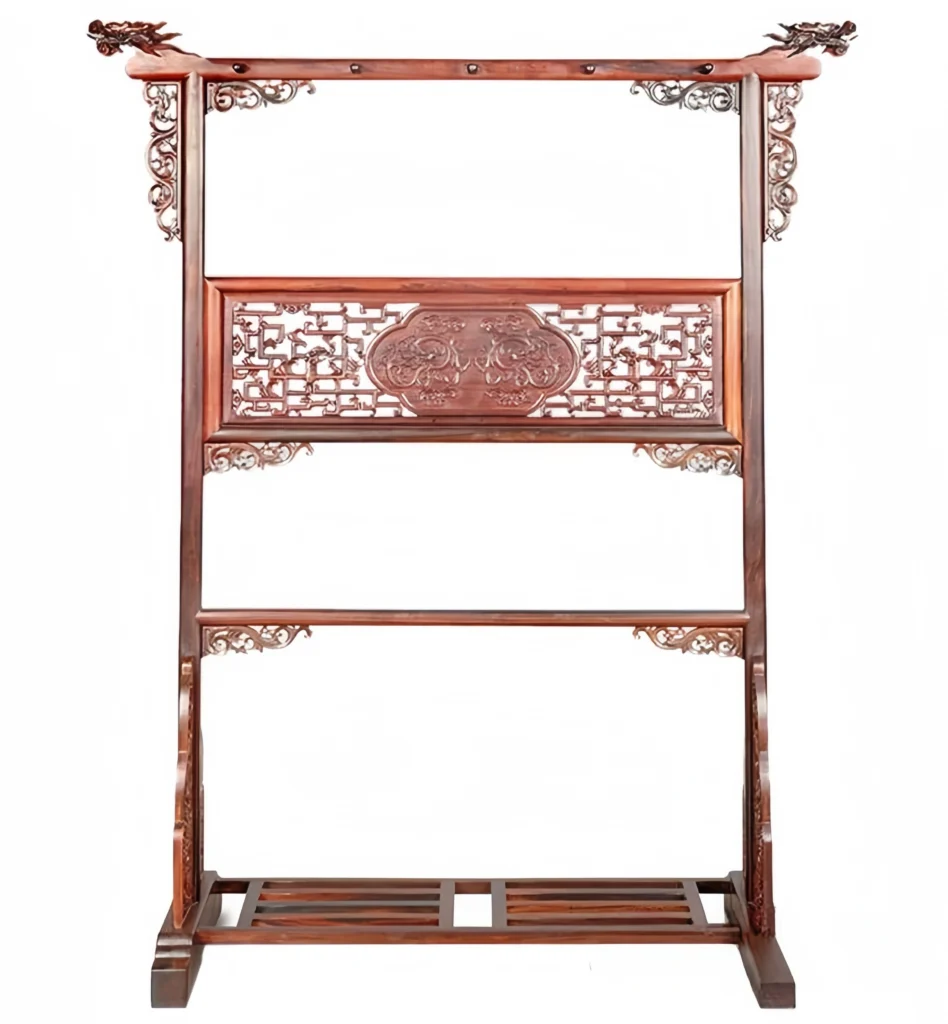
Ancient racks often had crossbars, side posts, top and bottom wooden bases, with a middle panel or brace. The top beam extended past posts, carved with dragon, phoenix, lingzhi, or cloud motifs. A central plaque with openwork decor added strength. Clothes were draped over the bar, which helped with Hanfu storage and traditional clothing display.
Song Dynasty: Racks became common, with visuals like Henan Yuxian Song tomb murals showing a combing scene. Two posts held a crossbar, ends extending past with upward-curved flower shapes. Two base blocks stabilized posts, and a lower brace reinforced it.
Ming Dynasty: Racks kept traditional shapes but upped the game with materials, craftsmanship, and decor. Bases had two blocks with Hui Wen carvings, flanked by carved vine “teeth” braced with wedges. Wider middle panels held shoes, and openwork floral supports under joints showcased Ming Dynasty furniture’s artistic peak.
Qing Dynasty: With the “Yi Fu” policy pushing Manchu clothes, racks grew grand due to larger, heavier garments—think embroidered silk and phoenix designs for the rich. Qing Dynasty racks were tall, with decorated crossbars extending past posts, dubbed Longmen Jia. Officials in black gauze hats with red tassels and patch-sleeved robes needed tall racks with vine-carved “teeth,” wedges, and wide panels for shoes, plus floral supports under joints.
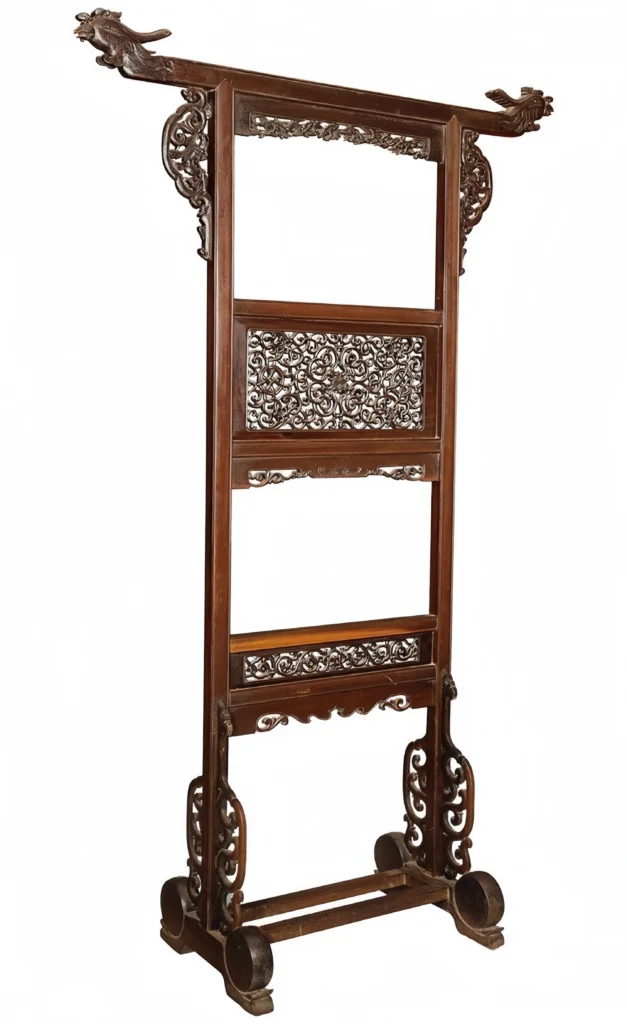
Ming and Qing racks were elegant, finely carved, glossy, and polished. Officials in black gauze hats with red tassels and patch-sleeved robes needed tall racks with vine-carved “teeth,” wedges, and wide panels for shoes, plus floral supports under joints. Hanfu hanging on them added to the room’s aesthetic, showing refinement and social status.
Racks were common in ancient bedrooms. In Gu Hongzhong’s Han Xizai Night Banquet, a double rack stands by the bed, holding bedding and clothes—proof early Chinese loved this handy furniture. Paintings and illustrations often show racks by beds or behind them, a typical daily sight. Hanfu storage on these racks was common among nobles and wealthy households, ensuring robes maintained their elegance.
Wrap-Up
In short, ancient racks were like today’s coat racks, blending function and beauty, a must-have in both past and present homes! They served as essential furniture for traditional clothing display and even Hanfu storage, showcasing the thoughtful design of Ming Dynasty furniture and Qing Dynasty racks across centuries.

Responses