The Evolution of Short Ru in Different Eras

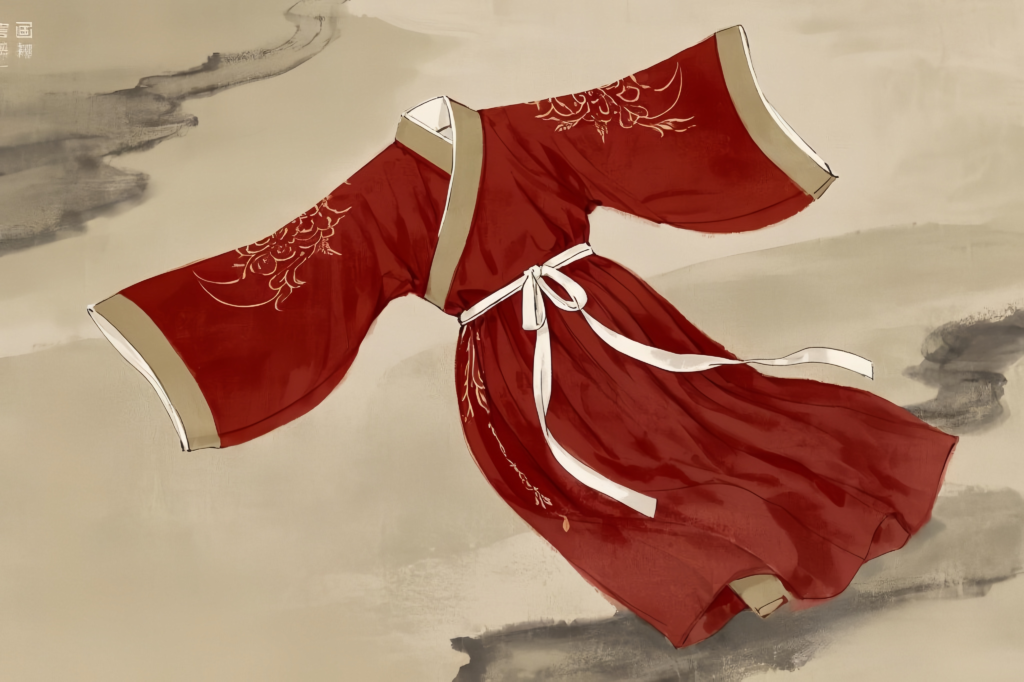
The Ru is a type of short jacket or top that typically reaches just above the knee. If it extends beyond the knee, it’s considered a “long Ru” or “big Ru,” much like how any short jacket is classified: a “long Ao” for a long coat or a “long Shan” for a long shirt. This basic rule applies across all short-length clothing.
During the Eastern Han, Three Kingdoms, and Western Jin periods, the “Chui Hu” sleeve became the dominant style for the ru. The Chui Hu sleeve is characterized by a tapered cuff, where the sleeve narrows towards the wrist, creating a distinctive silhouette. This sleeve style was often paired with the qun yan yi (skirt-covering garments) in the fashion of that era.
As we move into the Eastern Wu and Eastern Jin dynasties, straight sleeves took over as the fashion trend. These sleeves were about a foot wide (roughly 33 cm, as seen in the excavated examples from Huahui Tomb). The defining feature of straight sleeves is their lack of tapering—they are wide and have a more rigid, structured appearance. The outfit was usually paired with a yi yan qun (garment covering the skirt), which was a popular style at the time.
By the late Jin dynasty and the period leading into the Northern and Southern dynasties and Sui dynasty, wide sleeves became the dominant fashion trend. This era is often referred to as the “narrow-arm wide sleeve” period. Unlike the broader sleeves that emerged in the later Tang, Song, and Ming dynasties, these wide sleeves began to flare out only from the elbow. The narrow-arm wide sleeve still did not have a tapering cuff, and even the short-sleeve designs were tightly fitted. Contrary to what many might think, during this era, the ru was still mainly worn over the skirt.
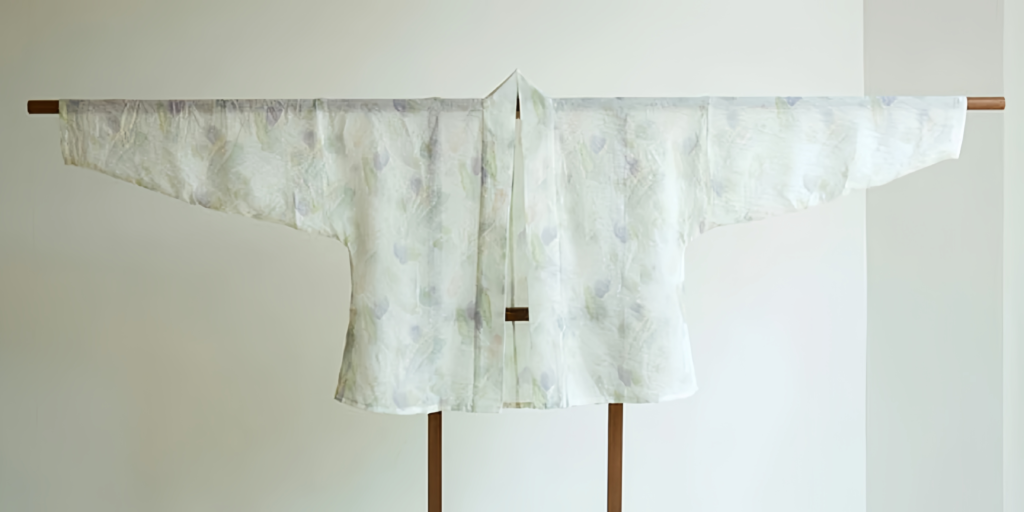
In the image, on the left, you can see the various Ru styles from different periods, each with its own unique characteristics. On the right, there’s a visual representation of how these garments would look when worn as part of a complete outfit.
Through these different time periods, the ru evolved not only in length and shape but also in the overall aesthetics, reflecting the cultural shifts and fashion trends of the respective dynasties.


Responses